Low-angle view along a red brick wall with trimmed shrubs and a mulch bed beside a mown lawn, with a single-story house with a garage door and tall pine trees under an overcast sky in the background.

Heat Pump Maintenance in Oxford, MS

Tell us about the job

Takes about a minute. No obligation.

Tune-up, service, or cleaningHeat PumpLafayette County, MS
Step 1 of 2

What ZIP code is the job in?

The signs are easy to miss

A heat pump that needs attention rarely stops outright. It runs longer to reach the same temperature, the air from the vents feels less warm or less cool than it used to, or the outdoor unit ices over when it shouldn't. None of that trips a breaker or sets off an alarm.


Catching it early is the whole point

A tech checking refrigerant charge, the condenser coil, and the reversing valve during a routine visit can find a problem while the system is still running. Wait for it to fail outright and the cause is often a compressor that burned out from running low on charge for months, not something a simple fix would have caught.

Half the homes in Lafayette County were built in 2000 or later.

A heat pump that age still has years ahead of it, and a yearly check is what gets it there.

A heat pump works almost year round here, so get it checked before each season starts

Cooling runs May through September
Heat runs November through March
Climate zone 3A

A dirty filter is the most common reason a heat pump starts struggling. Airflow drops, the indoor coil can ice up even in cooling mode, and the system has to work harder to move the same amount of air. The outdoor coil matters just as much. When it's caked with dirt, grass clippings or leaves, it can't release or absorb heat properly, and that hurts performance in both directions, heating and cooling. The condensate drain is the one people forget. If it clogs, water backs up and can shut the system down on its own or spill out where it shouldn't. A tech checking the filter, both coils and the drain line during a visit catches trouble in any of them before it causes real damage.

Keep a newer heat pump running the way it should

If your heat pump came with a house built in the last couple of decades, it still has plenty of working life ahead. A yearly check is what keeps it that way. It catches a low charge or a dirty coil before either one turns into a compressor replacement.

Find a contractor
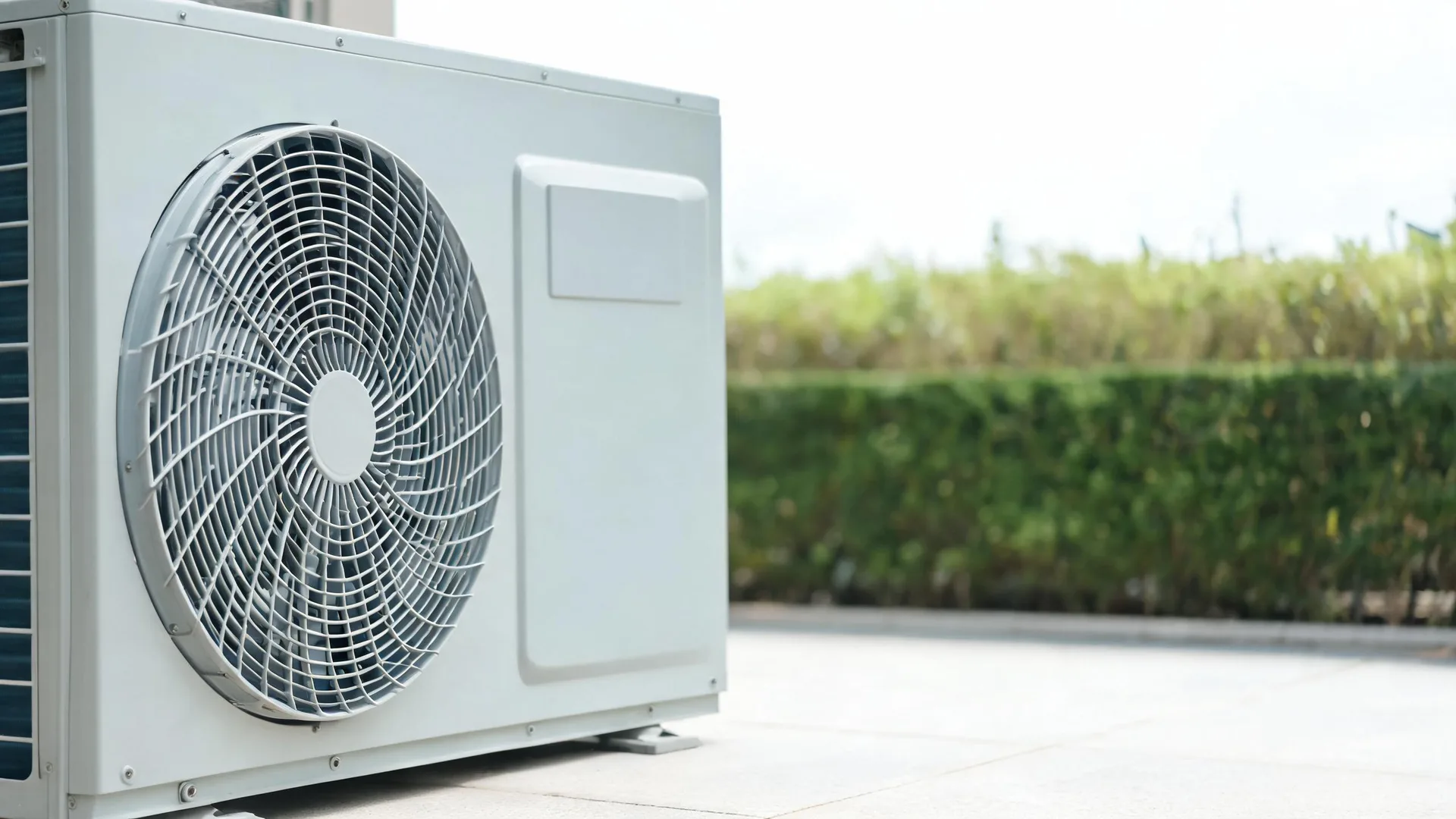
A gray air-source heat pump mounted on a concrete pad next to a house with gray vinyl siding, surrounded by gravel and flanked by green shrubs and white hydrangea flowers.

Between visits, the filter is the one job that's yours

Between visits, the filter is the one thing worth checking without waiting to be told. Pull it, hold it to the light, and if you can't see through it, swap it. A heat pump moving conditioned air through a dirty filter will ice its indoor coil even while it's running in cooling mode, and that ice cuts airflow further, which makes the system run longer to do less. Outside, keep the area around the unit clear. Grass clippings, leaves and anything piled against the cabinet block the airflow the outdoor coil depends on, and that matters in both heating and cooling since the heat pump reverses direction with the season. Beyond that, leave it alone. The refrigerant charge, the reversing valve and the electrical connections aren't things to check or adjust without the right gauges, and opening the cabinet to poke at them does more harm than good. If the system starts short cycling, ices up when it shouldn't, or the outdoor fan stops turning while the compressor still runs, that's the point to call for service rather than wait for the next scheduled visit.

The charge gets checked against a number, not a guess

A tech checks refrigerant charge against the manufacturer's spec, not a feeling for whether the air seems warm or cool enough. A charge that's running low doesn't usually show up as weak air right away. It shows up first as longer run times and a compressor working harder to move the same heat, which a homeowner has no way to see or hear from inside the house.

The reversing valve only proves itself at the changeover

The reversing valve is what switches a heat pump between heating and cooling, and it only has to move when the season turns. A valve that's starting to stick can sit fine for months and then fail the first time it's asked to switch direction. A tech can test it directly during a visit instead of waiting for it to fail on the reader.

A quick visit usually means a filter swap and a glance at the pressures, done in the time it takes to write the invoice. A thorough one means the coils actually get washed, not just looked at, and the condensate line gets flushed so it can't back up later. The electrical connections get checked for a loose lug or a burned spot, since that's a common way a heat pump fails without any warning at all. The tech should pull the refrigerant charge against the manufacturer's number, not just feel the line and call it good. Ask what was checked, not just what was replaced. A tune-up that only touches the filter didn't touch the parts most likely to leave you without heat or cooling.

A full tune-up starts outside, at the unit itself. The tech pulls the panel and looks at the contactor and capacitor, since a weak capacitor is one of the more common reasons a compressor struggles to start. Belts aren't part of the picture here, a heat pump's motors drive directly, but bearings and mounts still get checked for wear. Refrigerant lines get inspected for rub spots or oil residue, since oil tracks mean a slow leak somewhere in the system. Indoors, the blower wheel gets looked at for dust buildup, which throws off airflow in a way a new filter alone won't fix. None of this takes long when the system is healthy. It takes longer, and matters more, the first time something's actually wrong.