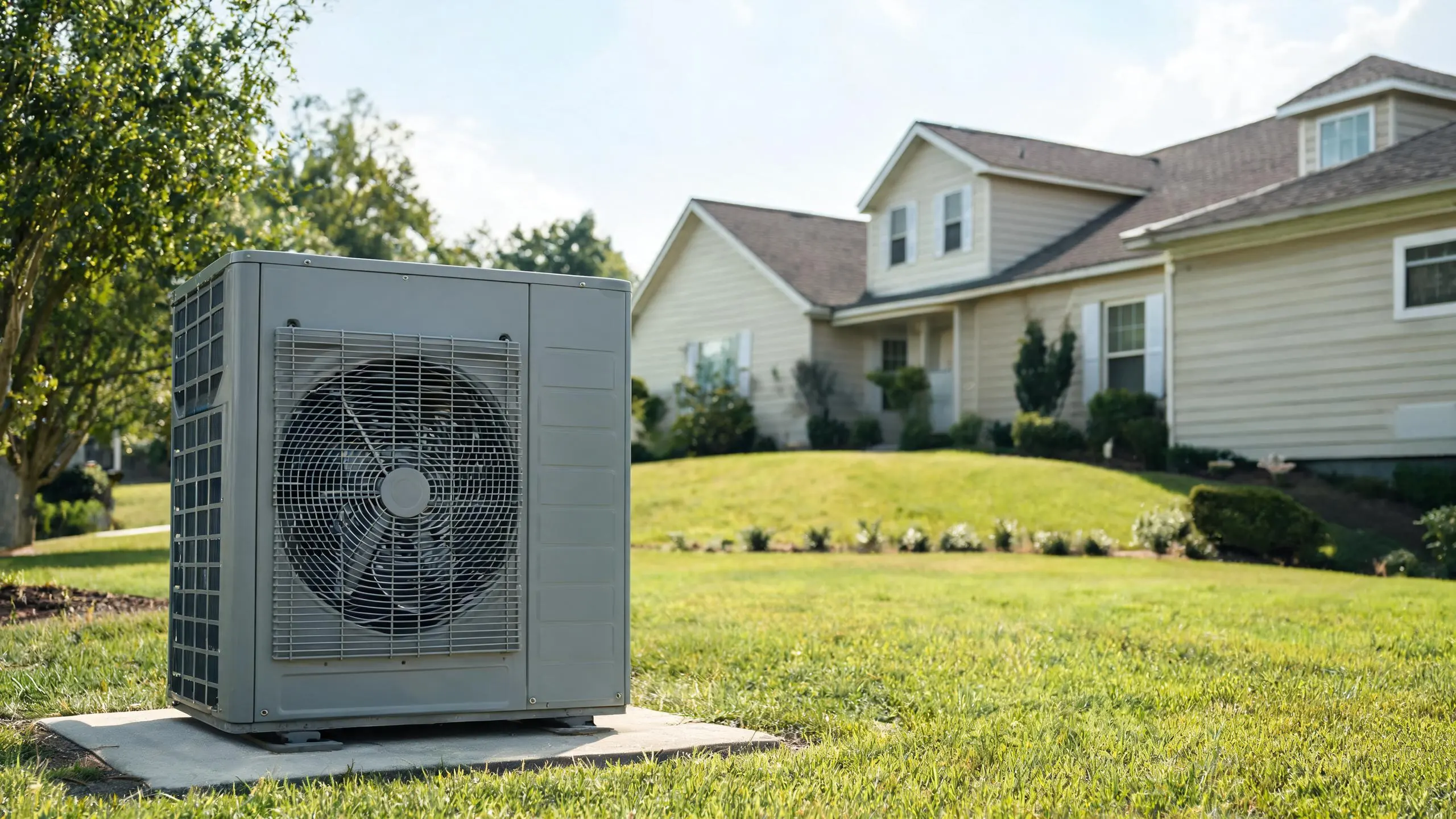
A gray outdoor HVAC condenser unit mounted on a concrete pad in the front yard of a two-story suburban house.

Heat Pump Maintenance in Natchez, MS

Tell us about the job

Takes about a minute. No obligation.

Tune-up, service, or cleaningHeat PumpAdams County, MS
Step 1 of 2

What ZIP code is the job in?

Signs the system is asking for a look

A heat pump that runs long cycles without warming or cooling the house the way it used to is telling you something. So is one that blows air that feels barely different from room temperature, or that frosts up on the outdoor unit when it shouldn't. Short cycling, where the unit turns on and off again fast, points to a problem too. None of these mean the system is done for, but each one is a reason to get a technician looking at it before it picks the worst day to quit.


Why catching it early matters

A heat pump running on low refrigerant charge, a weak reversing valve, or a dirty coil keeps trying to hit the temperature on the thermostat, and the compressor does the extra work to make that happen. The compressor is the part a heat pump cannot run without, and it is also the part most likely to fail for good once it has been overworked for a long stretch. Getting a technician in when something first seems off, rather than waiting for no heat or no cooling at all, gives the system a far better chance of a straightforward repair.

A heat pump in Natchez switches over to cooling in May and stays there through October.

Have it looked at in April, before it has to carry the first hot stretch of the year.

Half the homes in Adams County were built by 1972, old enough that a heat pump has no history you can count on

Half the homes here were built by 1972
Power costs 13.39 cents a kWh statewide
Climate zone 3A
Half these homes were built in 1972 or earlierIf the system came with the house, a yearly check is the only way to know what's wearing out.

Skip maintenance long enough and the coil outside gets a layer of dirt and grass clippings packed against the fins. That coil is how the unit dumps heat in warm weather and pulls heat from the air in cold weather, so once it's coated, the system has to run longer to do either job. The reversing valve is another part nobody thinks about until it sticks, and when it does the heat pump can get stuck cooling when it should be heating, or the other way around. Low refrigerant from a slow leak does its damage quietly too, since the system doesn't shut off and tell you, it just works harder and wears the compressor down doing it. A yearly check catches the dirty coil and the slow leak while a technician can still clean the coil or patch the leak outright. Left alone, both turn into the one part failing that the whole system depends on.

Book it before the season

It starts running hard in the first month of the season here. Book the check the month before.

Find a contractor
A gray heat pump outdoor unit mounted on a concrete pad next to the stone-accented exterior wall of a house.

A real tune-up checks both directions, not just the one it happens to be running in

A heat pump never gets an off season, so a tune-up has to cover both jobs it does. A quick visit checks that the system turns on and blows air. A thorough one runs the system in each mode, heating and cooling, and checks that the reversing valve actually switches the refrigerant flow both ways instead of just assuming it does because the unit started up fine. It means pulling the panel to check refrigerant charge with gauges, not guessing from how the lines feel. It means checking the capacitor's actual output, not just listening for the compressor to kick on. A tech doing it right clears the condensate drain so it won't back up later, checks the defrost cycle on the outdoor unit, and tightens electrical connections that loosen from the unit cycling on and off all year. Anyone can hose off a coil and call it done. The difference shows up months later, in whichever mode didn't get checked.

The filter is doing more than cleaning air

A clogged filter chokes off airflow across the indoor coil. Starve that coil of air and it can ice over even though the system is trying to heat or cool. The blower motor also works harder to push air through a dirty filter, and that extra strain shortens its life. Checking the filter is the one thing an owner can do between visits without any tools.

The drain line decides where the water goes

A heat pump pulls moisture out of the air it handles, and that water has to leave through the condensate drain. Algae and dirt build up inside that line over time and slow the water down, then stop it. Once the drain backs up, water sits in the pan and can spill into the space around the indoor unit instead of running outside where it belongs. Clearing that line before it clogs keeps the water going where it should.

A technician checking a heat pump during a tune-up opens the electrical panel and tests the contactor and capacitor under load, not just by eye. A capacitor can look fine and still be weak, and a weak one makes the compressor draw more current to start, which wears it down a little more each time. The tech also checks the amp draw on the compressor itself against what that unit is rated for. High amp draw with normal refrigerant charge usually means the compressor is working harder than it should, often because of a dirty coil or a motor on its way out. None of this shows up by looking at the unit or listening to it run. It shows up on a meter, which is why a visual check and a real tune-up are not the same thing.

A proper tune-up starts outside, with the fan blade and motor mount checked for wobble, since a fan that's out of balance wears its bearings fast and nobody notices until it seizes. Inside, the blower wheel gets inspected for dust buildup, because a coated wheel moves less air even when the motor itself is fine. The tech checks the thermostat's calibration against an actual thermometer, not just the number on the display, since a thermostat reading a few degrees off makes the whole system run longer than it needs to. Refrigerant lines get checked for insulation that's cracked or missing, because bare line exposed to outside air makes the compressor work to overcome that loss. The outdoor unit gets checked for level ground too, since a unit that's settled or tilted puts strain on the refrigerant lines and the compressor mounts over time. Each of these gets checked whether or not the system is making noise about it, because by the time it is, something's already worn.