





Single-story brick and cream-sided houses with covered porches behind a trimmed hedge and lawn, shaded by large oak trees draped with Spanish moss under an overcast sky.

Heat Pump Maintenance in Meridian, MS

Tell us about the job

Takes about a minute. No obligation.

Tune-up, service, or cleaningHeat PumpLauderdale County, MS
Step 1 of 2

What ZIP code is the job in?

A heat pump that needs a look usually tells you before it quits outright. Listen for a change in sound, a rattle on startup or a hum that lingers after the unit should have cycled off. Watch the outdoor unit for ice building up on the coil when it has no business being there, especially outside of a defrost cycle. Inside, warm air that doesn't feel as warm as it used to, or a system that runs long stretches without satisfying the thermostat, points to a refrigerant charge or airflow problem. A dirty filter or a coil caked with dirt makes the whole system work harder to move the same amount of air, and that strain shows up as higher runtime long before it shows up as a breakdown. If the outdoor fan looks like it's struggling to turn, or if you notice water pooling where it shouldn't, those are worth having checked rather than watched.

Lauderdale County took damaging wind 126 times between 2015 and 2024.

Wind that frequent works a heat pump's outdoor unit hard, so its parts deserve a check before they give out.

Heat runs here from November through March, so October is when a heat pump in Meridian needs the check

Cooling runs May through September
Heat runs November through March
126 damaging wind events from 2015 to 2024
Once a year covers itHalf the homes here were built in 1979 or earlier, and old or new, a heat pump only needs one checkup a year to stay ready.

Wind isn't the only thing that comes through Lauderdale County. The same years that brought 126 damaging wind events also brought 21 hail events and 22 tornadoes. Hail dents coil fins and bends them shut, and a coil that can't move air the way it's built to makes the whole system work harder for the same result. A tornado doesn't have to hit a house to throw debris into an outdoor unit sitting a few feet off the ground. None of that shows up from the kitchen window. It takes someone opening the cabinet and looking at the coil itself to know if last season left a mark.

Have it checked before the wind finds a weak spot first

The outdoor unit sits outside through every one of those wind events, not just the ones that make the news. A check before heat season finds the bent fin or loosened panel while it's still an easy fix, not a reason to go without heat on a cold night.

Find a contractor
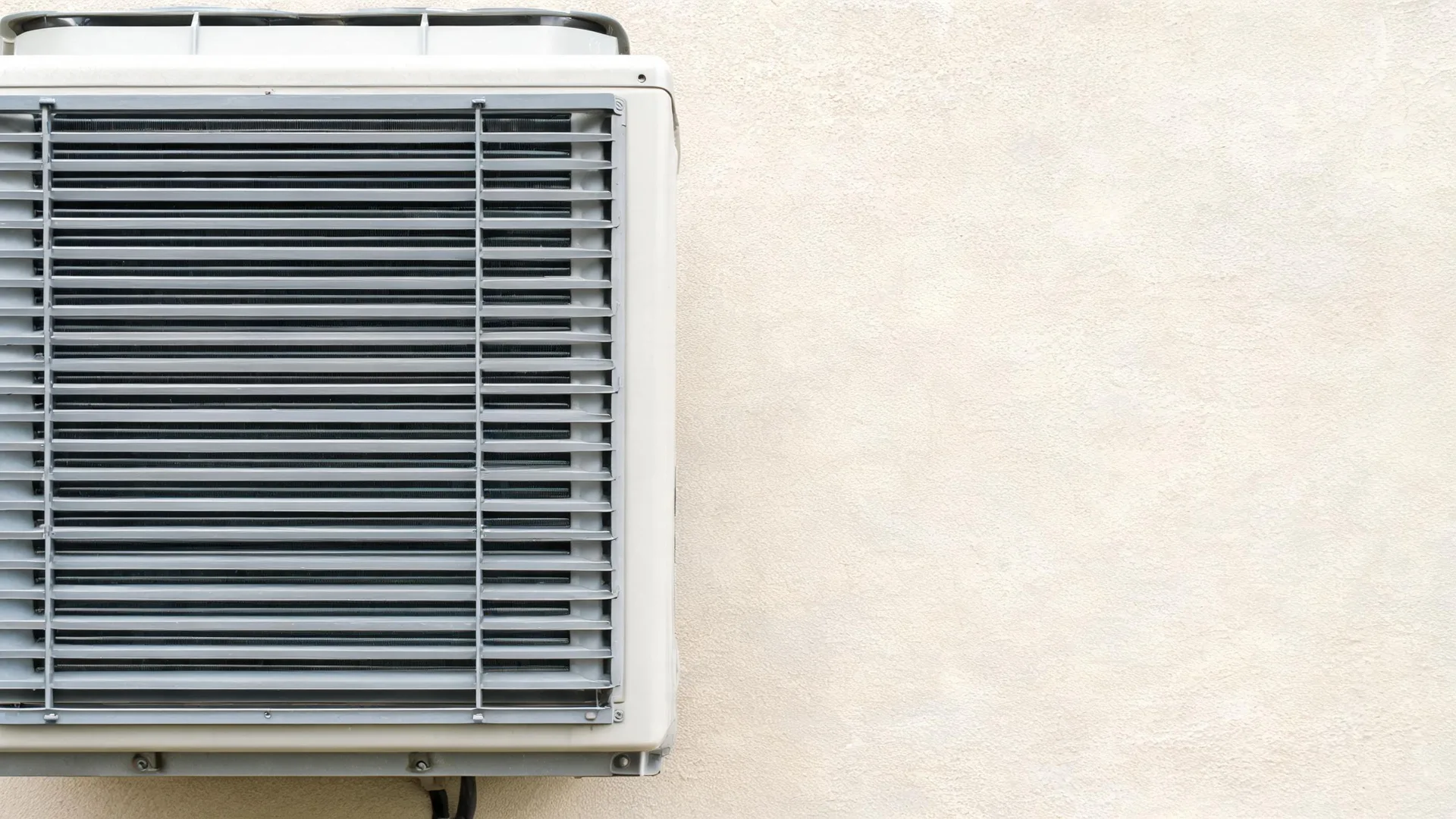
A residential heat pump outdoor unit mounted on a concrete pad next to a house with gray vinyl siding.

What a real tune-up checks that a fast one skips

A quick visit gets the filter swapped and the thermostat checked, then someone's packing up. A thorough one puts gauges on the system and checks the refrigerant charge against what the manufacturer specifies, not just by feel. It means pulling the panel off the outdoor unit to look at the coil fins and washing out what the wind and yard debris packed into them, not just glancing at it from a few feet away. It means checking the capacitor's readings against its rating instead of waiting for it to fail outright. Loose electrical connections get tightened, because a unit cycling on and off all season works them loose on its own. A tech who checks the reversing valve is doing more than one who skips it. That valve is the one part unique to a heat pump, the part that lets it heat as well as cool, and a tech who only looks at what the homeowner called about will walk right past it. One system holds its charge and its capacitor through the next season. The other turns up on a service call with a problem that was sitting there, visible, back when someone had the panel off.

The filter is doing more work than it looks like

Every bit of air the system moves, in heating or cooling, goes through that filter first. A clogged one starves the blower, and a starved blower means less air crossing the indoor coil. That coil needs airflow to do its job, so a dirty filter doesn't just mean dusty air, it can let the coil ice over or run colder than it should.
The drain only matters when it's blocked

Condensate forms on the indoor coil and is supposed to run off through a drain line into a pan or outside. Algae and dirt build up in that line over time and slow the flow. A blocked drain backs water up into the pan, and once the pan overflows, that water goes into the house, not outside it.

Between visits, the filter is the one thing worth checking yourself. Pull it out, hold it up to a light, and if you can't see through it, swap it or clean it. A heat pump run with a dirty filter works its blower harder for the same result, and that strain reaches the outdoor unit too since the whole system is one loop. Outside, keep the area around the unit clear. Leaves, grass clippings, and anything stacked against the cabinet block the airflow it needs to move heat in either direction. After a storm, a look at the coil fins for anything bent or packed with debris is worth the walk outside, even if you don't touch anything. Indoors, keep furniture and curtains away from the vents so the air it's moving actually gets where it's going.

A tune-up on a heat pump means going through the same list every time, not just the parts that failed last year. The outdoor unit gets its fan motor checked for wobble or noise, since a bearing starting to go will run fine for months before it seizes. The contactor gets looked at too, because the points on it pit and burn a little every time the compressor cycles on, and a worn contactor is a common reason a unit stops responding to the thermostat. Refrigerant lines get checked for anything rubbing against metal or wood, since a line that chafes through will leak slowly long before anyone notices the system running weak. Indoors, the blower wheel gets looked at for dirt buildup on the blades, which throws it out of balance and makes it work harder to move the same air. None of this shows up as a problem yet. That's the point of catching it now instead of in the middle of a cold snap.