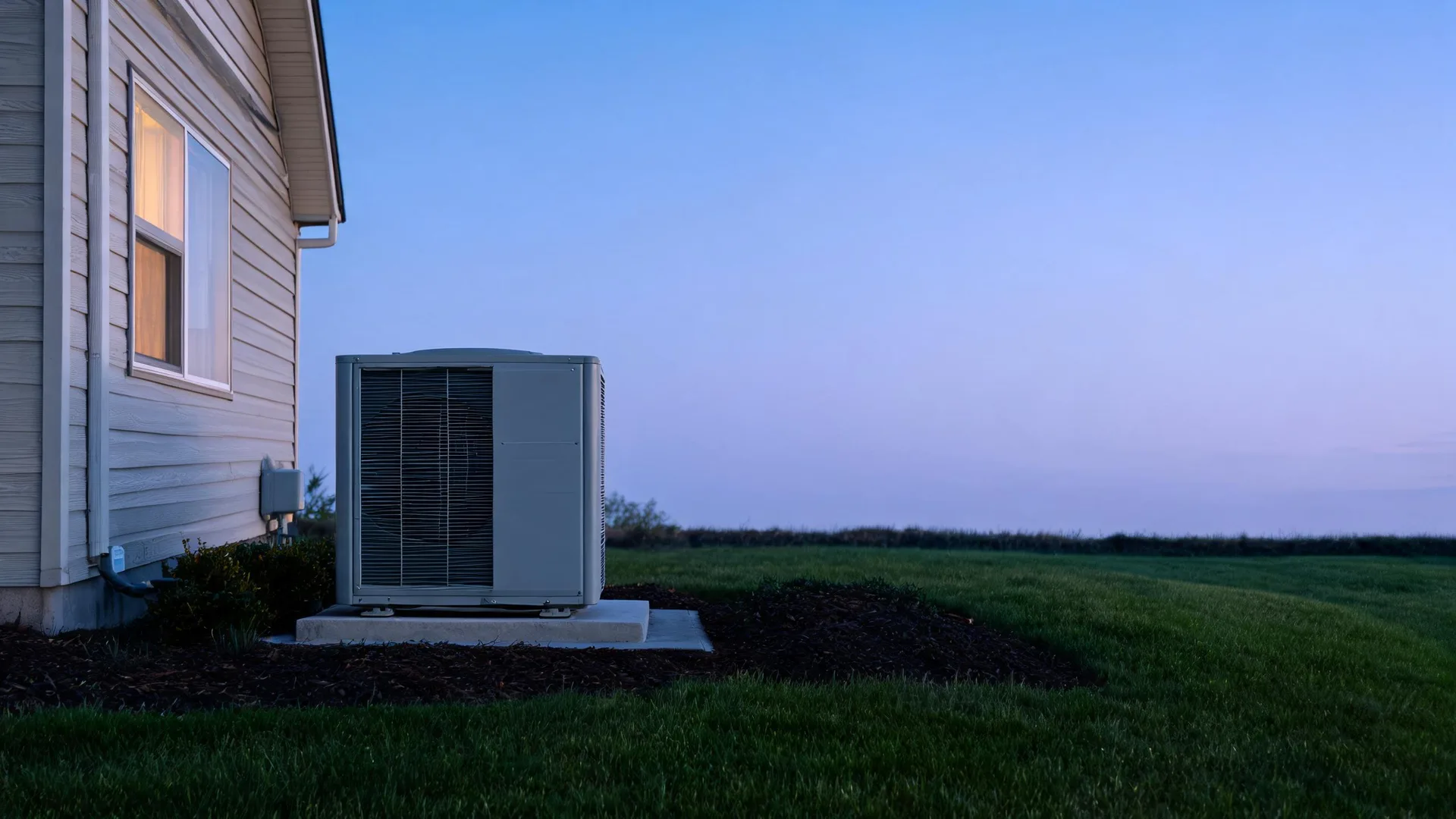
A heat pump low on charge still blows air and still runs. It just moves less heat while the compressor works harder to do it. A gauge set on the service ports is the only way to know the charge is actually right. Left unchecked, the compressor keeps doing extra work every cycle with nobody the wiser.
The reversing valve can stick before it fails
The reversing valve switches the system between heating and cooling, and it can start hanging partway before it quits for good. A valve that sticks can leave the system blowing cool air when it should be heating, or the reverse. Running the system in both directions during a tune-up catches that before the weather forces the question.
A dirty filter starves the indoor coil of airflow, and the coil can ice over even in heating mode.
A frozen coil blocks airflow completely, so the system keeps running while it moves almost no heat at all.
Ten tornadoes and three hurricanes in ten years is why this gets checked every year, not every few
51 severe weather events from 2015 to 202430% of homes statewide lost power a day or more in 202434 damaging wind events from 2015 to 2024
A heat pump in Pike County switches over to heating in November and stays on it through March. October is the month to get it looked at, right before that switch happens. The system has been running cooling steady since May, and the reversing valve and the charge have had six months to drift before they're asked to work the other direction. Catching a weak spot in October means it gets fixed before the house needs heat, not during the first cold week when the valve decides to stick.
A quick visit gets you a filter check and a glance at the gauges. A thorough one puts gauges on the service ports and checks the charge against the actual outdoor temperature, not a guess. It runs the system in both directions, heating and cooling, and watches the reversing valve actually switch instead of just listening for the click. It pulls the panel and checks the contactor and capacitor for wear instead of listening for odd noise and moving on. It checks the amp draw on the compressor against what that compressor is built to pull. A tech who never steps outside to look at the outdoor coil, or never switches the system over to check the valve, is leaving part of the job undone.
The wear doesn't stop, it just goes unseen
A contactor pits a little more with every cycle. A capacitor loses its charge a little at a time. None of that shows up as a symptom at first, because the system has enough margin to keep running anyway. By the time it fails outright, it usually takes something else out with it, most often the compressor.
A skipped year doesn't reset the clock
Dust on the indoor coil and a slightly low charge do not go away on their own between visits. They sit there and compound. A system that missed one tune-up is not back to normal once the next one happens. It is starting that visit already behind, which is why a tech may find more wrong than a single skipped year would suggest.
Between visits, the filter is the one thing worth your attention. Check it monthly and swap it when it looks gray or clogged, because a blocked filter starves the indoor coil and can ice it over in heating mode, same as in cooling. Keep the area around the outdoor unit clear of leaves, pine straw and anything stacked against it, since that unit needs open air on all sides to move heat in either direction. After a hard freeze or a storm, look at the outdoor coil for a layer of ice that isn't melting off on its own. Past that, leave the panel closed. Checking refrigerant charge or testing the reversing valve means gauges and training, not something to take on at home.
A tune-up is more than a filter swap and a listen to the compressor. It starts outside, where the outdoor coil needs to be clean enough to shed heat into the air during defrost cycles. The defrost control itself is worth checking, since it's what tells the system to melt off any frost buildup before it blocks airflow for good. Inside, the blower wheel collects dust the same way the coil does, and a dirty wheel moves less air no matter how strong the motor is. Electrical connections loosen with every heating and cooling cycle the system runs, so terminals get checked for corrosion and tightness, not just the big components. None of this shows up as a breakdown right away. It shows up as a system working harder for less heat, which is exactly what a real tune-up is supposed to catch.