




Night view of illuminated white Southern-style houses with wraparound porches beneath Spanish moss-draped oak trees.

Heat Pump Maintenance in Brookhaven, MS

Tell us about the job

Takes about a minute. No obligation.

Tune-up, service, or cleaningHeat PumpLincoln County, MS
Step 1 of 2

What ZIP code is the job in?

Lincoln County saw 131 severe weather events between 2015 and 2024, counting wind, hail and tornadoes. Your heat pump's outdoor unit sits through all of it, exposed to wind-blown debris and hail in a way your old furnace never was. Statewide, close to a third of Mississippi households lost power for a day or more last year. A unit that's been through a storm can look fine from a few feet away and still have a bent coil fin or a fan blade that's not sitting right. Before storm season builds again, it's worth having the outdoor unit looked over for damage and anything that's piled up against it.

Half the homes in Lincoln County were built in 1984 or earlier.

Whatever age your heat pump is, one visit a year is enough to keep it ready for the next storm.

October is the month to get it checked, before heat starts in November

Cooling runs May through October
Heat runs November through March
Power costs 13.39 cents a kWh statewide

A technician checking the outdoor unit before storm season builds can catch a bent fin or a loose panel while it's still a quick fix. Leaves and twigs pile up against the coil and cage over the winter and spring without anyone noticing from the back porch. Clearing that buildup and checking the refrigerant charge matters more here than in a county that doesn't see hail and tornadoes every year. If a storm does knock the power out, a unit that was already running clean comes back on without a fight.

Check it before storm season

Storm season beats up outdoor units here. Have it checked for damage and debris before you need it.

Find a contractor
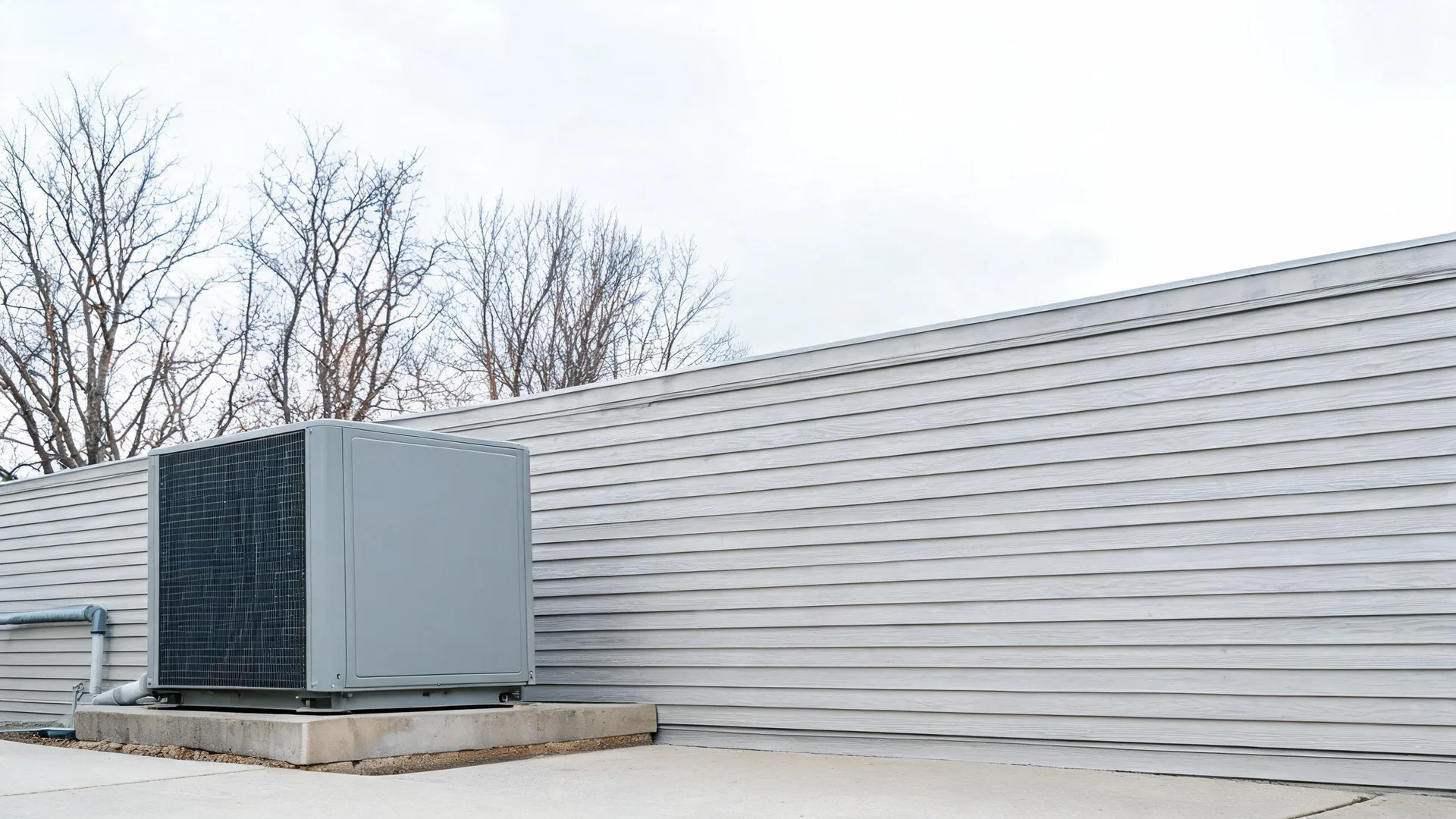
A dark gray heat pump unit mounted on a concrete pad next to a house with gray siding and a stone veneer wall.

What you can check without a technician

A heat pump runs in both directions, all year, so there's no real offseason to catch up on upkeep. Between visits, keep the area around the outdoor unit clear. Grass clippings, leaves and mulch piled against the cabinet block airflow across the coil, and a coil that can't breathe makes the whole system work harder. Leave a clear gap on all sides and don't let shrubs grow in close. Check the filter and change or rinse it when it looks dirty. A clogged filter restricts airflow the same way a blocked coil does, just on the inside. After any storm, look the outdoor unit over for bent fins, a cracked fan blade or a panel that's come loose. None of that needs tools to spot. If the unit is making a new noise, cycling on and off more than it used to, or running long without the house reaching temperature, that's worth a call rather than a wait. Everything else, the refrigerant charge, the electrical connections, the condition of the coil underneath the surface dirt, is for a technician to check on a scheduled visit.

A dirty coil makes the compressor work harder

The outdoor coil has to give up heat or absorb it depending on the mode, and dirt or matted debris on its surface slows that exchange down. The compressor ends up running longer to move the same amount of heat, which wears it faster than the running time alone would suggest. Keeping the coil clean is what a yearly visit is mostly about.
A skipped visit does not show up right away

A heat pump that misses its yearly check still runs. It just runs worse, pulling more power and shortening the life of the compressor and the fan motor a little more each season. The trouble is nothing looks wrong from outside until a part that was already strained finally gives out, usually on the day you need heat or cooling most.

The filter is the easiest part to ignore and the one causing the most strain when it's dirty. Air has to pass through it every time the system runs, and a filter clogged with dust forces the blower to work harder to move the same amount of air. That restriction shows up everywhere downstream. Less air across the indoor coil means the coil can freeze even when the system is in cooling mode. Less air moving also means the heat exchanger doesn't get rid of heat the way it should in winter. The outdoor coil has the opposite problem, it collects dirt, pollen and grass clippings right on the surface where air needs to pass through, and once it's coated the unit can't shed heat in summer or pull heat in winter as well as it's built to. The condensate drain matters just as much, even though nobody thinks about it until it fails. That line carries away the moisture pulled out of the air during cooling, and if it clogs with algae or dirt, the water backs up and finds somewhere else to go, usually the ceiling or wall below the indoor unit.

A tune-up is the one visit where someone actually measures things instead of just looking at them. The refrigerant charge gets checked against what the system is rated for, since a unit low on charge has to run longer to do the same job and puts extra wear on the compressor doing it. Electrical connections get tightened, because a loose connection at the contactor or capacitor is one of the more common reasons a heat pump fails to start on a cold morning. The technician checks the capacitor's output too, since a weak one lets the fan motor or compressor struggle to start even when everything else is fine. The thermostat gets checked against the actual temperature in the house, and the defrost cycle gets tested to make sure it's triggering when it should. None of that is visible from the back porch, which is why it waits for the scheduled visit instead of something you catch in between.