




An outdoor HVAC condensing unit on a concrete pad next to a beige single-story house with a dark shingle roof.

Heat Pump Installation in Oxford, MS

Tell us about the job

Takes about a minute. No obligation.

New system or replacementHeat PumpLafayette County, MS
Step 1 of 2

What ZIP code is the job in?

The size of the heat pump matters more than anything else on the quote. A unit sized to the house heats and cools evenly and runs long, steady cycles. One that's too big short cycles, which wears the compressor and leaves rooms clammy. Getting that size right takes a load calculation, not a guess based on the old equipment. Ductwork is the other big factor. If the existing ducts are undersized, leaky, or routed poorly, a contractor has to account for that, and sometimes modify them, before the new system can perform the way it's rated to. The electrical panel plays a part too, since a heat pump draws differently than a gas furnace and the panel needs the capacity to support it. Beyond the equipment itself, where the outdoor unit sits, how far the line set has to run, and what it takes to remove the old system all shape the job.

5 months
November through March, your system heats
5 months
May through September, it cools
34°F
the average winter night it heats against
90°F
the average summer afternoon it cools against
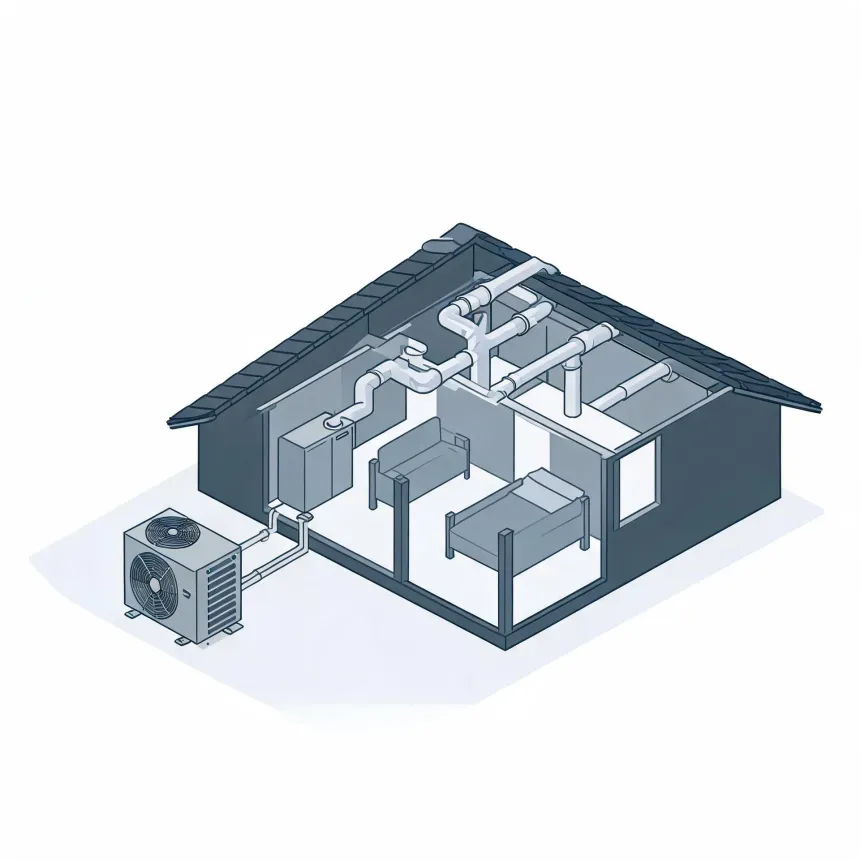
Isometric cutaway illustration of a house showing interior ductwork, an indoor air handler, and beds, with an outdoor condenser unit connected by lines outside the wall.
Your system heats November through March and cools May through September.

NOAA nClimDiv, 1991–2020 normals

Electricity heats 57.9% of homes in Lafayette County.

A heat pump fits right into that setup, no gas line to add or remove.

October gives you time to size it right before heat starts in November

Cooling runs May through September
Heat runs November through March
Power costs 13.39 cents a kWh statewide

Replace it before the season

Replace it before the season starts, so it happens on your schedule, not in a hurry.

Find a contractor
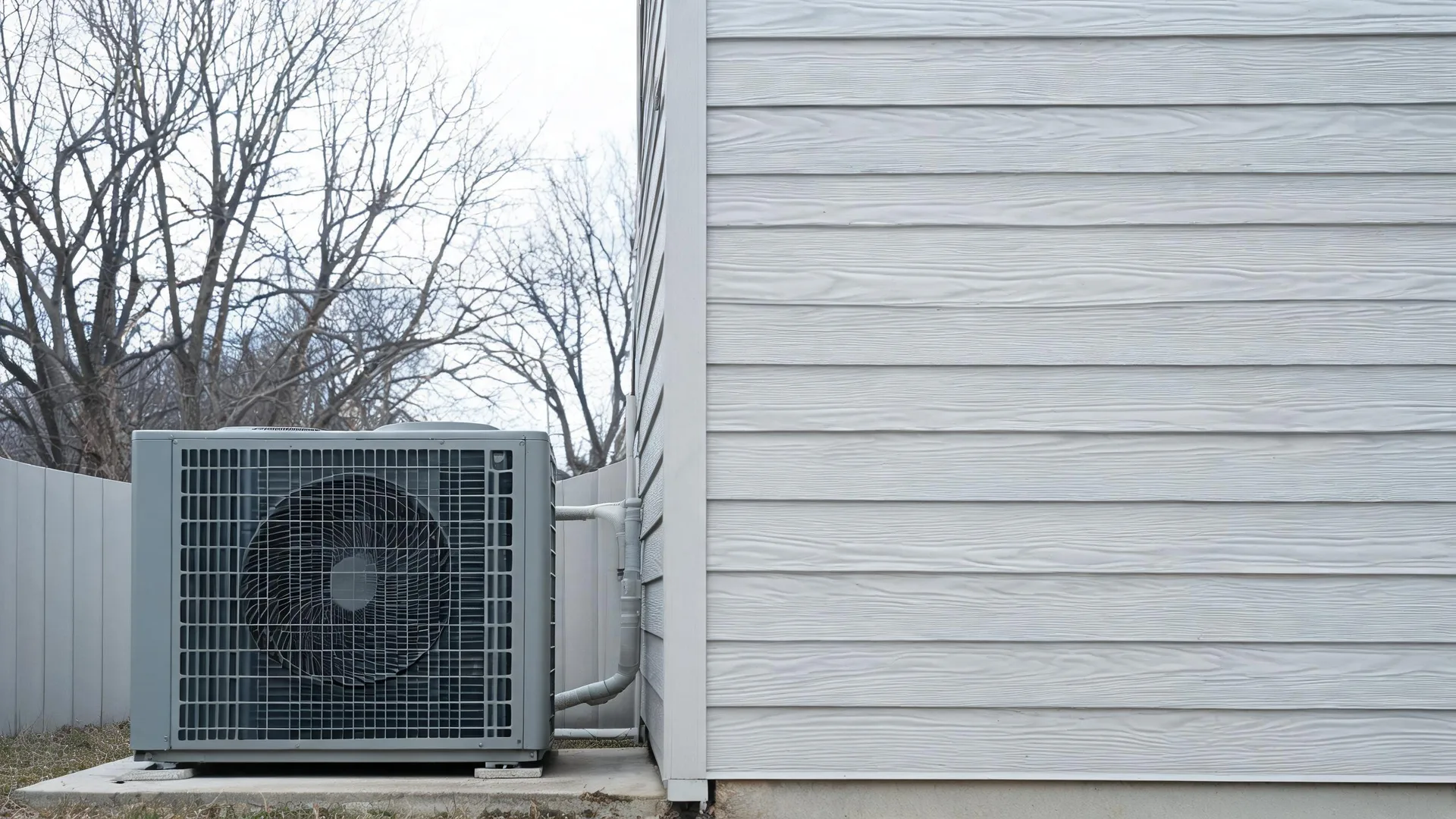
A gray air-source heat pump mounted on a concrete pad next to a house with gray vinyl siding, surrounded by gravel and flanked by green shrubs and white hydrangea flowers.

What separates one quote from another

A quote should tell you more than the tonnage. Ask what load calculation the contractor ran, since that number drives everything else about the job. Ask about the compressor type, because a variable-speed compressor adjusts its output to match what the house needs and runs long, low-speed cycles instead of switching on and off at full blast, and that matters more over the life of the system than almost anything else on the spec sheet. Ask what happens to the existing ductwork, since a contractor who hasn't inspected it closely is still guessing at part of the job. Ask about the backup heat source for the coldest stretches, how it's controlled, and what outdoor temperature triggers it. Ask what the warranty covers on the compressor versus the rest of the unit, since those terms often differ. A contractor who answers without hesitating already did the math on your house.

The load calculation looks at the house, not the old unit

A contractor measures square footage, window area, insulation, and orientation room by room, then adds it up into a number that says how much heat the house actually loses and gains. That number is what sizes the equipment. Going by the tonnage of whatever was there before just carries forward someone else's guess, or copies a unit that may have been wrong from the start.
Oversized and undersized both cause problems, in different ways

A heat pump that's too big satisfies the thermostat fast and shuts off, so it never runs long enough to pull moisture out of the air or settle into a steady airflow pattern through the house. One that's too small runs constantly and still can't keep up when the temperature drops, leaning hard on backup heat it shouldn't need that often. Right-sized is the one that runs long and steady and still keeps up.

Taking out the old system is its own piece of the job, not an afterthought. If the house is moving from a furnace to a heat pump, the furnace and its venting come out, and if it ran on gas, that line gets capped off by someone qualified to do it. An old air conditioner's outdoor unit and line set get disconnected and hauled away, and the refrigerant in that line set has to be recovered properly rather than vented, since that's both the law and good practice. Any ductwork that's being reused gets checked for leaks and damage once the old equipment is out of the way, since this is the one point in the job where that's easy to see. Whatever gets hauled off, the condensate drain and electrical disconnects from the old unit need to be dealt with too, not just left in place for the new install to work around.

The efficiency rating on the label comes from a lab test, run under set conditions that your house will rarely match exactly. It tells you how much heat the unit moves for the energy it uses, so a higher rating means less energy spent for the same comfort, but only if the system is sized right and the ductwork can actually move the air it's designed to move. A heat pump that's oversized, or hooked to leaky or undersized ducts, will not perform like its label promises no matter how good that number looks. Heating and cooling are rated separately, too, so a unit can be strong in one and ordinary in the other, and it's worth asking which figure is being quoted. Units with the same rating can still feel different from house to house, because the rating doesn't know anything about your ductwork, your insulation, or how carefully the contractor set the system up.