





A red brick house with a white-columned porch and a row of pale clapboard cottages sit behind a trimmed hedge and lawn, under oak branches draped with Spanish moss.

Heat Pump Installation in Natchez, MS

Tell us about the job

Takes about a minute. No obligation.

New system or replacementHeat PumpAdams County, MS
Step 1 of 2

What ZIP code is the job in?

Half the homes in Adams County were built in 1972 or earlier. A heat pump going into a house that old is rarely a straight swap. The ductwork was sized for whatever ran before it, and old return air or tight duct runs can hold a new system back from doing its job. Whoever installs it should size the equipment and check the ducts for this house, not just the one that was there before.

5 months
November through March, your system heats
6 months
May through October, it cools
40°F
the average winter night it heats against
91°F
the average summer afternoon it cools against
Isometric line illustration of a cutaway single-story house showing interior rooms, ceiling ductwork and an indoor air handler, connected by a line to an outdoor condenser unit on a pad beside the building.
Your system heats November through March and cools May through October.

NOAA nClimDiv, 1991–2020 normals

A heat pump in Natchez runs most of the year, five months of heat and six of cooling.

Put a new one in before October and it settles into the heating months instead of starting under load.

Natchez sees storms most counties don't, and the outdoor unit sits outside in them

84 severe weather events from 2015 to 2024
30% of homes statewide lost power a day or more in 2024
62 damaging wind events from 2015 to 2024

Electricity heats 53.2% of homes in Adams County, more than any other fuel, with utility gas a distant second at 40%. A heat pump fits a home already wired for electric heat without adding a gas line or venting to work around. Homes already on gas have a choice to make, since a heat pump can still cut into that gas use through most of the year. Either way, the installer sizing the system needs to know which fuel is running the house now, because that changes what the new equipment has to tie into.

Cheap power here means fit and reliability matter more than chasing efficiency

Electricity in Mississippi runs 13.39 cents per kilowatt-hour, cheaper than most of the country. That doesn't change how much this heat pump runs, but it does change the payoff math on paying extra for the highest efficiency model. A unit sized right and installed to hold up through Natchez storms is worth more here than a fraction more on the efficiency rating.

Find a contractor
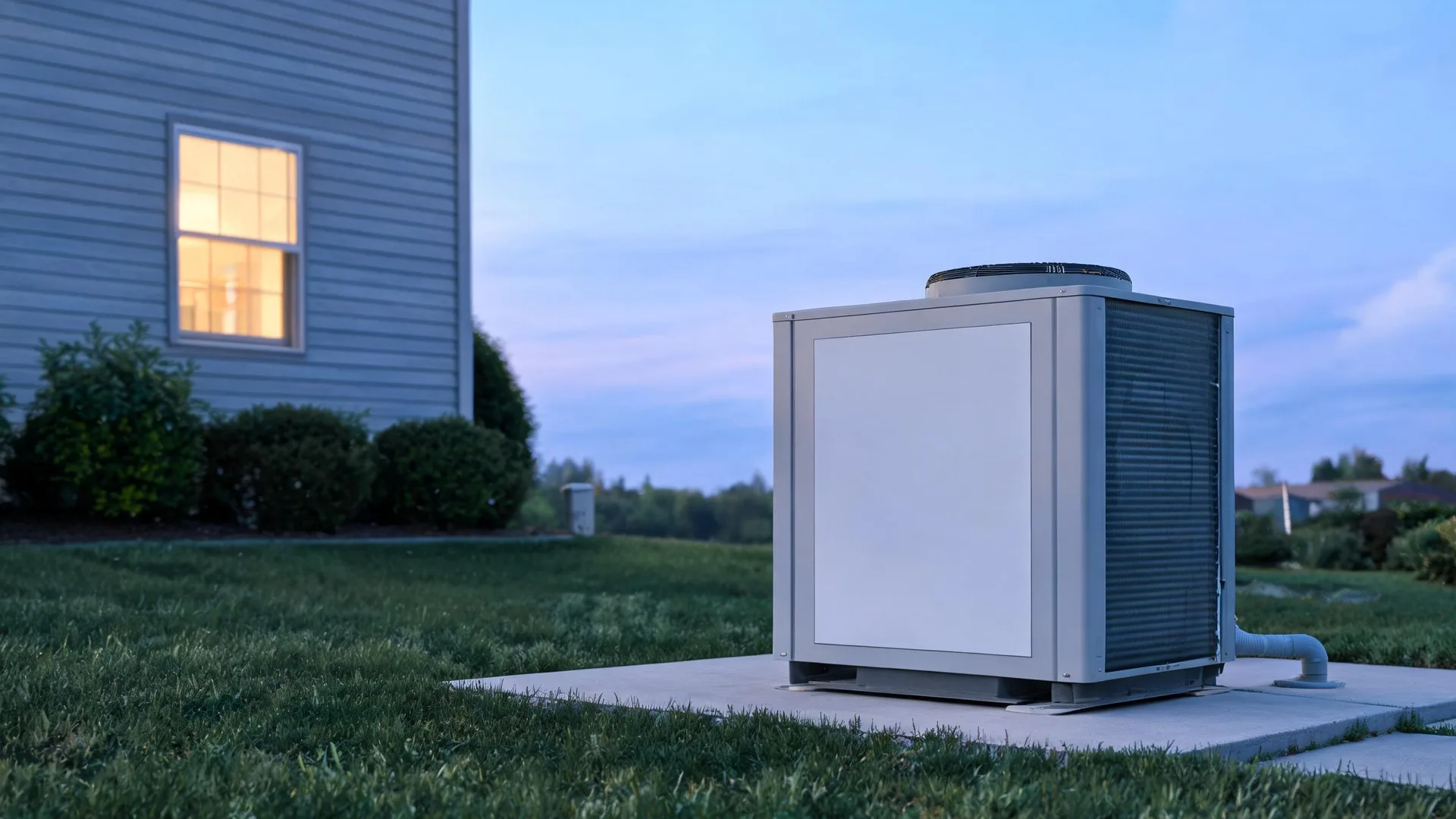
A gray air-source heat pump mounted on a concrete pad next to a house with gray vinyl siding, surrounded by gravel and flanked by green shrubs and white hydrangea flowers.

Size the system to the house, not the average

Install day is when that sizing question gets answered. A load calculation for this job should start with the ductwork and return air already in this house, not a generic number pulled for a newer build down the street. Running the numbers against what's actually behind the walls here is what keeps the new system from being undersized or oversized for the house it's going into.

Ask for the manual J, not a guess

Any contractor can size a heat pump off the square footage in a few seconds. That number leaves out the insulation, the windows, and the duct losses that actually decide how much heat the house gains or loses. A manual J load calculation accounts for those things room by room. Ask to see it before you agree to a number.
Ask what happens on the coldest night

Every heat pump loses capacity as the air outside gets colder, and at some point it needs backup heat to keep up. Ask what that backup is, how it switches on, and what temperature triggers it. A system sized without answering that question can leave the house short of heat right when it needs it most.

What a heat pump installation costs comes down to what has to change to make the new equipment work with the house, not just the equipment itself. A straight swap, same spot, same ductwork, same electrical, costs less than a job where the ducts need rework or the electrical panel needs more capacity to run the new system. Line sets, the refrigerant lines running between the outdoor unit and the indoor coil, sometimes need replacing rather than reusing, and that's a judgment call made on site, not from a price sheet. The backup heat source factors in too, since a system that needs one installed costs more than a house that already has the wiring or ductwork for it. None of this shows up in a quote based on square footage alone. It shows up when someone walks the house and looks at what's actually there to work with.

Install day starts with the old equipment coming out, not the new going in. The line set gets pressure tested, and replaced if it's not holding. Any duct or electrical changes happen before the new unit ever runs, not after. Once the indoor coil and outdoor unit are set, the refrigerant lines get connected, pulled down to a vacuum, then charged to the pressure that system calls for. After that comes startup. The installer checks airflow at the vents, confirms the thermostat is actually talking to the system, and makes sure the backup heat switches on when it's supposed to. A heat pump charged wrong or started without checking airflow can run for years without ever reaching the capacity it was sized for, so that last step matters as much as anything done earlier in the day.