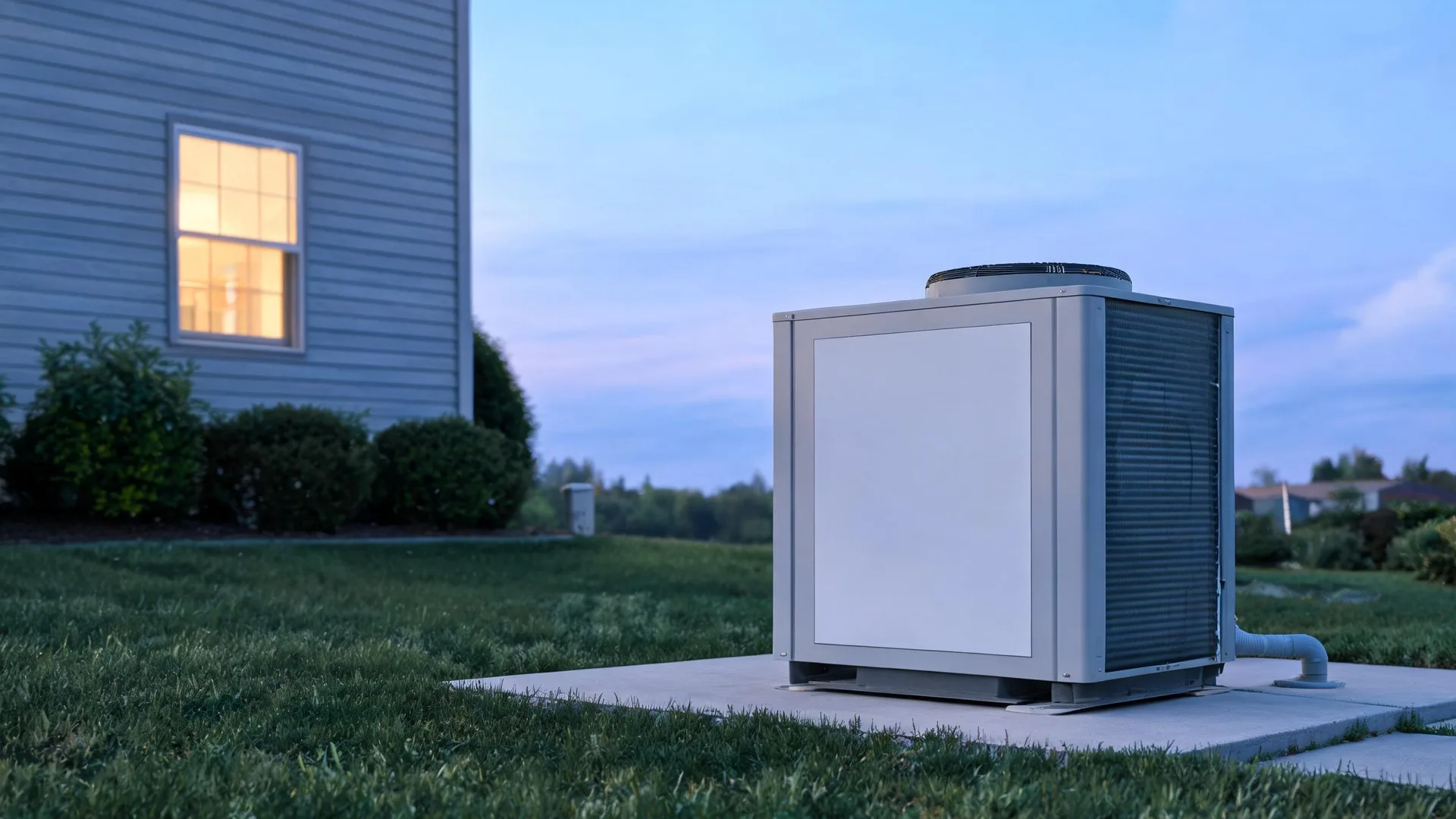
Most of McComb already heats with electricity
Electricity heats 70.6% of occupied homes in Pike County, well ahead of gas. A heat pump fits right into that setup, since it runs on the same fuel most homes here already use.

Takes about a minute. No obligation.
Electricity heats 70.6% of occupied homes in Pike County, well ahead of gas. A heat pump fits right into that setup, since it runs on the same fuel most homes here already use.
No gas line to run, no new fuel to plan around. The electrical work a contractor needs to check is the panel and the circuit, not a whole new utility hookup.

NOAA nClimDiv, 1991–2020 normals
Half the homes in Pike County were built in 1984 or earlier, half in 1984 or later.
A standard heat pump size and efficiency rating covers both, no special equipment needed.




Ask what the unit is rated to do in cold weather, not just how it's sized for your square footage. Every heat pump loses some capacity as the outdoor temperature drops, and the spec sheet will show that curve. Ask where the balance point sits, the temperature below which the system leans on backup heat strips instead of the compressor alone. A lower balance point means more days running on the heat pump itself, which matters more than the sticker efficiency number. Ask about the sound rating too, since the outdoor unit runs year round now instead of just in summer, and where the installer plans to place it matters for how much you notice it. Finally ask what happens to the existing ductwork, because a heat pump moves a different volume of air than a furnace did, and undersized or leaky ducts will cost you comfort no matter how good the equipment is.
Cooling runs May through October here, heat runs November through March. That only leaves April and October clear. Get a heat pump in during one of those months and it's tested and running right before the next season puts a load on it.
Find a contractor
Whatever is coming out, whether it's a straight electric furnace or an older heat pump, has been cycling on every single time the temperature called for it for as long as it's been in. Compressors wear, contactors pit, capacitors weaken. None of that happens all at once. It shows up as longer run times, as the outdoor unit short cycling, as rooms that used to feel even and now don't. If the old equipment is a heat pump, the reversing valve is usually the first thing to show its age, sticking in one mode or the other. If it's a straight air conditioner paired with electric strips or a furnace, that whole setup comes out, not just the condenser. The line set gets swapped too in most cases, since reusing old refrigerant lines with new equipment can mean contamination or the wrong size tubing for the new system's charge. None of this is a judgment on how the old system was kept up. It's just what happens to any machine that runs as long as a heating and cooling system does.
A heat pump's efficiency rating is an average across a whole range of outdoor temperatures, not one test condition. On a mild day it beats the number on the label. On a very cold or very hot day it falls short of it. Homes running the same rated equipment can still see different results depending on how much mild weather they get against extreme weather.
The savings on a higher rated unit show up over time, not right away, and only if the equipment actually runs long and often. A unit that barely cycles because the load on the house is light has little to save against. Sizing matters here as much as the rating does. An oversized unit short cycles and shuts off before it ever settles into the steady running where the efficiency number is earned.
Sizing a heat pump starts with a load calculation, not a tape measure around the house. A contractor works out how much heat the place loses on a cold day and how much it gains on a hot one, factoring in windows, insulation, and ceiling height, then matches equipment to that number rather than to square footage alone. Go too big and the unit blasts the space to temperature and shuts off before it finishes a full cycle, which leaves humidity uncut in summer and cold spots in winter. Go too small and it runs flat out on the worst days and still can't keep up, leaning hard on backup heat strips instead of the compressor. Either mistake also shortens the life of the equipment, since short cycling and constant max-output running both wear parts faster than steady, moderate operation. The only way to get it right is the calculation, not a guess based on what the old system was rated for.
Installation day starts before anyone touches the old equipment. The crew lays down drop cloths and sets the pad or bracket for the new outdoor unit first, since that part can happen while the old system still runs. Once the swap starts, the house has no heating or cooling for a while. The new line set has to be brazed, pressure tested, then pulled down to a vacuum to clear out air and moisture. That vacuum step takes time on its own, and it shouldn't be rushed. Any moisture left behind turns into acid once refrigerant and oil start circulating. Indoors, the air handler or coil gets swapped and the wiring gets tied in, including a dedicated circuit sized for the new equipment. The last stretch is startup. The refrigerant charge gets checked against the manufacturer's chart, airflow across the coil gets confirmed, and the system runs in both heating and cooling before anyone calls the job finished.