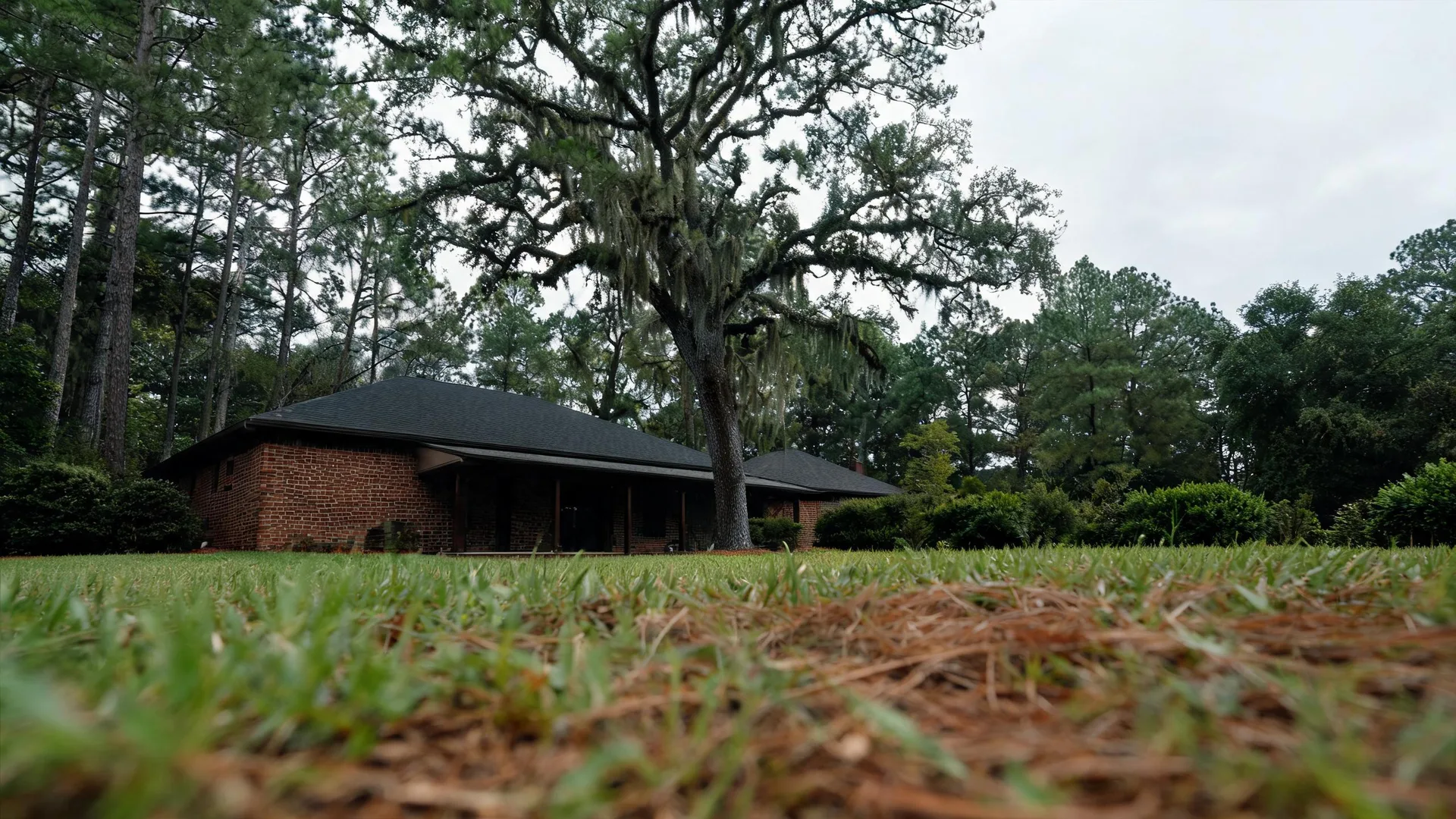
Low ground-level view across a lawn toward a single-story brick house with a dark shingled roof, framed by a large moss-draped oak and tall pine trees under an overcast sky.

Heat Pump Installation in Brookhaven, MS

Tell us about the job

Takes about a minute. No obligation.

New system or replacementHeat PumpLincoln County, MS
Step 1 of 2

What ZIP code is the job in?

Electricity here is cheap

Mississippi homes paid 13.39 cents per kilowatthour in 2024, below what most of the country pays. A heat pump still costs less to run than straight electric heat, but the gap between an efficient model and a basic one closes faster here.

Spend on the right size, not the top tier

With power this cheap, chasing the highest efficiency rating takes longer to pay back. Put the money into a unit sized correctly for the house and installed to hold up through a storm outage instead.

5 months
November through March, your system heats
6 months
May through October, it cools
39°F
the average winter night it heats against
91°F
the average summer afternoon it cools against
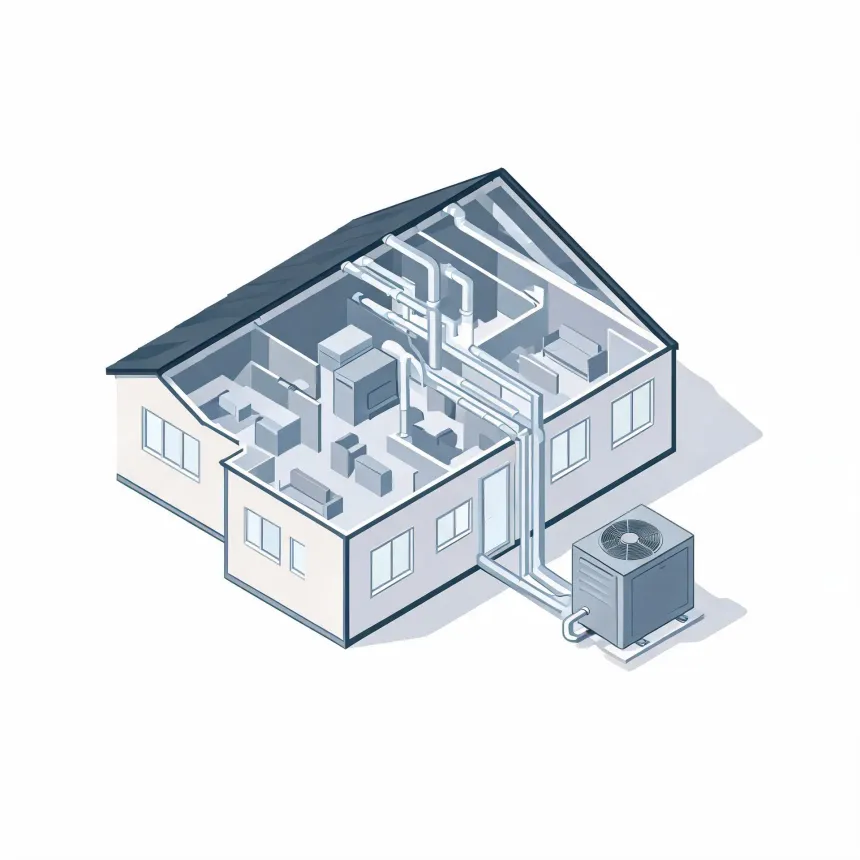
Isometric illustration of a cutaway single-story house showing interior ductwork and vents connected to an outdoor condenser unit beside the building, on a white background.
Your system heats November through March and cools May through October.

NOAA nClimDiv, 1991–2020 normals

Electricity already heats almost 7 in 10 homes in Lincoln County.

A heat pump replacing electric heat is working with wiring the house already has, not against it.

October is the month to put a heat pump in before heat season starts

Cooling runs May through October
Heat runs November through March
Power costs 13.39 cents a kWh statewide

Brookhaven falls in climate zone 3A, warm with a humid side and winter that barely shows up. Any split-system heat pump installed here now has to meet 14.3 SEER2 for cooling and 7.5 HSPF2 for heating. Central air alone carries the same 14.3 SEER2 floor, as long as the unit stays under 45,000 Btu/h. Those numbers are the minimum allowed, not a cap, so a contractor can still offer something higher. What they can't do is install a unit built to the old national minimum and call it done.

A standard heat pump, sized right, is all this job needs

Half the homes in Lincoln County were built in 1984 or earlier, and a quarter of all homes here are mobile homes. Neither points to a bigger unit or a higher efficiency tier. A heat pump sized to the house and installed to code will do the job. Get a few contractors to size it properly and compare what they quote.

Find a contractor
A man in a cap, dark jacket and tan work pants climbs porch steps toward a blue front door, carrying a canvas tool bag in his right hand, with a potted shrub beside the entry.
A white mini-split heat pump outdoor unit mounted on a concrete pad beside a gray-sided house, surrounded by gravel and green shrubs.

The old unit doesn't move to a second home, it gets taken apart

The old system doesn't get a second life somewhere else. Once a contractor disconnects it, the refrigerant in the outdoor unit has to be recovered into a tank before anything gets cut apart or hauled off. That's not optional and it's not a courtesy, it's how the law requires it to be handled. From there the unit is scrapped. The compressor, the coils, the sheet metal cabinet all get broken down for the materials in them. None of it goes back together as a working system for another house. If the old unit ran on a different voltage or used a different refrigerant than what's standard now, that's one more reason it ends at the scrapyard instead of a resale lot.

A unit sized by square footage alone is a guess

Square footage gets a contractor in the right range, but the real number comes from a load calculation that accounts for insulation, window area, ceiling height and how many walls face the sun. Houses the same size on paper can need different sized units once those details are counted. Skip the calculation and the install is built on a guess.

Oversized trips off before it finishes the job

A heat pump that's too big satisfies the thermostat fast, shuts off, then kicks back on again soon after. That short run time means it never pulls the humidity out of the air, so the house can feel cool and damp at once. The constant starting and stopping also wears the compressor harder than a longer, steady run would.

The SEER2 and HSPF2 numbers on that label are efficiency ratings, not a measure of how much heat or cooling the unit can move. A higher rating means the system gets more heating or cooling out of the same amount of electricity, similar to a car rated for better mileage going further on a gallon of gas. It says nothing about whether the unit is the right size for the house. A unit with a strong rating can still perform poorly if the ductwork leaks, the refrigerant charge is off, or the airflow across the coil isn't set up right. A lower-rated unit installed correctly can outperform a higher-rated one installed wrong. The rating describes the equipment under test conditions. What it actually delivers depends on the installation.

The old unit comes out first. A contractor has to recover the refrigerant from it before anything gets disconnected, and that step alone takes time to do right. Setting the new outdoor unit doesn't take nearly as long. The slower work is the refrigerant lines, cut to length, joined, then tested for leaks before the system gets sealed and charged. Inside, the air handler or coil ties into the ductwork that's already there, and a contractor should be checking that those ducts can actually move the air the new unit pushes. The reversing valve and defrost control get checked too, since those are what let a heat pump pull heat out of outdoor air, which straight air conditioning never has to do. Once it's all connected, the system gets run so the contractor can check the charge, the airflow, and that the thermostat is actually controlling it.