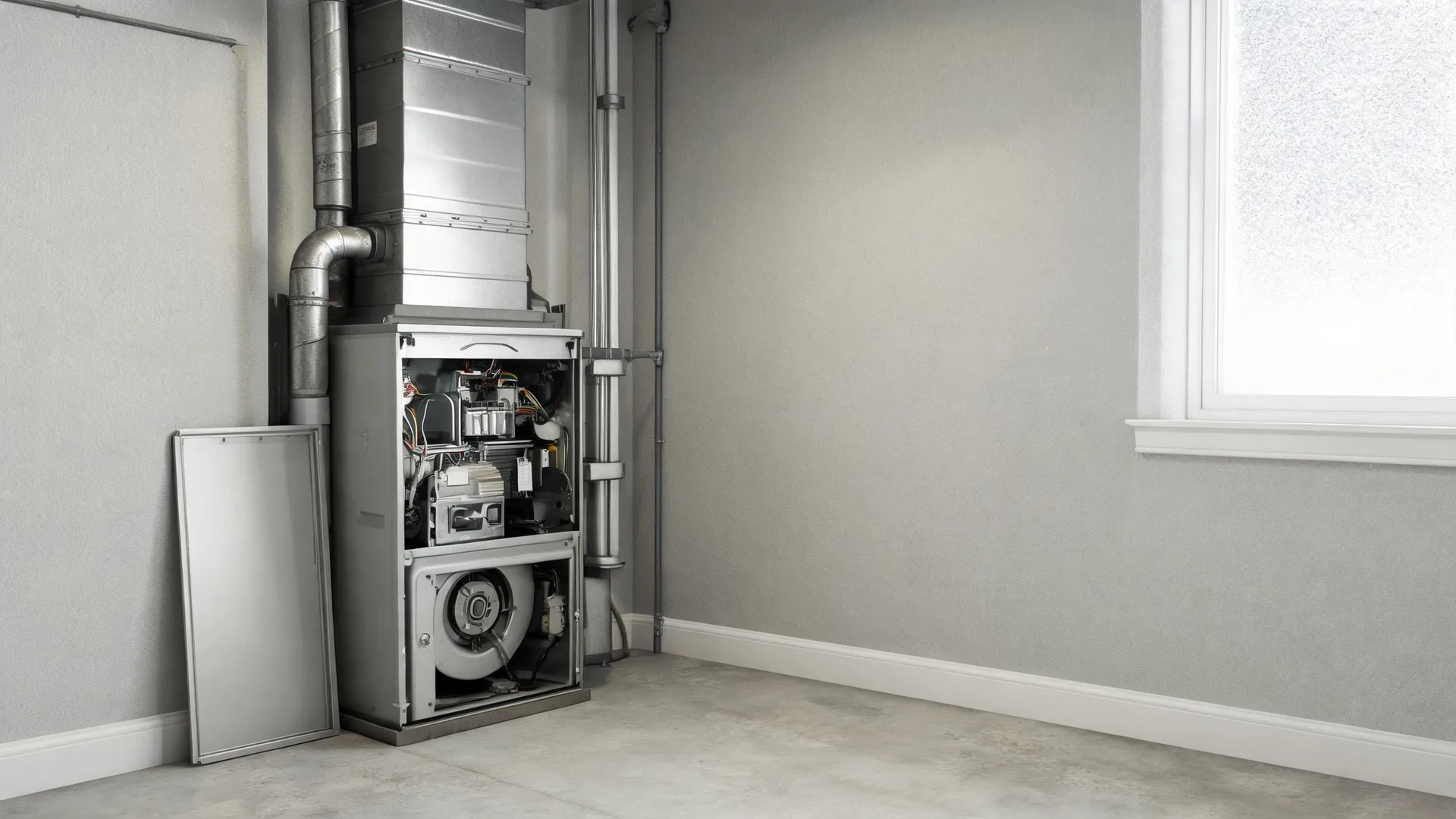
A gray forced-air furnace with ductwork stands in an unfinished concrete basement surrounded by storage items and clutter.

Furnace Repair in Starkville, MS

Tell us about the job

Takes about a minute. No obligation.

RepairFurnace or heatingOktibbeha County, MS
Step 1 of 2

What ZIP code is the job in?

Five months of work a year

Furnaces in Oktibbeha County run from November through March, with lows averaging 35°F in the coldest stretch. That's a short season compared to a lot of the country, and it means less wear on the heat exchanger and blower over the life of the unit.

So a repair usually makes sense

A furnace that hasn't been run hard for years is usually still worth fixing rather than replacing. When something goes wrong here, it's more often a part that failed from age or sitting unused than one worn out from overwork.

5 months
November through March, your furnace is on duty
35°F
the average winter night it heats against
5 winter storms
in ten years, the nights a failure hurts most
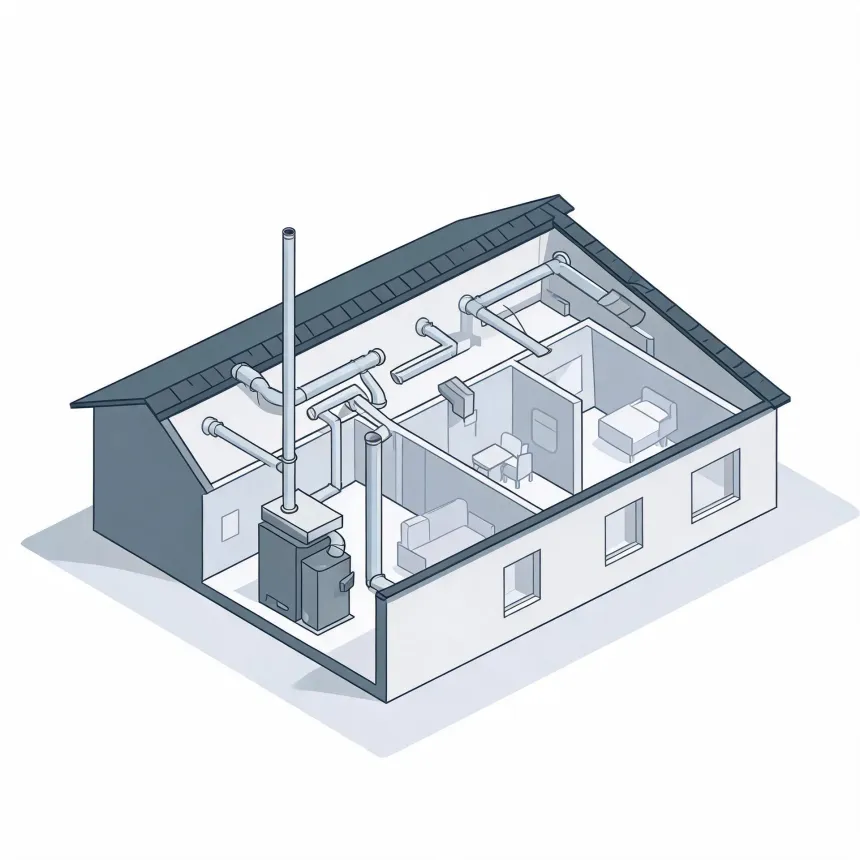
Isometric line illustration of a single-story house cutaway showing interior rooms with furniture, ductwork or piping running along the ceiling, and a boxy furnace unit with a tall vertical flue pipe.
Your furnace works hardest from November through March.

NOAA nClimDiv, 1991–2020 normals

Half the houses in Oktibbeha County were built in 1993 or later.

A furnace that came with a newer house like that usually has years left in it, which is why repair is the right first call.

A mild winter here, nothing that wears a furnace out early

Heat runs November through March
Winter nights average 35°F
Climate zone 3A

Oktibbeha County saw 91 damaging wind events between 2015 and 2024, along with tornadoes and hail. A furnace itself sits indoors, away from any of that, but the outdoor parts of a home's heating and cooling setup don't. If a storm has come through recently, it's worth having the system looked over even if the furnace seems to be running fine. Power loss is the other side of it. Close to a third of Mississippi households went at least a day without power last year, and a furnace with electronic ignition won't fire on its own once the power drops. A sudden cold house during a storm isn't always a broken furnace.

Get it fixed before November

Furnaces here start working in November, after sitting idle since March. Whatever was already weak tends to show up in those first cold weeks, not in the easy months. Getting a repair done in October means it's handled before the season puts any load on it.

Find a contractor
A man in a cap, gray long-sleeve shirt and tan work pants carries a canvas tool bag up gray porch steps toward a dark blue front door, with a blue ceramic planter and shrub beside it.
A gray high-efficiency gas furnace installed in an unfinished basement, surrounded by gas lines, a condensate drain, and sheet-metal ductwork.

Check the age before you agree to a replacement

If your furnace came with the house, check what year that was. Half the houses in this county were built in 1993 or later, and a furnace that young has no business being pulled out over a failed igniter or a bad flame sensor. Ask whoever comes out to look at it straight. Is this part worn out, or is the whole unit done. Those are different questions, and the age of the house is a clue to which one you're going to get.

A cracked heat exchanger gets worse with every cycle

Once a heat exchanger cracks, running the furnace flexes that crack wider each time it heats up and cools down. It can also start pushing exhaust into the air the blower moves through the house. A furnace doing this needs to be shut down, not kept running until someone gets to it.

A small ignition problem can take out the control board

A furnace that's struggling to light, failing to detect a flame, or short cycling is often still trying over and over to fix itself. That repeated strain is hard on the control board and the blower motor. A problem that starts as a bad flame sensor or igniter can end up costing you a board too, if it runs that way long enough.

A furnace that needs attention usually says so in a way you can hear or feel before you see it. It might take several tries to light, or light and then shut off a minute later. It might run but blow air that isn't actually warm. A burner flame that's flickering yellow instead of steady blue is worth paying attention to, since that's a sign of a combustion problem rather than just an old part. Banging or scraping when it starts up usually points to the blower or the motor mounts, not something that fixes itself. A furnace that smells hot or metallic the first few times it runs each season is normal for a day. If that smell doesn't go away, or it's something closer to a rotten egg smell, that's not a burner wearing in. That's a reason to shut it off and call someone.

A tech weighing repair against replacement is really asking how many more winters this unit has left, and age is only part of that. A furnace that's been maintained, with clean burners and a blower that's been oiled or checked, holds up differently than one that's been ignored. If the parts failing are the common ones, the igniter, the flame sensor, the thermostat, replacing them is usually straightforward and the furnace goes back to running the way it should. A cracked heat exchanger is different. That's not a part you replace on its own, and once it's gone the furnace itself is done regardless of what year it is. The honest question to ask whoever looks at it is whether this is a single part wearing out or the cabinet and exchanger themselves failing underneath everything else.