Three white clapboard houses with wraparound porches glow with warm interior and landscape lighting beneath Spanish moss-draped oak trees at dusk.

Furnace Repair in Philadelphia, MS

Tell us about the job

Takes about a minute. No obligation.

RepairFurnace or heatingNeshoba County, MS
Step 1 of 2

What ZIP code is the job in?

Weather here is rough on equipment

Neshoba County logged 135 severe weather events between 2015 and 2024, with damaging wind behind most of them. Hail and tornadoes hit here too. An outdoor unit that sits through storms like that takes a beating over the years, even when nothing looks wrong at a glance.


Power doesn't always come right back

Close to a third of Mississippi households went at least a day without power in 2024. A furnace needs electricity for its blower and ignition, so it stays off until power is back, no matter what shape the rest of the system is in.

5 months
November through March, your furnace is on duty
36°F
the average winter night it heats against
4 winter storms
in ten years, the nights a failure hurts most
Isometric cutaway illustration of a house with a shingled gable roof, showing a gray furnace unit connected to overhead ductwork and a chimney flue, with simplified furniture in the rooms below.
Your furnace works hardest from November through March.

NOAA nClimDiv, 1991–2020 normals

Furnaces in Neshoba County only run about five months a year, November through March.

A furnace with a short work year like that usually has problems from age or neglect, not from being worked hard.

Half these furnaces are older, and that's the usual reason they need a repair

Half the homes here were built by 1985
Heat runs November through March
Winter nights average 36°F

October is worth a look before the cold comes. Heat season here runs November through March, and the first cold snap is when a furnace shows what was already wrong with it. A weak igniter or a clogged flame sensor can sit fine all summer and then fail the moment the thermostat calls for heat. Getting it checked in October means a repair happens on your schedule, not on the first cold night of the year.

If the outdoor unit took a hit this year, get it looked at now

Storms here are hard on outdoor equipment, and a furnace with hidden storm damage usually doesn't show it until that first cold night. Get it checked before then.

Find a contractor
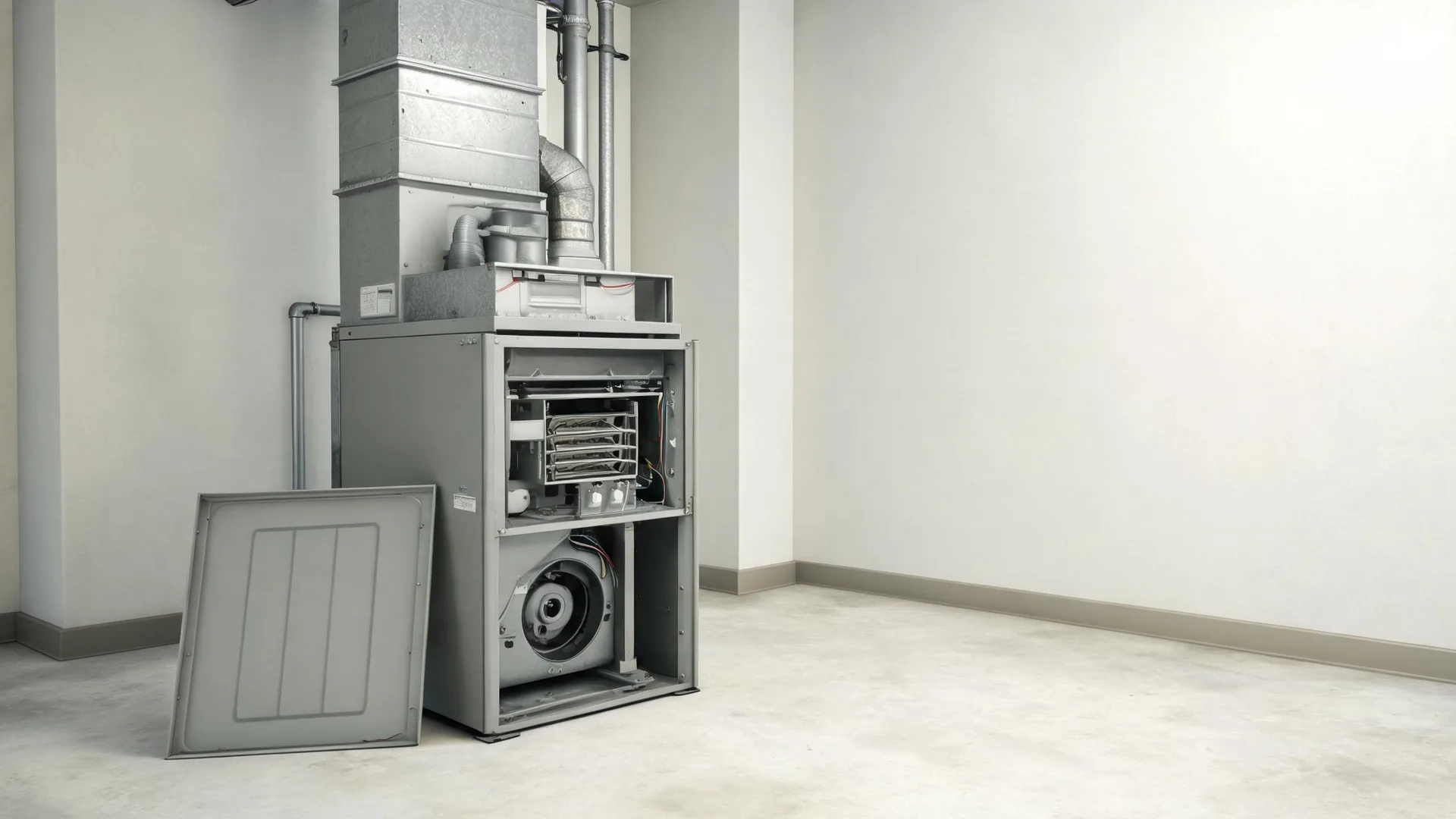
A gas furnace with attached ductwork, gas piping, and condensate lines installed in a concrete-block basement.

Mild nights, not a hard winter

36 degrees is the average overnight low here through December, January and February. That's not an extreme cold a furnace has to fight. Most nights it's cycling on and off to hold the house steady, not running flat out. So when one of these breaks down, call a tech and get it fixed. The problem built up over years of age or a missed filter change, not from the system being pushed hard, and that kind of problem is usually worth repairing rather than replacing.

What you'll notice first

A furnace losing its grip usually tells you before it quits outright. Rooms that used to heat evenly now have a cold one. The blower running longer than it used to, or kicking on and off more than it should. A burner flame that's yellow or flickering instead of steady blue. Short cycling, where the furnace fires up, shuts off, then fires again within a few minutes, is one of the clearer signs something's wrong with the flame sensor or the airflow across the heat exchanger.

What's worth a call

A furnace that won't light at all, or one that lights and then trips off, needs a tech regardless of how old it is. So does a burning smell that doesn't clear after the first few minutes of a cold start, rattling or grinding from the blower motor, or a yellow flame with soot around the burner, since that points at incomplete combustion. Any of these is worth a same-week call rather than waiting to see if it sorts itself out.

Before you call anyone, check the thermostat first. Make sure it's set to heat, not just fan, and that the setting is actually above room temperature. Next, go look at the filter. A filter clogged with dust chokes off airflow, and some furnaces will shut themselves down rather than run with a blocked filter, which can look exactly like a bigger problem when it isn't one. Check the breaker box too. A furnace that won't start at all sometimes just tripped a switch. If you have a window near the unit, look for the flame through it. Steady blue means the burner itself is fine. Yellow or flickering is something to tell the tech about, not something to try fixing yourself.

The decision to fix or replace usually comes down to what's actually failed, not how old the furnace looks. An igniter, a flame sensor, a blower motor, these are normal wear parts, and replacing one on an older furnace is still money well spent. A cracked heat exchanger is different. That's the part that separates the flame from the air moving through your house, and once it's cracked, the furnace isn't safe to run no matter how well everything else works. If a tech tells you the exchanger is cracked, that's a replacement conversation, not a repair one. Short of that, most furnace problems are fixable, and fixing them doesn't shorten the life of what's left.