





Two illuminated white colonial-style houses with wrap-around porches, flanked by oak trees draped in Spanish moss, photographed at night.

Furnace Repair in Pascagoula, MS

Tell us about the job

Takes about a minute. No obligation.

RepairFurnace or heatingJackson County, MS
Step 1 of 2

What ZIP code is the job in?

Jackson County isn't old housing stock. Half the homes here were built in 1984 or later, which puts a lot of furnaces well inside their working life. If yours came with the house, it's worth finding out when that was before you assume the worst. A furnace acting up partway through its life usually just needs a part, not a replacement. Mobile homes are a small slice of the county, so most furnace setups here are the standard kind a repair tech sees every day.

5 months
November through March, your furnace is on duty
42°F
the average winter night it heats against
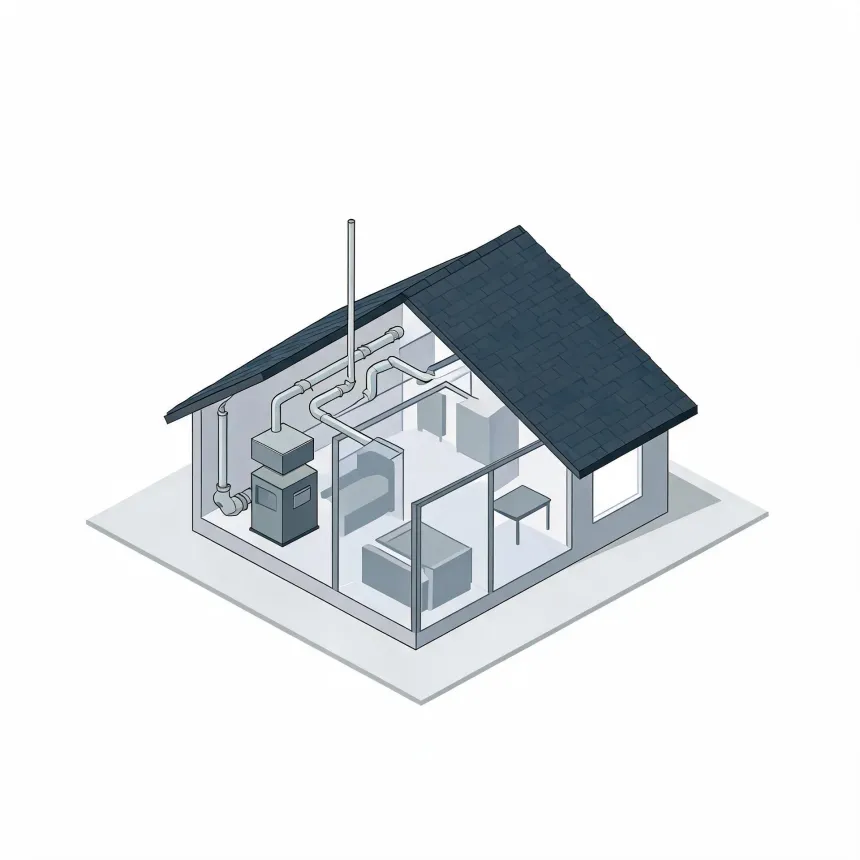
Isometric cutaway illustration of a small house with a dark shingled roof, showing an interior furnace unit, ductwork, and a flue pipe extending through the roof.
Your furnace works hardest from December through February.

NOAA nClimDiv, 1991–2020 normals

Your furnace only has to work five months a year here, November through March.

A machine with that little demand on it usually still has some life left, worth fixing instead of replacing.

Storms come through often here. If the outdoor unit took a hit, get it looked at before trusting it.

82 severe weather events from 2015 to 2024
30% of homes statewide lost power a day or more in 2024
29 damaging wind events from 2015 to 2024
October is the month to get yours checkedFurnaces here start up in November after sitting idle since spring.

So when something goes wrong partway through those five months, it's worth calling someone out rather than writing the furnace off. A cracked heat exchanger or a dead control board is a real repair, but it's one repair, not a reason to replace the whole system. Nights here average 42°F in December and January, nothing like what a furnace up north has to push against. A tech can usually tell you in one visit whether you're looking at a part or something bigger, and on a machine with this little wear on it, the smart money is on the part.

Call someone before you write it off

Get a tech out to look at it before you start pricing a new furnace. A system that came with a newer house still has years in it, and most furnace trouble partway through a working life is one part, not the whole unit.

Find a contractor
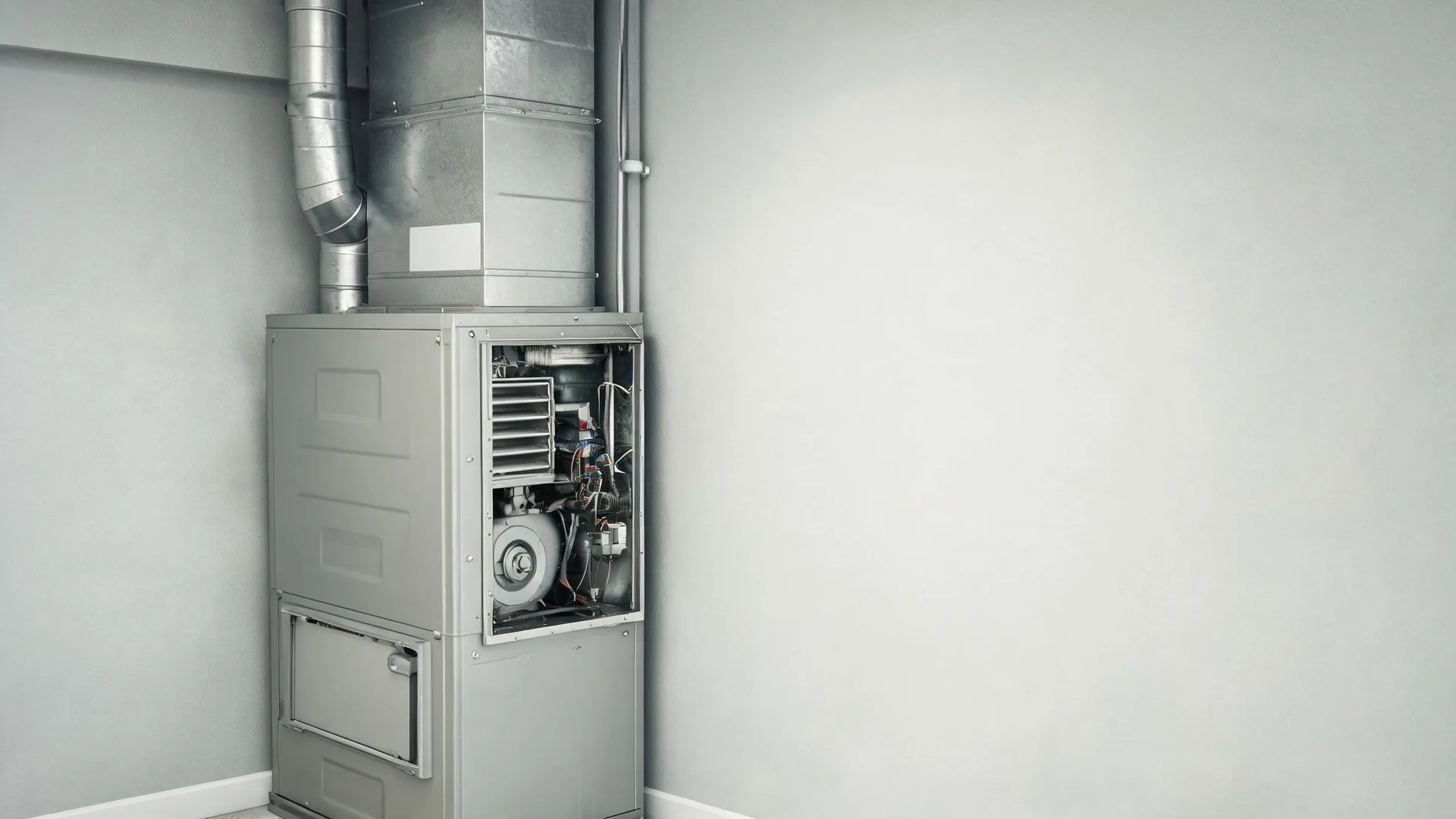
A gas furnace with attached ductwork, gas piping, and condensate lines installed in a concrete-block basement.

What to check before you pick up the phone

Before you call, check the thermostat is set to heat and the temperature is actually above room temperature. Go to the furnace and look at the switch on the side of the unit, the one that looks like a light switch. It should be up. Check the breaker too. Next, look at the filter. A filter clogged with dust can choke off airflow until the furnace overheats and shuts itself down as a safety measure. If you have a glass viewing port, look for a steady blue flame or a small blinking light on the control board. The blink pattern usually means something specific, and you can look up what that count means before anyone comes out. If the furnace has a standing pilot, check whether it's lit at all. None of this fixes a cracked heat exchanger or a failed control board, but it rules out the simple stuff first, and it gives the tech a head start on what to bring.

Short cycling wears out the parts faster

A furnace that fires up, shuts off, then starts again right away isn't just annoying. Every start puts a load on the igniter and the inducer motor, so a furnace doing this is burning through parts that are only built for so many cycles before one of them fails.
A smell that lingers is different from one that fades

A dusty smell the first time the furnace runs for the season is normal, just dust burning off the heat exchanger. If the smell is sharp, or like formaldehyde, or it doesn't fade once the furnace has been running a while, that's worth getting looked at.

A furnace fails one part at a time, and that's the whole case for fixing it rather than replacing it. The cabinet, the ductwork, the heat exchanger if it's sound, none of that wears out on the same schedule as an igniter or a motor bearing, so one of those failing doesn't say anything about the rest of the unit. Repair stops making sense when the same furnace keeps coming back with a different problem each time it's called out, since that pattern usually means something is working the whole system harder than it should, not that parts are failing at random. It also stops making sense if the heat exchanger itself is cracked, because that one isn't a simple swap the way an igniter or a sensor is. Outside of those cases, a furnace that's run fine up to now and just dropped one part is almost always worth fixing rather than replacing.

A diagnostic visit starts before the furnace is even opened up. A tech will ask what it's doing, when it started, and whether anything changed right before, a breaker tripped, a thermostat swapped out, a filter that hasn't been looked at in a while. Then they'll run it through a cycle and watch, not just listen. That means pulling the panel and checking the flame itself, its color and shape, rather than taking your word for it. They'll test the flame sensor and igniter with a meter instead of guessing from how old they look, because a part can look fine and still be failing. If the board is flashing a code, they'll already know what it means before they check it against the panel. Most of the time the cause shows itself within that first look. What takes longer is confirming it's the only thing wrong, since a furnace that's been struggling for a while can wear on more than one part at once.