





A red brick wall with a row of low shrubs and mulch bed on the left, a mown lawn in the center, and a single-story light-colored house with a gabled roof beyond, backed by pine trees under an overcast sky.

Furnace Repair in Madison, MS

Tell us about the job

Takes about a minute. No obligation.

RepairFurnace or heatingMadison County, MS
Step 1 of 2

What ZIP code is the job in?

Most furnace calls come down to a handful of parts. The igniter is the one that fails most, since it heats up and cools down every single cycle and the element gets brittle over time. A dirty flame sensor is another common one. It's supposed to confirm the burners are lit, and once it's coated with residue it can't read the flame, so the furnace shuts itself off as a safety measure. The blower motor wears out too, usually from age or from running dirty for a long time. Clogged filters make all of this worse, since they force the system to work harder and run hotter than it should. None of these mean the whole furnace is done. Most of the time it's one part acting up, not the unit itself.

5 months
November through March, your furnace is on duty
37°F
the average winter night it heats against
4 winter storms
in ten years, the nights a failure hurts most
Isometric grayscale illustration of a cutaway house showing an interior furnace with a tall flue pipe and ductwork running to rooms under a partially lifted roof.
Your furnace works hardest from November through February.

NOAA nClimDiv, 1991–2020 normals

Furnaces in Madison County only have to run about five months a year.

A furnace with that light a workload is usually still in good shape underneath, so fixing the one failed part makes sense.

Get your furnace checked before November, not after it fails on the first cold night

Heat runs November through March
Winter nights average 37°F
Climate zone 3A
Madison County homes run youngHalf the homes in Madison County were built in 1997 or later.

Before anyone comes out, there's a few things worth checking yourself. Start with the thermostat. Make sure it's set to heat, not just fan, and the temperature is set above room temperature. Check the breaker and any switch on the furnace itself, including the one that looks like a light switch on the side of the unit, since that gets bumped off more often than people expect. Pull the filter and hold it up to a light. If you can't see through it, that's enough to choke the system down on its own. If your furnace has a standing pilot, check whether it's still lit. None of this fixes a bad igniter or a failed motor, but it rules out the simple stuff before you pay someone to find it for you.

A light workload means your furnace is worth repairing

Five months of real work a year is not much to ask of a furnace. If yours has one part failing, getting it fixed is the right call, not a step toward replacing the whole unit.

Find a contractor
A gas furnace with attached ductwork, gas piping, and condensate lines installed in a concrete-block basement.

A newer furnace is worth the repair call

If your furnace came in with the house, check when that was built. Half the homes in Madison County went up in 1997 or later, so there's a good chance yours is on the newer side. A furnace that age having one part fail doesn't mean it's worn out. Get the part fixed and let the rest of it keep running.

What you'll actually notice first

Short cycling is one of the clearest signs, where the furnace fires up, runs a few minutes, and shuts off before the house warms. Cold air blowing from the vents instead of warm is another. So is a burner flame that looks yellow or flickers instead of burning steady blue. Any of these means something is telling the furnace to stop before it should, and that's worth looking into before it stops for good.

Sounds and smells are not something to wait out

A furnace that bangs, rattles, or squeals when it starts is making noise for a reason, often a loose part or a motor bearing wearing down. A burning smell the first time it runs after sitting idle is normal and clears fast. If it lingers, or if you smell gas at any point, that's not a wait and see situation. Get it shut off and get someone out.

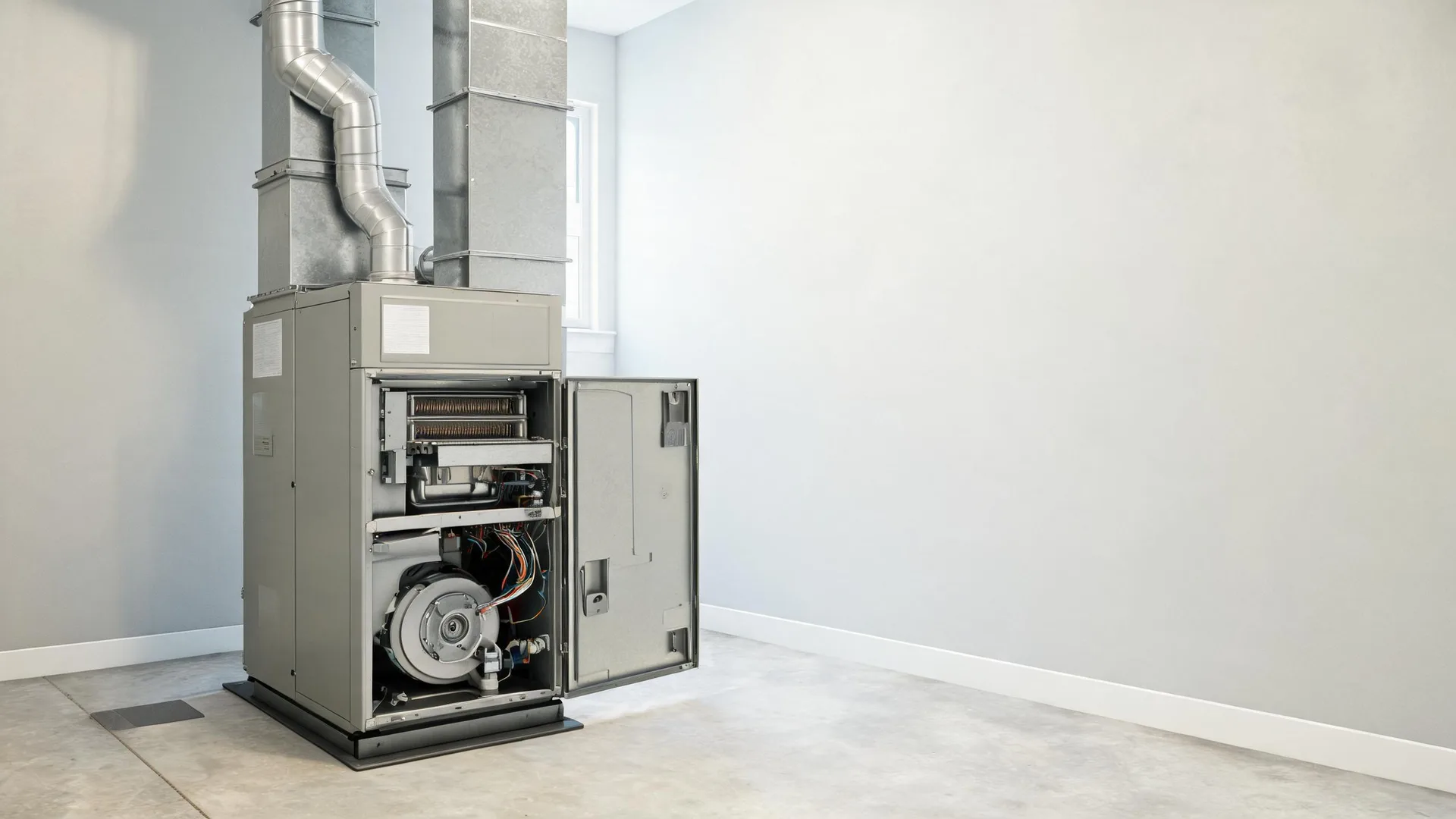
An empty unfinished basement containing a forced-air furnace with overhead ductwork, exposed ceiling joists, and a single hanging light bulb.

A new furnace would cut about $90 a year off heating for a typical Madison County home.

  • A new high-efficiency furnace$420 a year
  • An older furnace$510 a year

Estimates for a typical Madison County home, compared with an older unit built to the previous federal minimum, from EIA household energy data, Mississippi fuel prices and NOAA climate normals. Your home will differ.

Repair makes sense when one part has failed and the heat exchanger is sound.

Replacement makes sense when the heat exchanger is cracked or the furnace keeps needing parts.

A diagnostic call starts with the thermostat and works back from there. The tech checks what the furnace is actually doing. Does it fire at all, does it try and fail, does it run and shut off early. From there it's a set of tests on the parts most likely to cause that behavior. A multimeter checks the igniter for continuity. The flame sensor gets pulled and looked at, since a coated one can often be cleaned on the spot rather than replaced. If the blower is making noise or moving less air than it should, the motor and the wheel get checked for wear or buildup. Gas pressure and flame color get looked at together, since one tells you about the other. Most of this gets done without opening up the furnace cabinet beyond a panel. The goal is to find the one part causing the problem, not to go through the whole unit piece by piece.