





An unfinished basement containing a gray HVAC furnace with ductwork, exposed wooden joists, a concrete floor, and miscellaneous clutter in one corner.

Furnace Repair in Laurel, MS

Tell us about the job

Takes about a minute. No obligation.

RepairFurnace or heatingJones County, MS
Step 1 of 2

What ZIP code is the job in?

A furnace that's about to need a repair usually tells on itself before it quits outright. The burners light with a pop instead of a steady whoosh, or the flame looks yellow and ragged instead of blue. Air comes out of the vents cooler than it should, or it takes longer to warm the house than it used to. You might hear a rattle from the blower, a grinding when it starts up, or clicking that doesn't lead to ignition. Short cycling, where it fires up and shuts off again before the room ever warms, usually points to a flame sensor that needs cleaning or a limit switch tripping early. A burning dust smell at startup is normal for a few minutes once a year, but if it lingers or comes back, something's overheating. Any of these is worth a call before the furnace stops working on a cold night instead of just working poorly.

5 months
November through March, your furnace is on duty
39°F
the average winter night it heats against
2 winter storms
in ten years, the nights a failure hurts most
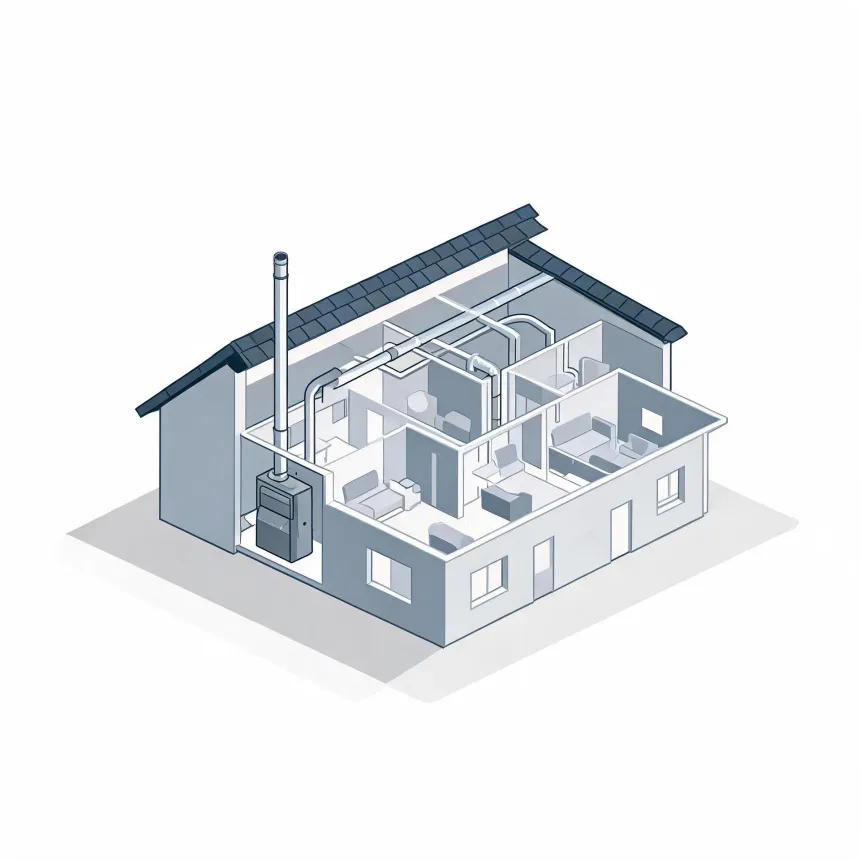
Isometric cutaway illustration of a single-story house in gray tones, showing interior rooms with furniture, ceiling ductwork, and an exterior furnace unit with a tall flue pipe.
Your furnace works hardest from November through February.

NOAA nClimDiv, 1991–2020 normals

Furnaces in Jones County only have to run about five months a year, November through March.

A furnace with a short season behind it usually has less wear on the burners and blower, so a repair is more often fixing age or neglect than a machine worn out from overwork.

An older house here doesn't mean an older furnace

Half the homes here were built by 1981
Heat runs November through March
Winter nights average 39°F
Ready by NovemberFurnaces here start running in November and go through March.

Jones County has logged 224 severe weather events over the past decade, and most of it is wind. Damaging wind has come through 160 times, with hail and tornadoes adding to that count. A furnace sits indoors, away from hail and wind-driven debris, but an outdoor condenser or the siding and vents around it don't have that shelter. If a storm came through recently and the outdoor unit took a hit, it's worth having someone look even if the furnace itself is heating the house fine. Damage like that doesn't always show up as a problem right away.

A furnace that only works five months a year is usually worth repairing

Five months of real work a year is not much to ask of a furnace. Most of what's wrong with yours likely comes down to age or a part that needs attention, not a machine that's given out. That usually makes it worth fixing.

Find a contractor
A gray high-efficiency gas furnace installed in an unfinished basement, surrounded by gas lines, a condensate drain, and sheet-metal ductwork.

What actually wears out

Most furnace failures trace back to a handful of parts, and age gets to them whether the furnace ran hard or barely at all. An igniter weakens after enough cycles of heating up and cooling down, until it no longer glows hot enough to light the gas. A flame sensor builds up a coating from normal combustion and starts telling the control board no flame is there even when one is burning fine. A capacitor in the blower motor dries out over the years, so the blower struggles to start or runs slower than it should. Dust and lint settle in the burners and flue during the months the furnace sits idle, and that buildup is often what makes the first few startups of the season rough. Sitting unused isn't gentler on these parts. Idle time lets dust settle where it shouldn't and gives corrosion a chance to work on contacts and sensors between seasons. A furnace that barely runs still needs its filter changed and its burners looked at, or the parts that would have worn in slowly instead sit and degrade.

A cracked heat exchanger gets worse with every cycle

Running a furnace with a cracked heat exchanger flexes the metal further each time it heats up and cools down. What starts as a hairline crack widens, and the crack is also how exhaust can mix into the air the blower pushes through the house. Shutting it down when you first hear a rattle or smell exhaust keeps a repair a repair.
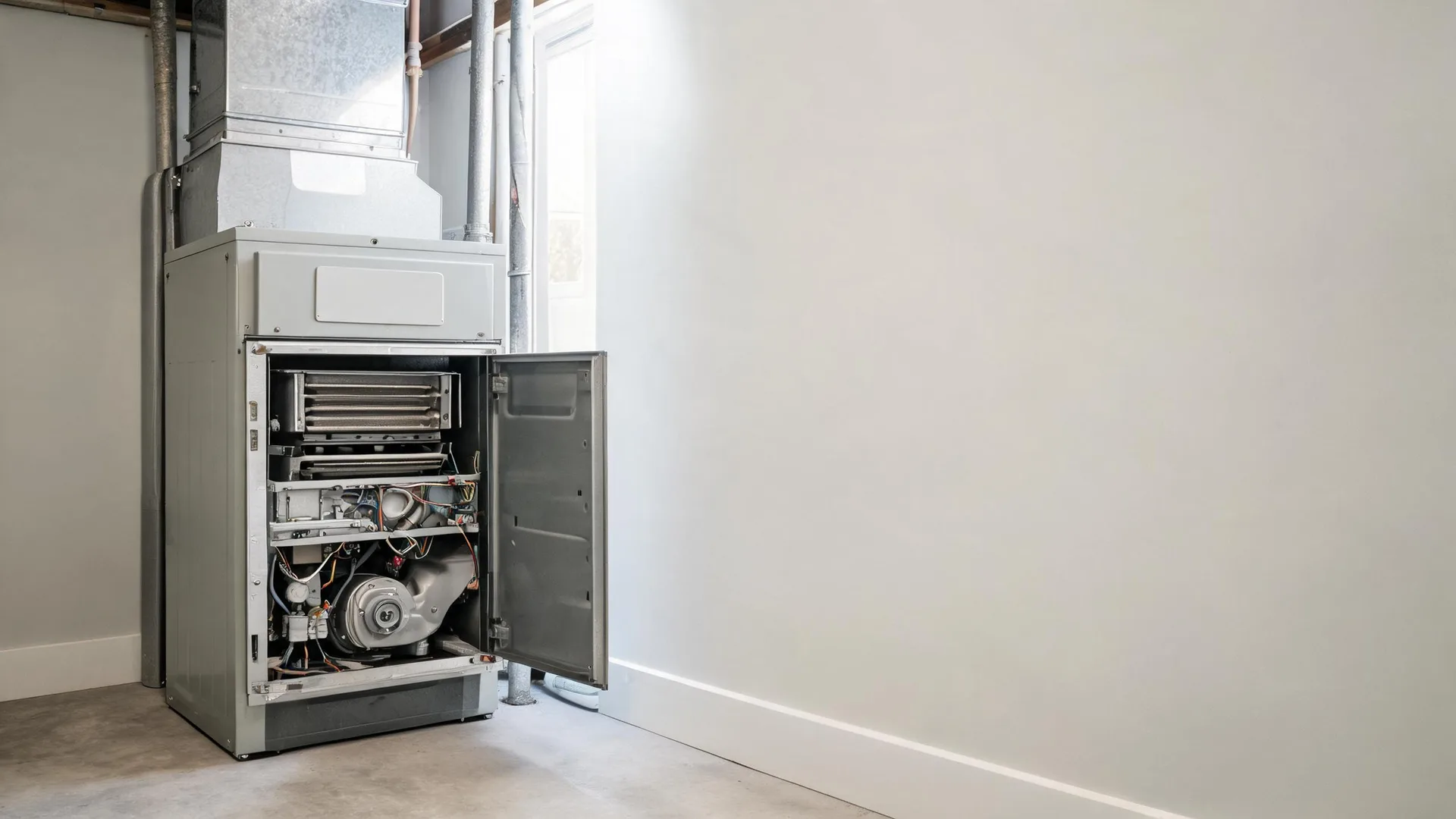
A dirty flame sensor ends in a shutdown, not a fire

A flame sensor coated in buildup tells the control board no flame is present even when the burners are lit, so the board cuts gas to protect the house. Each short cycle before that shutdown puts more heat stress on the igniter and the limit switch. Letting it keep short cycling instead of cleaning the sensor just adds parts to the repair.

There's a few things worth checking before you pick up the phone. Look at the air filter first. A filter clogged with dust chokes off airflow, and that alone can cause short cycling or weak heat at the vents. Check that the thermostat is set to heat and the temperature is actually above room temperature, and if it runs on batteries, try fresh ones. Walk over to the furnace and see if the switch on or near it, the one that looks like a light switch, got bumped off. Check the breaker too, since a tripped breaker will stop a furnace cold with no warning at the thermostat. If the furnace has a standing pilot, check whether it's still lit. None of this fixes a cracked heat exchanger or a failing control board, but it rules out the simple stuff before anyone needs to come out.

A diagnostic call starts with the complaint, not the furnace. The tech asks what it's doing, when it started, and whether anything changed right before, like a power outage or a new thermostat. Then it's a visual pass. The filter, the flame through the viewport, the flue connection, the wiring at the control board. Most furnaces store their fault as a blink code on a small light, and that code narrows things down before a panel ever comes off. From there it's testing with a meter. The igniter should pull a certain current. The flame sensor should read a real signal once it's lit. The limit switch should open and close where it's supposed to. A furnace that's short cycling gets watched through a full cycle, start to shutdown, because some faults only show up once things heat up. The visit ends with the part named, not just the symptom. A cracked heat exchanger and a dirty flame sensor can look alike from the thermostat, but they call for very different repairs.