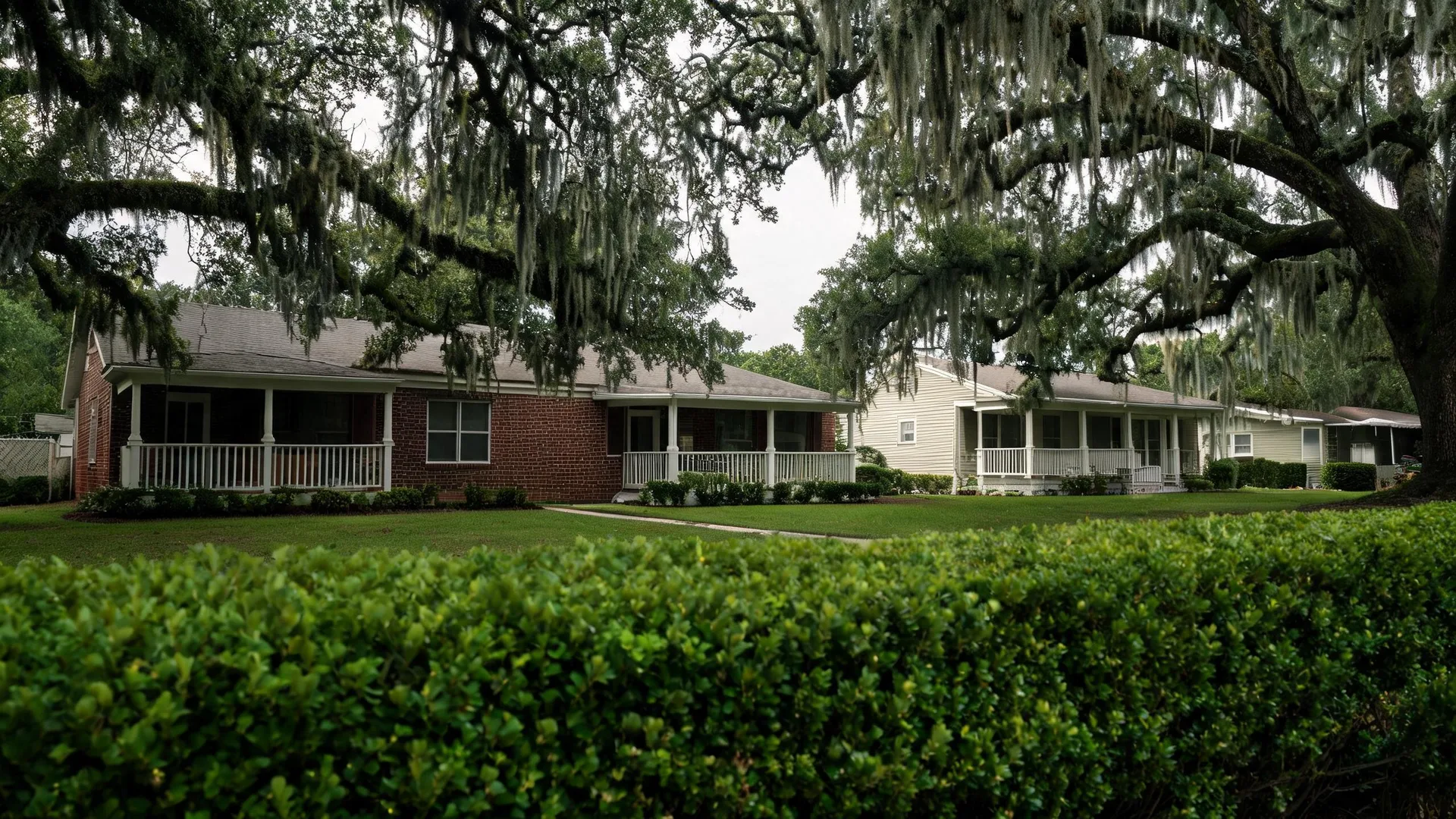







A row of single-story houses with covered porches, the nearest clad in red brick, seen behind a trimmed hedge and lawn beneath large moss-draped oak branches.

Furnace Repair in Indianola, MS

Tell us about the job

Takes about a minute. No obligation.

RepairFurnace or heatingSunflower County, MS
Step 1 of 2

What ZIP code is the job in?

Furnaces in Indianola only have to work about five months a year, November through March. Overnight lows average 37°F through the coldest stretch of winter, which is cold enough to run a furnace steady but nothing close to the strain a unit sees further north. A hard freeze is rare here, not routine. That means a furnace acting up now is less likely worn out from the job it's been doing and more likely dealing with an age issue or something that got neglected. Most of the time that's worth fixing rather than replacing.

5 months
November through March, your furnace is on duty
37°F
the average winter night it heats against
57%
of homes here heat with gas, so most furnaces here burn gas
7 winter storms
in ten years, the nights a failure hurts most
Isometric line illustration of a cutaway single-story house showing interior rooms with furniture, ceiling ductwork, a chimney flue, and a furnace unit outside the exterior wall.
Your furnace works hardest from November through February.

NOAA nClimDiv, 1991–2020 normals

A tech runs your furnace through a full cycle before touching anything, watching for where it stumbles.

A dropped flame sensor or a blower that stalls partway only shows up once the furnace is actually running, not before.

Sunflower County weather is nothing special for a furnace to handle

74 severe weather events from 2015 to 2024
30% of homes statewide lost power a day or more in 2024
54 damaging wind events from 2015 to 2024
November is when weak parts show themselvesFurnaces in Sunflower County start running in November, after sitting idle since spring.

Get a repair done now and the furnace should have a long life ahead of it. Winter storms have hit Sunflower County 7 times between 2015 and 2024, so the furnace sees real cold some years, but it's not the kind of strain that wears a unit down fast. A technician fixing a problem today isn't patching something that's about to fail again next month from overwork. Whatever gets repaired should hold up fine through the rest of this winter and the ones after it.

It's usually worth repairing

It has an easier job here than in most places, so your furnace is often in decent shape. Repair is usually worth it.

Find a contractor
A man in a dark cap, dark shirt and tan pants, seen from behind, carries a canvas tool bag up concrete steps toward a blue front door, with a potted green plant in a blue planter beside the entry.
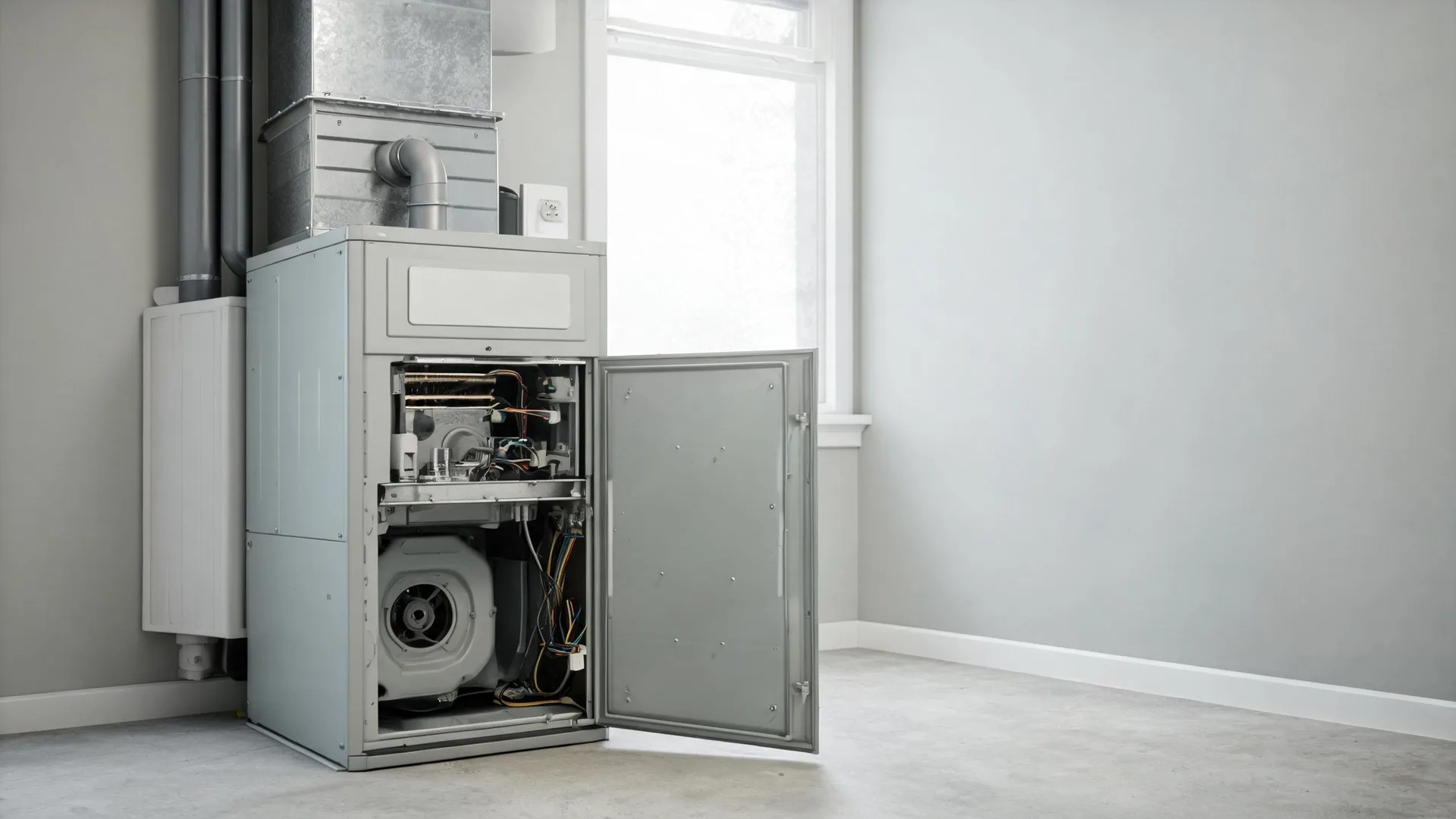
A gray residential gas furnace installed in an unfinished basement, connected to sheet-metal ductwork and PVC pipes.

Most failures start small and build for a long time

Furnaces don't usually fail from one big thing going wrong. They fail from small parts wearing down the same way every cycle, until one of them finally quits. A flame sensor builds carbon a little at a time, cycle after cycle, until the rod can't sense the flame anymore. A blower bearing loses lubrication slowly, and the grinding you hear is metal wearing against metal that used to turn smooth. An igniter is brittle to begin with, and every time it heats up and cools back down, it gets a little more likely to crack. Heat exchangers fail the same way, from years of expanding when the burners fire and contracting when they shut off, until metal fatigued enough times finally splits. None of this is about one hard winter or one rough night. It's wear that adds up the same way in every furnace, and it shows up as a breakdown only once it's gone far enough to matter.

What you'll notice first

Short cycling is usually the first thing an owner catches on to, the furnace kicking on, running a few minutes, then shutting off before the house warms up. Cold air out of the vents while the blower's running means the burners never lit or shut down right after. A burner flame that's flickering or yellow instead of steady blue is worth paying attention to, and so is a furnace that's gotten loud, a rattle, a screech, or a bang when it starts up.

What those signs actually mean

Short cycling usually points to a flame sensor coated in carbon or a limit switch tripping from restricted airflow. A yellow flame can mean the burners aren't getting enough air to burn clean. New noises mean something's loose, worn, or rubbing that wasn't before, often a blower wheel or a bearing going bad. None of these fix themselves by waiting, and all of them are easier to run down while the furnace is still limping along than after it quits.

An unfinished basement featuring a forced-air furnace, exposed wooden ceiling joists, bare concrete walls, and miscellaneous items including cardboard boxes and coiled cables on the floor.

A new furnace would cut about $100 a year off heating for a typical Sunflower County home.

  • A new high-efficiency furnace$470 a year
  • An older furnace$570 a year

Estimates for a typical Sunflower County home, compared with an older unit built to the previous federal minimum, from EIA household energy data, Mississippi fuel prices and NOAA climate normals. Your home will differ.

Repair makes sense when one part has failed and the heat exchanger is sound.

Replacement makes sense when the heat exchanger is cracked or the furnace keeps needing parts.

Age is the thing to weigh, not just the symptom. A furnace with a cracked heat exchanger needs replacing no matter how good the rest of it looks, because that part isn't sold on its own and isn't safe to patch. Everything else on a furnace, the igniter, the blower motor, the control board, the flame sensor, gets replaced without touching the rest of the unit. So the real question a tech is answering isn't just what broke, it's whether the furnace is old enough that another part is likely to go right after this one. A furnace early in its life is usually one repair and done. One well on in years might be worth pricing against a new unit before you spend on the old one.