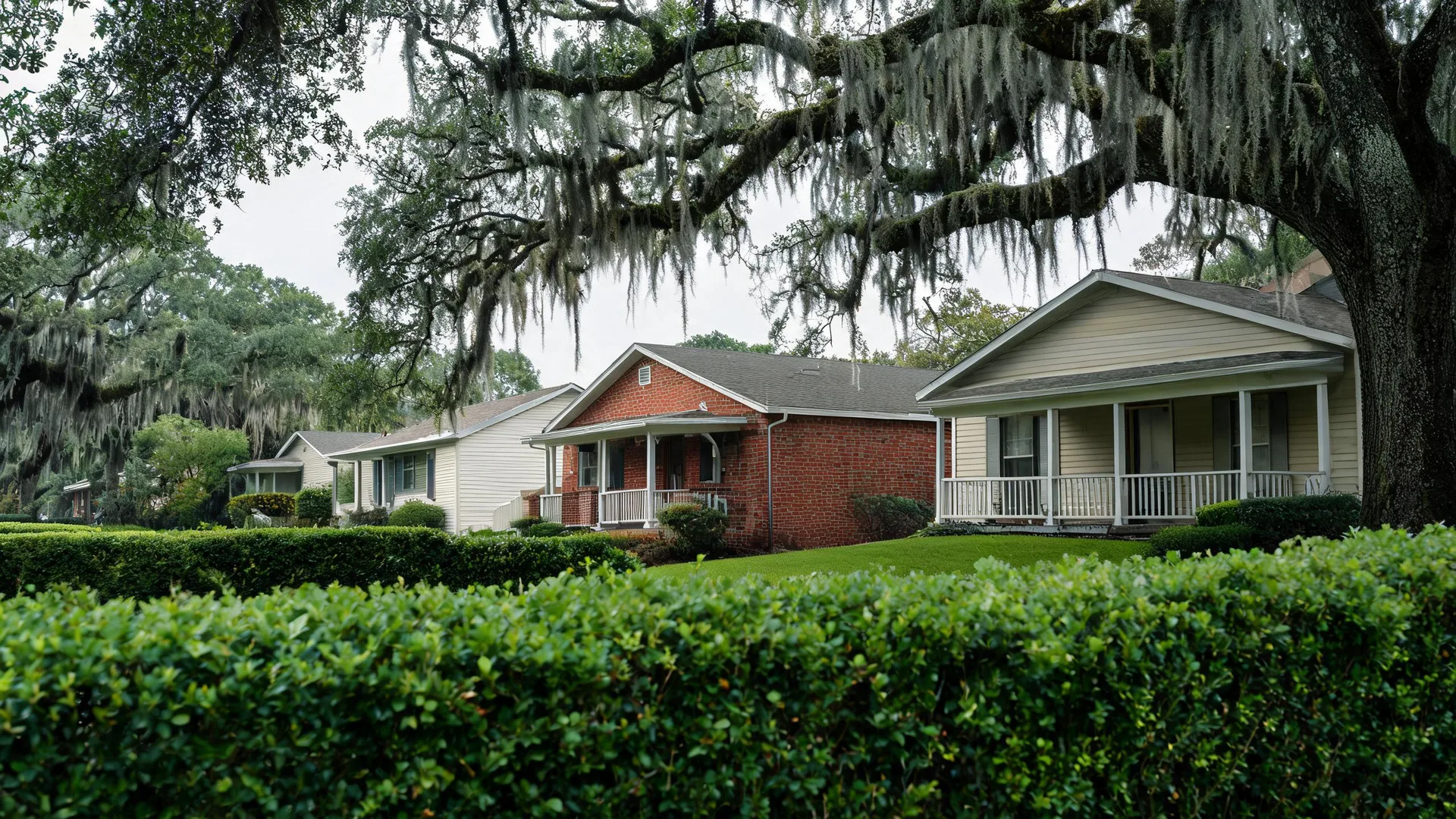





A row of single-story houses, one brick and others with light siding and covered porches, set behind a trimmed green hedge and lawn, under large oak branches draped with Spanish moss.

Furnace Repair in Hattiesburg, MS

Tell us about the job

Takes about a minute. No obligation.

RepairFurnace or heatingForrest County, MS
Step 1 of 2

What ZIP code is the job in?

Forrest County saw 164 severe weather events between 2015 and 2024, and most of those were damaging wind. Add hail and tornadoes to the count, and the outdoor unit here takes a beating most years. Wind-blown debris can bend fins or crack a housing without stopping the furnace from running that same day. Statewide, close to a third of households went at least a day without power in 2024, and a furnace with electronic ignition won't fire without it. If your system took a hard storm this year, it's worth having someone look even if nothing seems wrong yet.

5 months
November through March, your furnace is on duty
40°F
the average winter night it heats against
1 winter storms
in ten years, the nights a failure hurts most
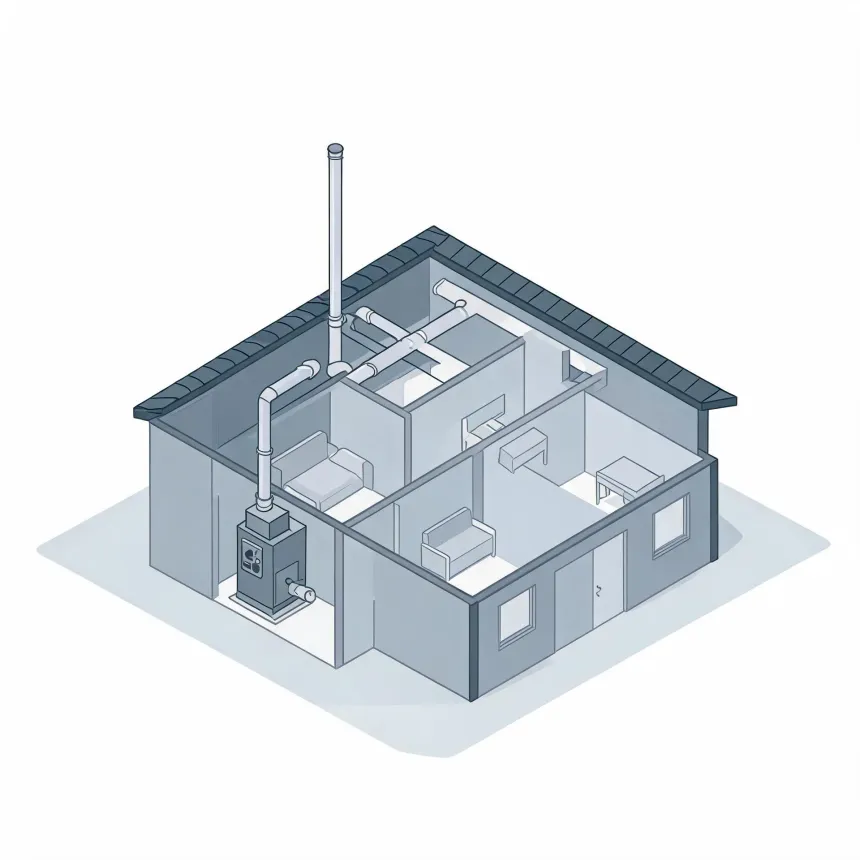
Isometric grayscale illustration of a cutaway single-story house showing interior rooms with furniture, a furnace unit connected to ductwork and a tall vertical flue pipe extending above the roof.
Your furnace works hardest from November through February.

NOAA nClimDiv, 1991–2020 normals

A diagnostic visit starts with questions about what the furnace is doing, or not doing, before anyone touches a panel.

A tech who knows the symptoms can usually narrow the problem to the igniter, the flame sensor, or the control board before testing confirms it.

Five months of mild winters means your furnace isn't working hard to begin with

Heat runs November through March
Winter nights average 40°F
Climate zone 3A
October is the month to find outFurnace season starts in November and runs through March. Weak parts tend to fail in the first cold weeks, not the last.

Before you call anyone, check the thermostat first. Make sure it's set to heat and the setpoint is actually above room temperature, since a bumped switch is more common than people think. Next, go look at the furnace itself and check the filter. A filter clogged with dust can choke airflow enough that the furnace shuts itself off partway through a cycle. If the furnace is dead quiet, go to the breaker panel and look for a tripped breaker before assuming the worst. Gas furnaces also have a switch that looks like a light switch on or near the unit, and it can get bumped off during other work nearby. If the furnace runs but blows cold air, don't keep running it. That's usually the igniter or burners failing to light, and leaving it running won't fix it or hurt anything, but it wastes time.

A newer furnace is almost always worth fixing

Half the homes in Forrest County were built in 1982 or later. If yours is one of them, the furnace likely has years left in it, and whatever's wrong right now is probably a single failed part, not a system on its way out. Worth getting a real diagnosis before anyone talks replacement.

Find a contractor
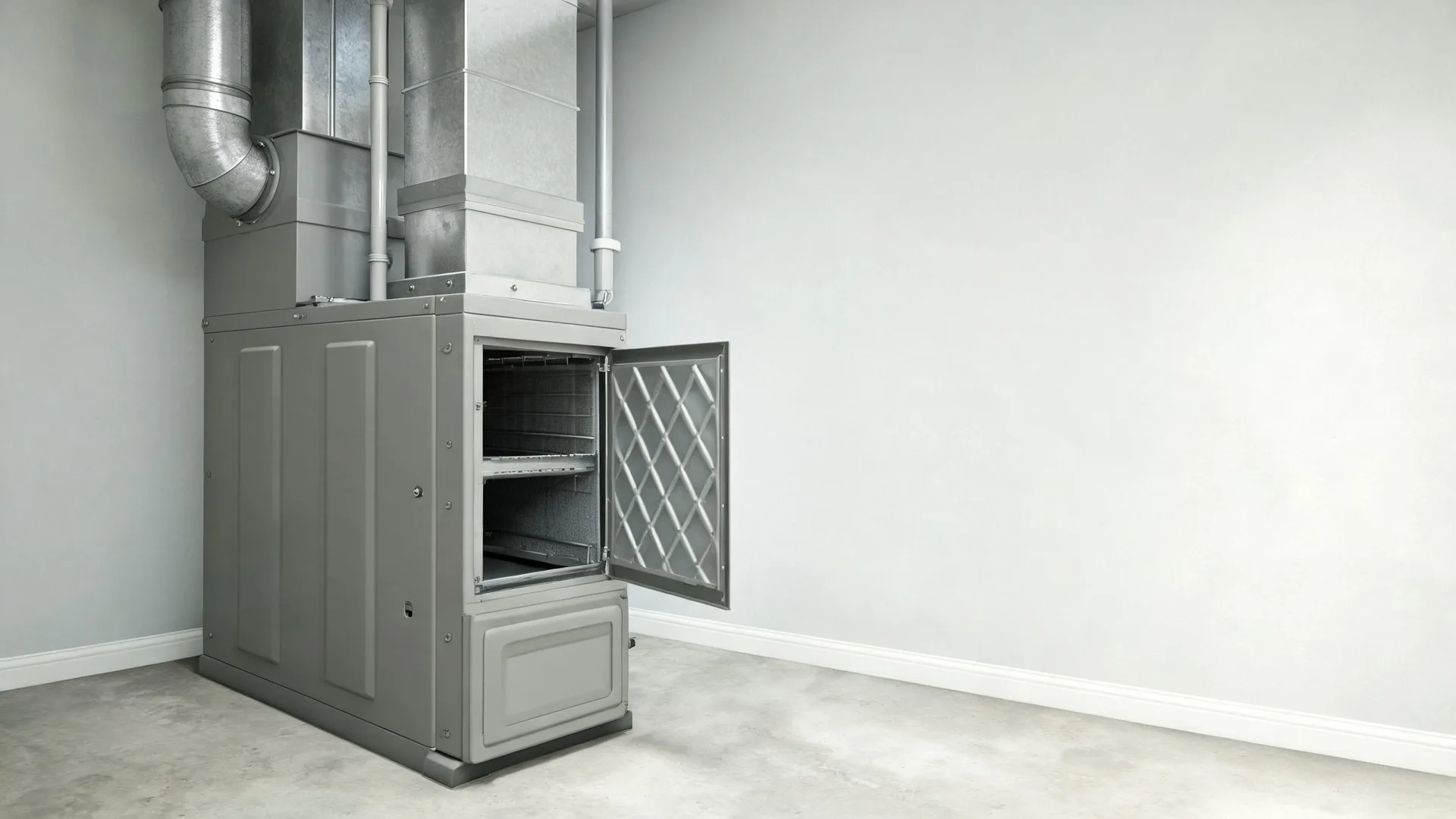
A gray gas furnace with attached ductwork and piping installed in an unfinished concrete basement.

Five mild winters in, most of what's wrong is one part, not the whole system

Overnight lows here average 40 degrees in December and January. That's not the kind of cold that cracks a heat exchanger or keeps a blower running nonstop for days. A furnace that's had five mild winters behind it and gets a repair now has a good shot at several more. If it's heating unevenly or short-cycling, get that looked at while it's still just one part acting up.

The signs rarely show up alone

A furnace about to need repair usually tells you in more than one way. Short cycling, a burner smell that lingers past startup, air that's warm but weaker than it used to be, a louder bang when the burners light. Any one of these alone could be nothing. Several together means something's actually failing, not just having an off day.
Sound and smell catch problems sight won't

A delayed whoosh when the burners finally light means gas is building up before ignition catches it, which points to the igniter or the flame sensor. A burning dust smell at the start of a cycle is normal early in the season and nothing after that. A metallic rattle that wasn't there before usually means a blower wheel has come loose or is hitting something it shouldn't.

Most furnace failures trace back to a handful of parts, and the igniter tops the list. It's a thin strip that heats up and lights the gas, and thin strips crack after enough cycles on and off. The flame sensor goes next, usually just dirty rather than broken, since a film of residue builds up on it over the winter and fools it into thinking no flame is present when there is one. Blower motors wear out from running hours every winter, and bearings inside them give out the same way any motor bearing does. The control board fails less often, but when it does, it tends to take several functions down at once rather than one. Pressure switches and limit switches are simple parts, and they usually fail because something upstream of them, like a blocked vent or a dirty filter, put them in a position they're designed to react to. None of these failures mean the furnace is done. They mean one part did what parts eventually do.

The question isn't the furnace's age so much as what's actually broken. A cracked igniter or a dirty flame sensor is a small repair no matter how old the unit is, and replacing one doesn't tell you anything about the rest of the system. What changes the math is a cracked heat exchanger. That's the one part that can't be patched, since it puts combustion gases where the house air is, and a furnace with a failed heat exchanger gets replaced, not repaired, regardless of what else is fine. Short of that, most failures are isolated. A blower motor, a control board, a pressure switch, each one can be swapped on its own without touching anything else. The repair only turns into a replacement conversation when several parts are failing in the same year, or when the parts needed are hard to find because the unit is old enough that the manufacturer has moved on from it.