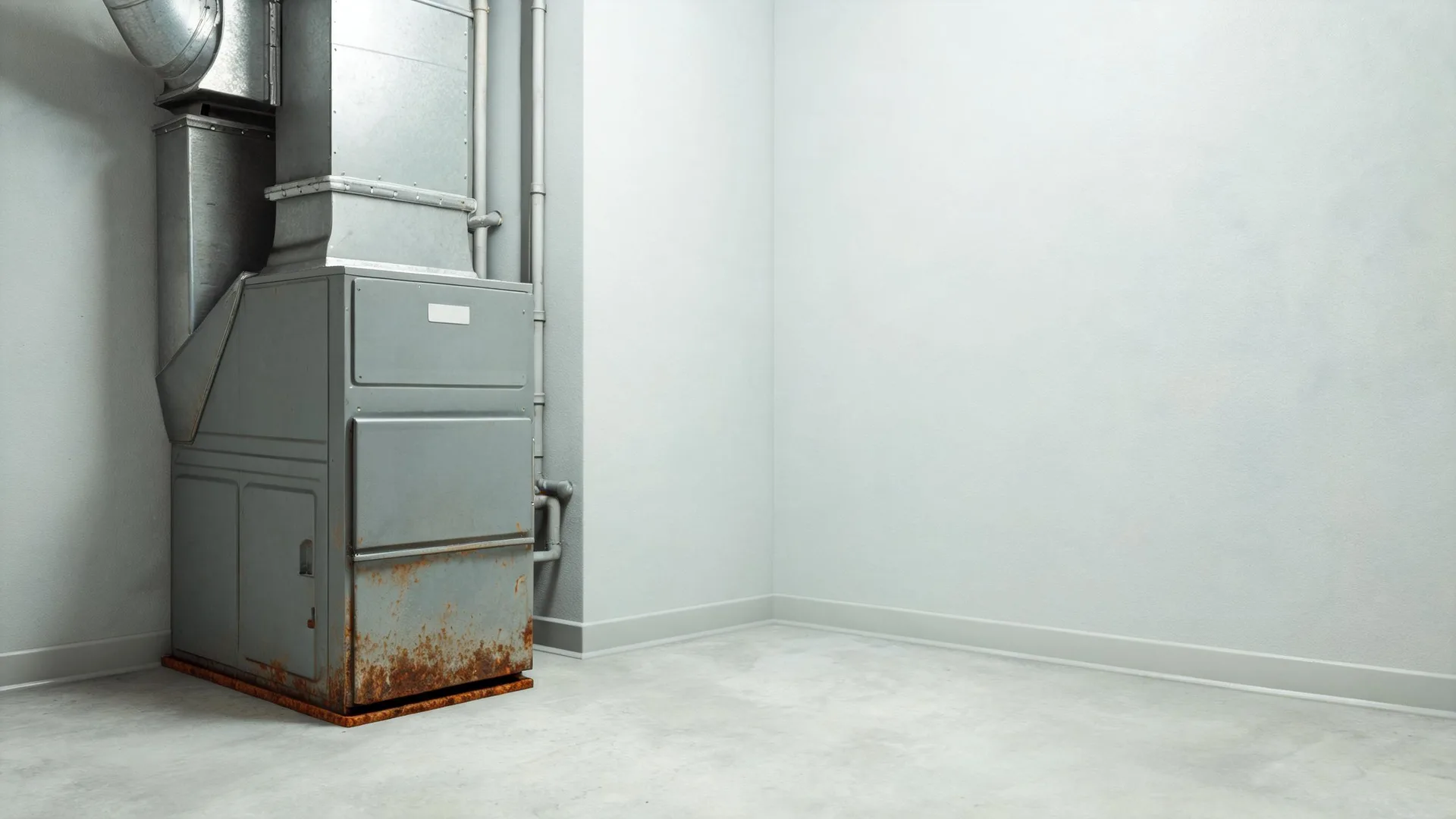
October is when to get it checked
Furnaces in Greenwood start running in November. The weeks before that, while it's still off, are the time to find a weak part before it has to carry a full load.
Takes about a minute. No obligation.
Furnaces in Greenwood start running in November. The weeks before that, while it's still off, are the time to find a weak part before it has to carry a full load.
A furnace that sat idle since spring often reveals its problems in the first cold snap. If yours is struggling in November, it was probably already worn going in, not damaged by this winter.

NOAA nClimDiv, 1991–2020 normals
Furnaces in Greenwood run about five months a year, November through March.
A furnace that only has to work five months a year usually has less wear to show for its age, so repair is often the right call.



A furnace in good shape runs quietly and keeps the heat steady from one room to the next. When something's wrong, you'll usually hear it before you can name it. A bang at startup. A screech as the blower spins up. A clicking that doesn't lead to flame. Short cycling is another one to watch for, where it fires up, runs a few minutes, then quits before the house warms. A burner flame that's flickering yellow instead of steady blue points to a combustion problem and shouldn't wait. If the air coming out feels lukewarm instead of hot, or one room stays cold no matter how long it runs, the furnace is working but not doing its job. Any of these is worth a call before the part that's struggling now fails outright on a cold night.
Call it in and get it running right. A furnace that only carries five months of the year, with lows near 37°F through December, January and February, isn't the kind of machine that wears out from the job. Whatever's wrong with yours is likely fixable.
Find a contractorIf your furnace came with the house, ask the contractor how old it actually is before you decide anything. A unit from 1973 or earlier has had decades to rack up a full count of heating seasons, even at five months a year, and that history is worth knowing alongside whatever's failing now. The light workload here is still the reason repair is usually the right call. Knowing the age just tells you what to ask about while they're out there.
The igniter heats up every time the furnace starts and cools down every time it stops, and that cycling eventually cracks it. When it goes, the burners won't light at all, or you'll hear clicking with no flame following. It's a straightforward swap for a tech, not a sign of anything bigger.
The flame sensor reads the flame to confirm it's burning clean, and over time it picks up a film that stops it from sensing correctly. The furnace shuts itself down as a safety response, even though nothing is actually broken. This one's often a quick fix rather than a part replacement.
Estimates for a typical Leflore County home, compared with an older unit built to the previous federal minimum, from EIA household energy data, Mississippi fuel prices and NOAA climate normals. Your home will differ.
Repair makes sense when one part has failed and the heat exchanger is sound.
Replacement makes sense when the heat exchanger is cracked or the furnace keeps needing parts.
A cracked heat exchanger ends the conversation. That one part means the furnace is done, no matter how well the rest of it runs. Short of that, most failures are single parts. An igniter. A blower motor. A control board. Any of those can be swapped without touching anything else. What matters more than the part is the pattern around it. A furnace that starts clean, holds a steady flame, and has needed one repair in its life is just getting maintenance. A furnace that keeps breaking, even small things, even different parts each time, is telling you something upstream is wearing out everything downstream of it.