






An unfinished basement featuring exposed ceiling joists, a metal HVAC unit with round ductwork, a hanging light bulb, and scattered boxes and debris along the left wall.

Furnace Repair in Greenville, MS

Tell us about the job

Takes about a minute. No obligation.

RepairFurnace or heatingWashington County, MS
Step 1 of 2

What ZIP code is the job in?

A furnace that's short cycling or making a grinding noise will still heat your house, so it's tempting to leave it alone until the season's over. That's usually the wrong call. A cracked heat exchanger gets worse under heat stress every time the burners fire. A failing inducer motor that's struggling will eventually seize instead of just sounding rough. Even something as simple as a dirty flame sensor means the furnace works harder to stay lit, and that strain lands on the igniter next. The part that's complaining now is rarely the only part paying for it.

5 months
November through March, your furnace is on duty
37°F
the average winter night it heats against
54%
of homes here heat with gas, so most furnaces here burn gas
6 winter storms
in ten years, the nights a failure hurts most
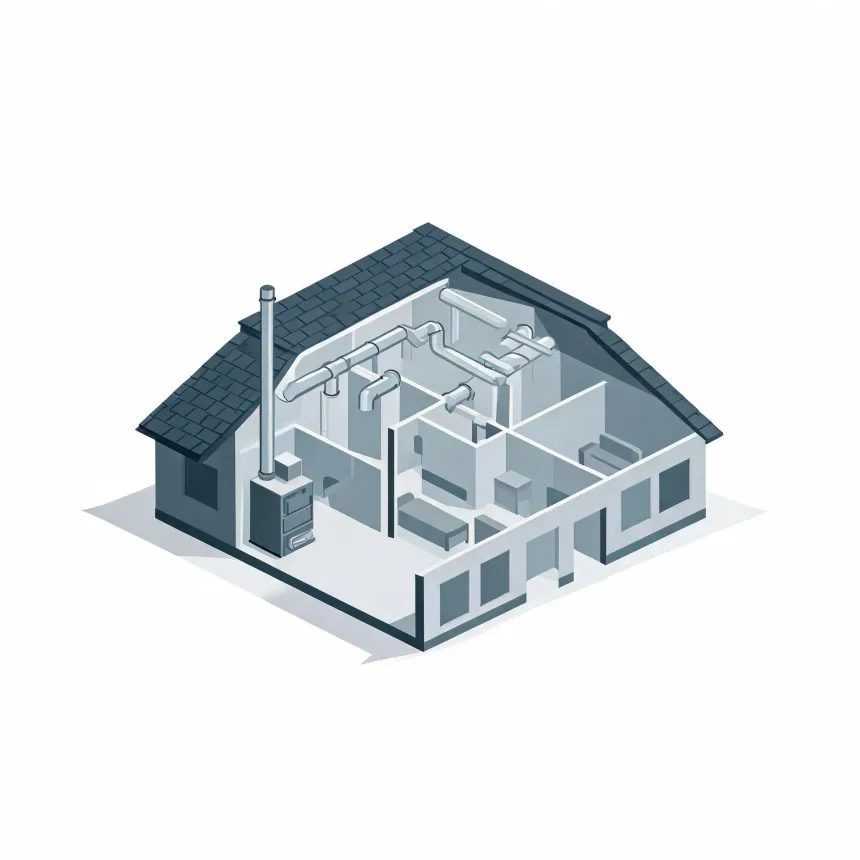
Isometric grayscale illustration of a cutaway house showing interior rooms, ceiling ductwork, a flue pipe, and a furnace unit on the left side.
Your furnace works hardest from November through February.

NOAA nClimDiv, 1991–2020 normals

Half the homes in Washington County were built in 1973 or earlier.

A furnace that has sat in a house that old is worth asking about before it fails on the coldest night of the year.

Five months of work a year is not much to ask of it

Heat runs November through March
Winter nights average 37°F
6 winter storms from 2015 to 2024
Built for NovemberFurnace season runs November through March here. October is the month to get ahead of it.

A diagnostic visit starts with questions. A tech wants to know when the trouble happens, what it sounds like, whether it has gotten worse. Then the cover comes off and the furnace runs through a full cycle while they watch, because some problems only show up at ignition and others only after it has been running a few minutes. They check the flame and whether it holds steady. They test the flame sensor and igniter with a meter instead of judging by how they look, since a part can look fine and still be failing. Airflow gets checked too. A furnace starved for air will overheat and shut itself down even when every part inside it is working. The point is to find the one thing causing the symptom, not to start swapping parts and see what helps.

A furnace with this little work to do is usually worth fixing

Five months of real work a year doesn't wear a furnace down much on its own. If yours is acting up, that points more toward a part reaching the end of its life than a system that's been run into the ground. Worth having someone look at it and tell you which one it is.

Find a contractor
A person in a dark long-sleeved shirt and tan pants, seen from behind, carries a worn canvas tool bag up stone steps toward a blue front door with a shrub in a blue planter beside it.
A gas furnace with attached ductwork, gas piping, and condensate lines installed in a concrete-block basement.

How old is the furnace, not just the house

A furnace that's already near the end of its life is not a good candidate for a repair that only holds it over. If yours has been acting up and came with a house built decades ago, ask whoever looks at it for a straight answer on the furnace's age and what's left in it. That changes whether a repair is the right call or just a delay.

What you'll actually notice first

Most furnace trouble shows up as a sound or a smell before it shows up as no heat at all. A boom at startup means gas is building up before it catches, instead of lighting right away. A burning dust smell in the first few minutes is normal, but a smell that lingers or comes with soot around the cabinet is not. Short cycling, where the furnace fires up and shuts off again before the room warms, usually means it's overheating and shutting itself down to protect the heat exchanger.

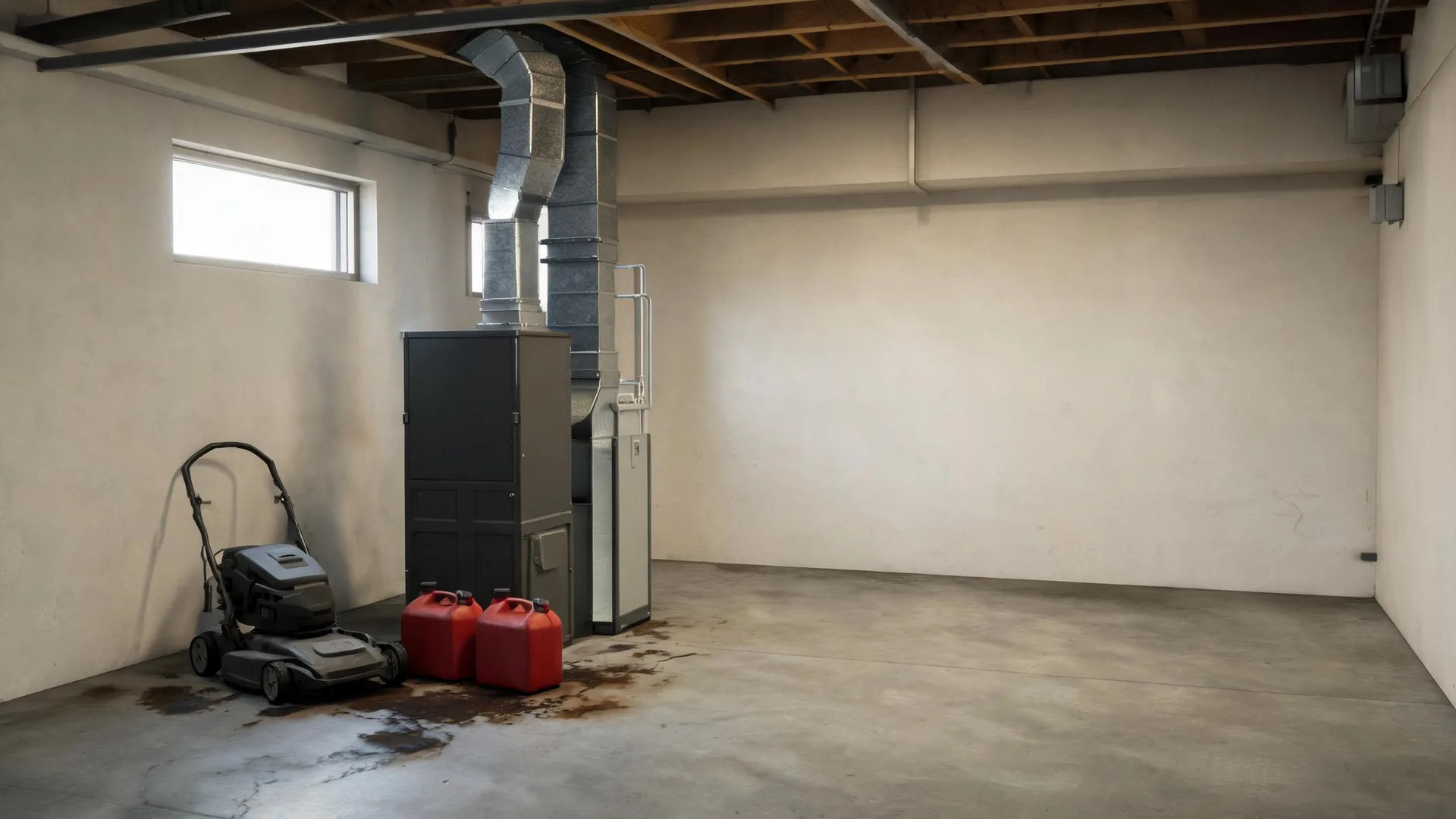
The signs that mean stop using it

A yellow or flickering flame instead of a steady blue one means the gas isn't burning clean. Soot stains near the burner or a persistent headache when the furnace is running are both reasons to shut it off and get it checked before you turn it back on. These aren't wear and tear you can put off. They're signs of incomplete combustion, and that's not something to wait out.

An unfinished basement featuring concrete block walls, exposed floor joists, and a metal forced-air furnace with ductwork near a central pillar.

A new furnace would cut about $90 a year off heating for a typical Washington County home.

  • A new high-efficiency furnace$450 a year
  • An older furnace$540 a year

Estimates for a typical Washington County home, compared with an older unit built to the previous federal minimum, from EIA household energy data, Mississippi fuel prices and NOAA climate normals. Your home will differ.

Repair makes sense when one part has failed and the heat exchanger is sound.

Replacement makes sense when the heat exchanger is cracked or the furnace keeps needing parts.

A repair is worth it when the part failing is small and the rest of the furnace is doing its job around it. A new flame sensor or igniter is a quick fix because the heat exchanger, the blower and the inducer motor underneath it are all still sound. Replacement starts to make more sense when the failures move to the parts that cost the most to reach, especially the heat exchanger itself. Nobody patches a cracked heat exchanger. Age matters more than the symptom. The same grinding inducer motor is a routine swap in a furnace with years left in it, and a sign to stop spending in one that's already near the end. Ask whoever looks at it to tell you plainly whether the repair fixes the furnace or just buys it a little more time.