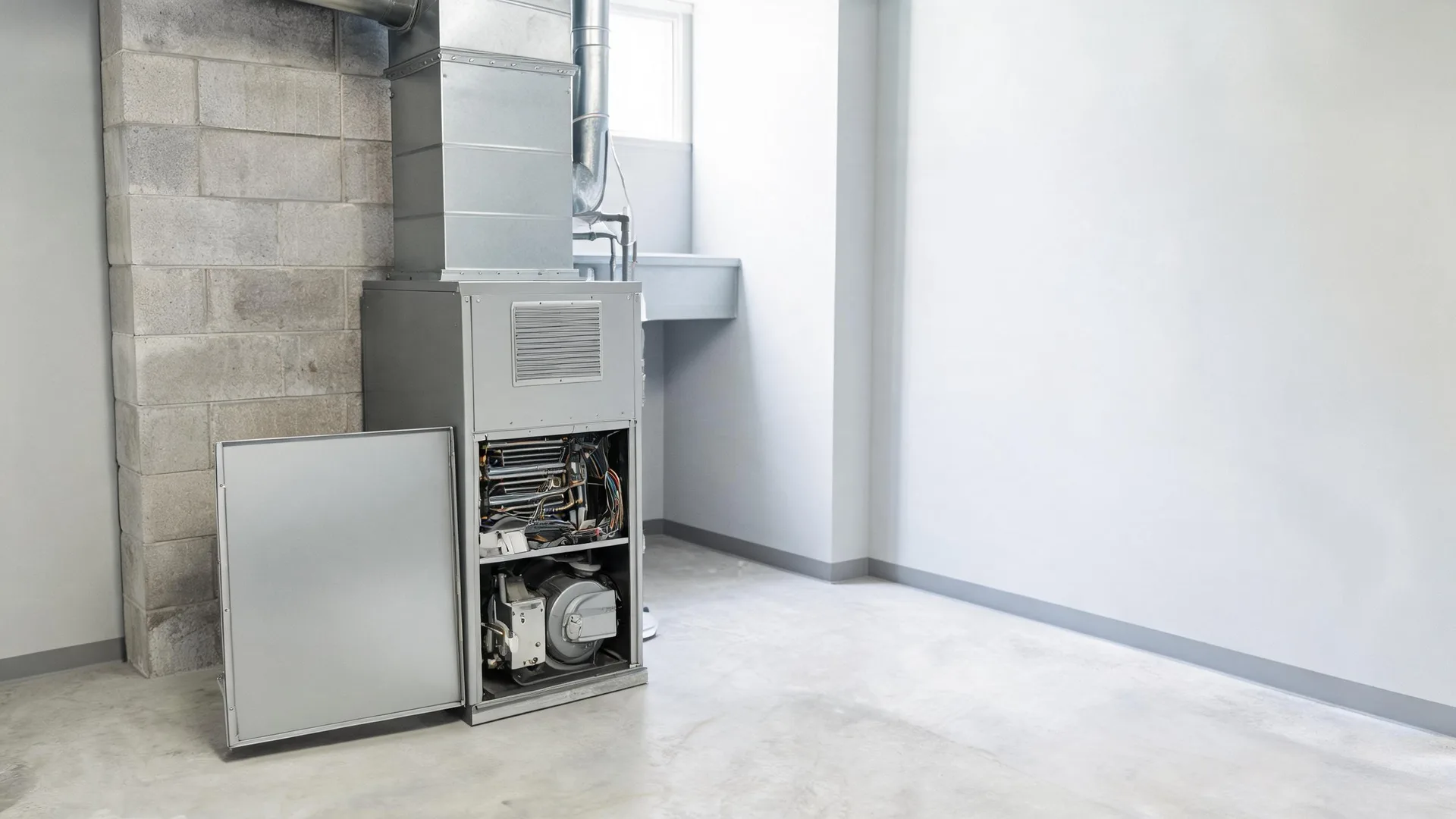
An unfinished basement containing a gas furnace with ductwork in the foreground and miscellaneous stored items along the far concrete wall.

Furnace Repair in Columbia, MS

Tell us about the job

Takes about a minute. No obligation.

RepairFurnace or heatingMarion County, MS
Step 1 of 2

What ZIP code is the job in?

Check the thermostat and the switch first

Make sure the thermostat is set to heat and the temperature is actually above room temperature. Check that the furnace switch, the one that looks like a light switch near the unit, is flipped on, since it's easy to bump off. Look at the breaker too. If any of these got switched off or tripped, that alone could be the whole problem.

What you find tells the tech what to bring

If the furnace won't start at all, that points to power, the switch, or the control board. If it starts and then shuts off, that's usually a sensor or airflow issue, like a dirty filter choking things down. Telling the contractor what you saw, no heat at all versus short cycling versus a smell, means less guessing and the right parts on the truck the first visit.

5 months
November through March, your furnace is on duty
40°F
the average winter night it heats against
2 winter storms
in ten years, the nights a failure hurts most
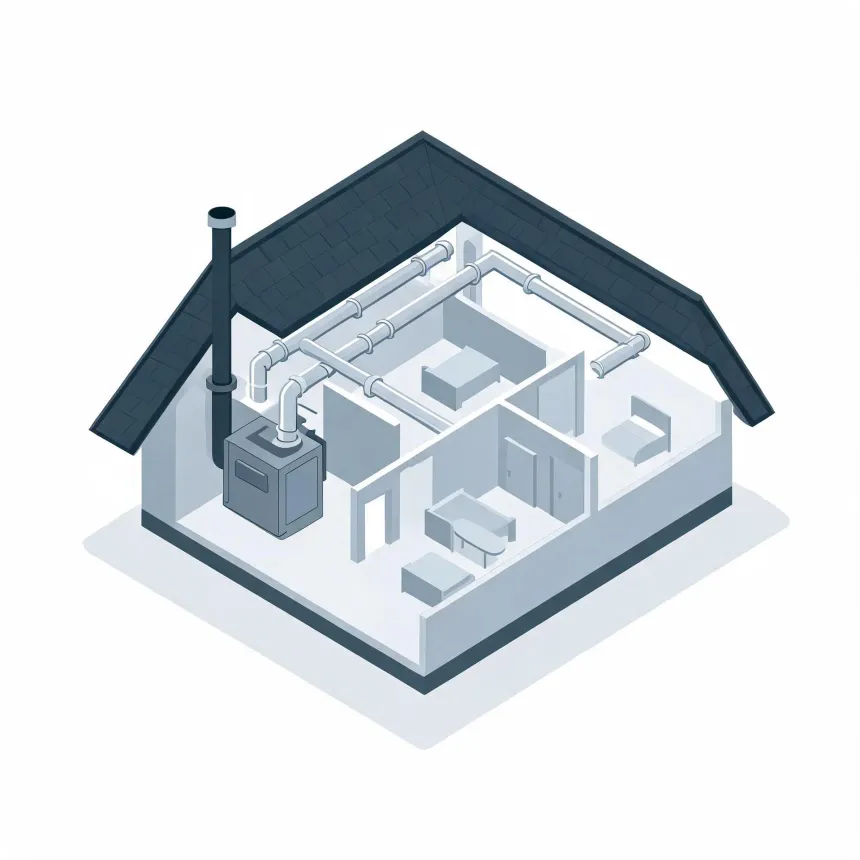
Isometric illustration of a cutaway house showing a dark furnace unit with a flue pipe and branching ductwork running through rooms with simple furniture under a dark gabled roof.
Your furnace works hardest from November through February.

NOAA nClimDiv, 1991–2020 normals

Furnaces in Columbia go on in November.

October is the month to get a weak part looked at before it has to carry a full load.

Five months of real work a year means your furnace isn't fighting for its life

Heat runs November through March
Winter nights average 40°F
Climate zone 3A

Half the homes in Marion County were built in 1980 or earlier, half in 1980 or later. Furnace age here comes down to when a system was last replaced, not when the house went up, so check the unit itself rather than guess from the house. Mobile homes make up close to a quarter of the housing stock in the county, and furnaces in those run the same way as any other, just with less room around them for a tech to work. None of that points to anything unusual going on inside your furnace. A no-start is still about power, the switch, or the control board. Short cycling still usually traces back to a sensor or a dirty filter.

Get it looked at early

Problems tend to show up in the first weeks of the season, when the load hits a part that was already weak.

Find a contractor
A man seen from behind in a gray shirt and tan work pants climbs porch steps toward a blue front door, carrying a worn leather tool bag in his right hand, with a potted shrub in a blue planter beside the door.
A gas furnace with attached ductwork, gas piping, and condensate lines installed in a concrete-block basement.

An easier life means repair usually makes sense

Five months of real heat load, with overnight lows only averaging 40, is not hard duty for a furnace. That's a point in favor of fixing what's wrong rather than assuming the whole unit is done. A furnace that hasn't been run hard tends to have more left in it, so a repair now is a reasonable bet, not a stopgap before a bigger failure.

A small problem can take out a bigger part

A cracked flame sensor or a failing igniter will usually just stop the furnace, and that's the safe outcome. A clogged filter is different. It restricts airflow across the heat exchanger, and running that way heats the exchanger more than it's built for. Keep running it and a simple part failure can turn into a cracked heat exchanger.

Shutting down early is a clue, not a flaw

A furnace that short cycles or trips its limit switch is doing what it's supposed to do. It's stopping before heat builds up somewhere it shouldn't. Resetting it over and over pushes past that safety margin instead of respecting it. The right move is to stop running it and get the actual cause checked.

A few things tend to show up before a furnace quits outright. A burning or electrical smell on startup is the heat exchanger or wiring, not just dust burning off an idle unit. A yellow or flickering flame instead of a steady blue one points to a combustion problem worth checking soon. Banging or popping from the ductwork when it kicks on is usually metal expanding against something, often tied to airflow. Rooms heating unevenly, or air that feels cooler than it should, can mean the blower or the heat exchanger isn't keeping up anymore. Any of these are worth a call before the furnace starts refusing to run at all.

A diagnostic starts before any panel comes off. A tech will ask what you saw. No heat at all, heat that stops after a few minutes, a smell, a sound, all point somewhere different. Then they check power and the switch, confirm the thermostat is calling for heat, and pull the filter to see if airflow is the problem. With the panel off, they read the control board for an error code if it has one, check the flame sensor and igniter, and watch the burners light to see if the flame is steady and blue. If the furnace trips its limit switch or short cycles, they check the heat exchanger before anything else. That part decides whether this ends up a repair or a replacement. Most of a diagnostic visit is confirming or ruling things out in order, not guessing.