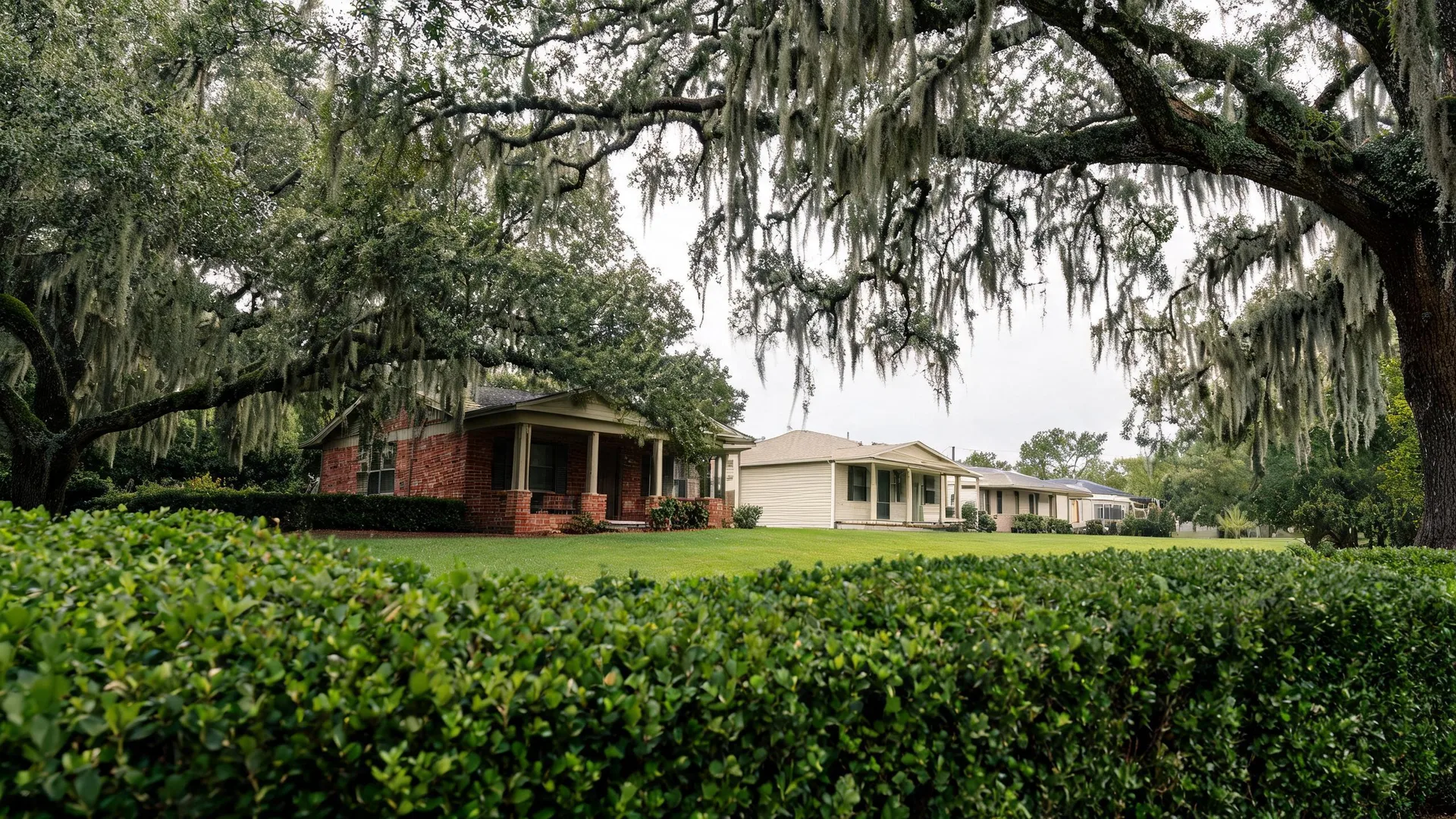
A single-story brick house with a covered porch sits on a mown lawn behind a long trimmed hedge, framed by large oak branches draped with hanging moss, with additional light-colored houses in the background under an overcast sky.

Furnace Repair in Cleveland, MS

Tell us about the job

Takes about a minute. No obligation.

RepairFurnace or heatingBolivar County, MS
Step 1 of 2

What ZIP code is the job in?

A small problem can turn into a cracked heat exchanger

A furnace that short cycles or runs with a weak flame is already stressed. Keep running it and the heat exchanger can crack from the strain, and that's not a part you patch. It has to be replaced, and on some furnaces that's close to replacing the whole unit.

Waiting rarely buys you anything

A furnace making a new noise or tripping its limit switch isn't going to fix itself by running longer. The same fault keeps firing every cycle, and each cycle is another chance for it to damage something around it, like the blower motor or the control board.

5 months
November through March, your furnace is on duty
36°F
the average winter night it heats against
9 winter storms
in ten years, the nights a failure hurts most
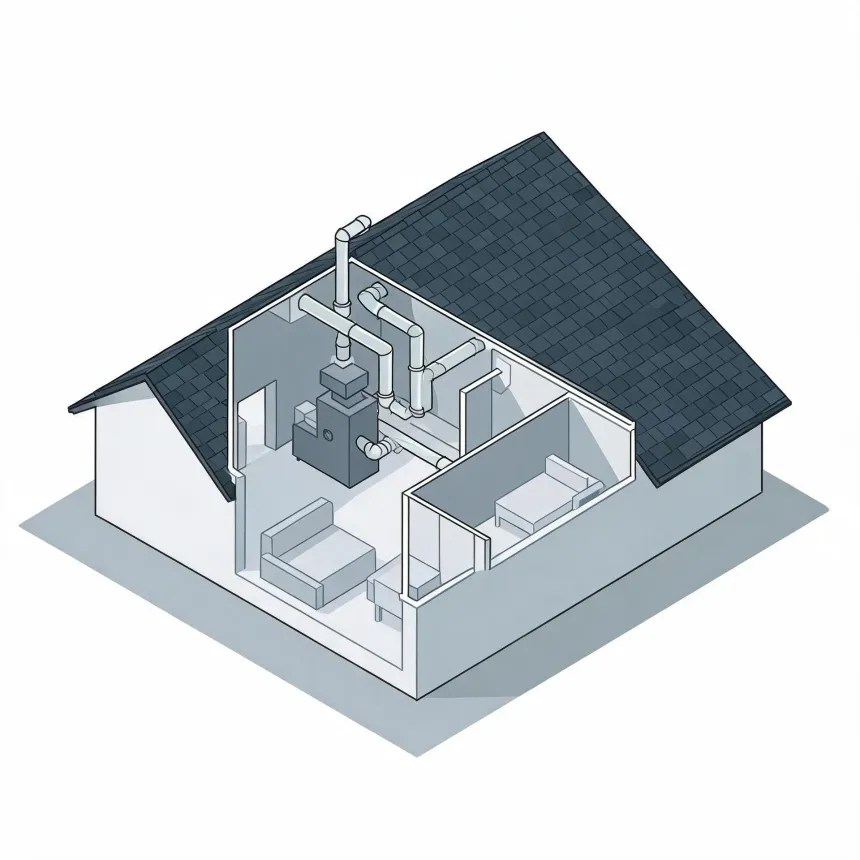
Isometric cutaway illustration of a single-story house with a dark shingled roof, showing interior rooms with furniture and a furnace connected to ductwork.
Your furnace works hardest from November through March.

NOAA nClimDiv, 1991–2020 normals

Furnaces in Bolivar County start firing up in November.

Get a furnace checked in October, before it has to carry a full load on a cold night.

Five months of work a year is not much to ask of a furnace

Heat runs November through March
Winter nights average 36°F
9 winter storms from 2015 to 2024

Half the homes in Bolivar County were built in 1977 or earlier, half later. That split doesn't change what's likely wrong with a furnace that won't fire or won't stay lit. Older furnaces and newer ones fail the same handful of ways, a bad igniter, a dirty flame sensor, a pressure switch that won't make contact. None of that depends on when the house went up. What matters more is how long the furnace itself has been in service, not the house around it. A tech checking yours will ask when it was installed, not when the house was built.

Get it looked at early

Problems tend to show up in the first weeks of the season, when the load hits a part that was already weak.

Find a contractor
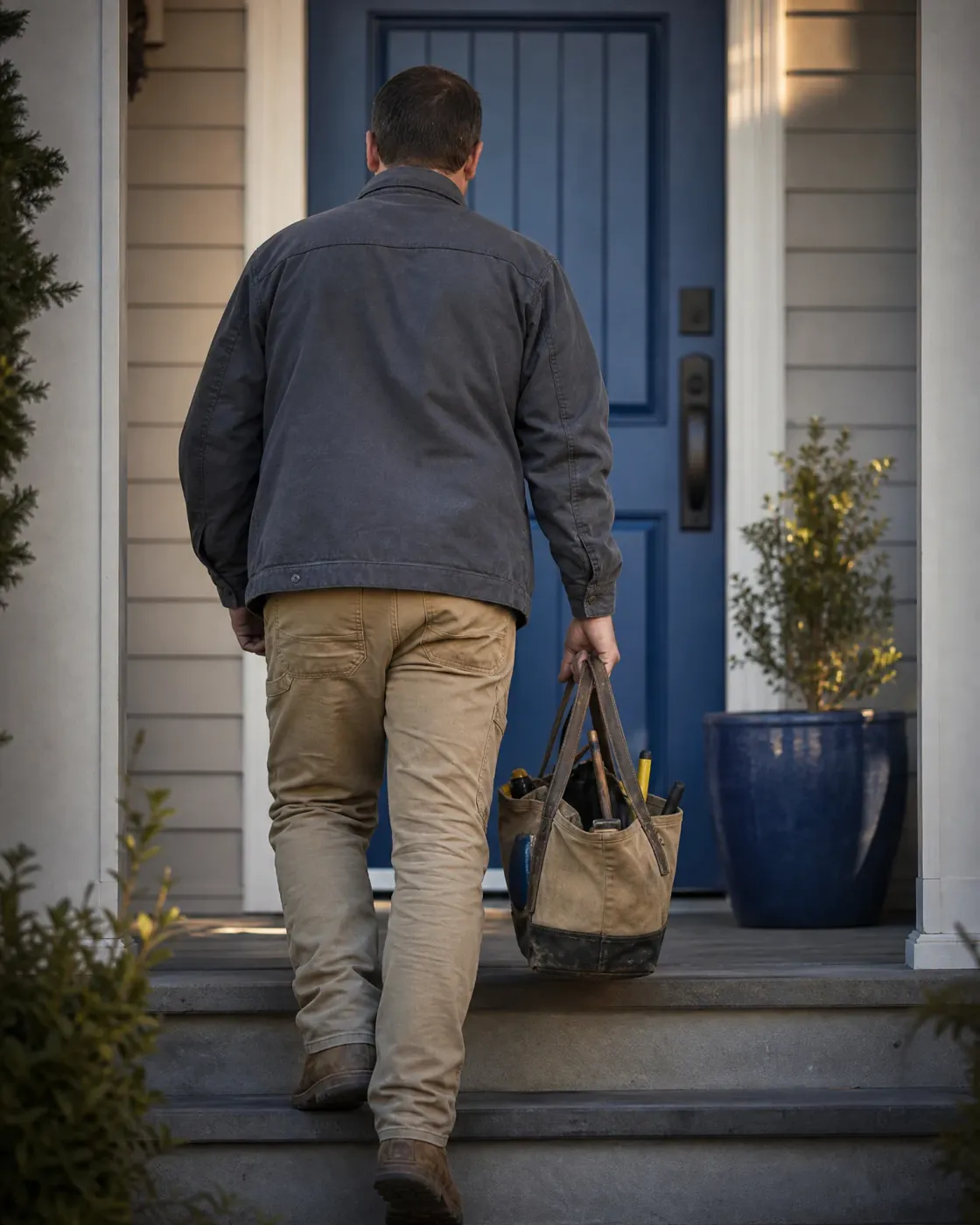
A man in a dark jacket and tan pants, seen from behind, carries a canvas tool bag up concrete steps toward a blue front door of a house with light horizontal siding and a potted shrub in a blue planter.
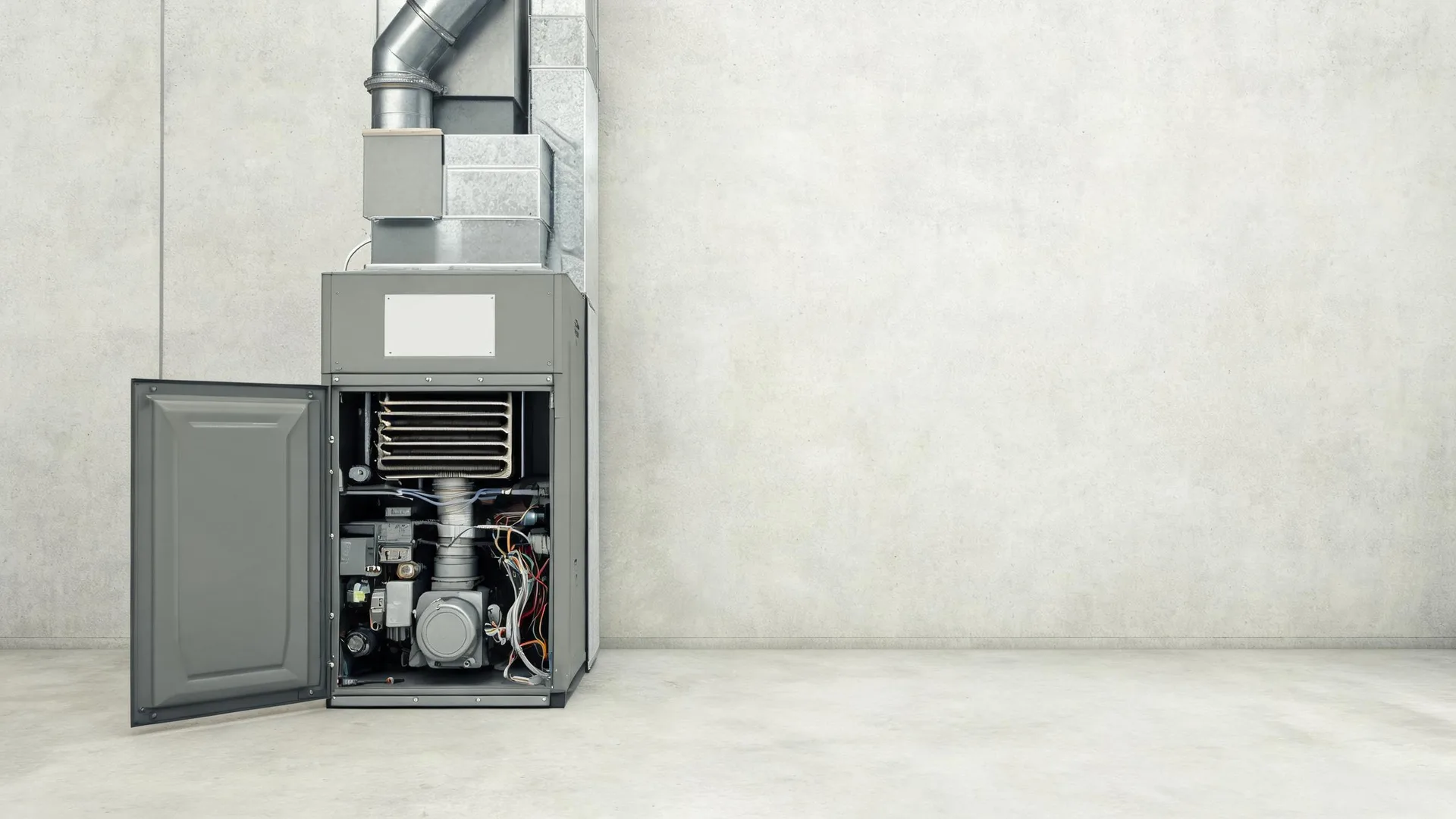
A gray residential gas furnace installed in an unfinished basement, surrounded by ductwork, a metal flue pipe, and a gas supply line.

A light workload means a repair is usually worth it

A furnace that's only worked five months a year for most of its life is usually still in good shape underneath whatever's gone wrong. That's reason enough to get a broken one looked at instead of replaced outright. What breaks a furnace down this way is usually one part failing, not the whole unit wearing out from the work. The overnight lows here average 36°F in January, nothing close to what pushes a furnace to its limit. If yours won't fire or won't stay lit, odds are good a repair gets it through the rest of the season.

Check the simple things first

Make sure the thermostat is set to heat and the setting is above room temperature. Check the furnace switch, it looks like a light switch near the unit, and make sure it's on. Look at the breaker. A furnace that won't do anything at all is sometimes just waiting on one of these.

Know what you shouldn't touch

Don't take apart the burner assembly or go near the gas valve. If you smell gas, leave the house and call the gas company before anyone calls for repair. A flame that looks yellow instead of blue, or soot around the unit, is worth telling a tech about, but it's not something to fix yourself.

An unfinished concrete basement containing a metal HVAC air handler, exposed wooden ceiling joists with sheet-metal ducts, a hanging bare bulb, copper pipes, and stacked cardboard boxes.

A new furnace would cut about $110 a year off heating for a typical Bolivar County home.

  • A new high-efficiency furnace$490 a year
  • An older furnace$600 a year

Estimates for a typical Bolivar County home, compared with an older unit built to the previous federal minimum, from EIA household energy data, Mississippi fuel prices and NOAA climate normals. Your home will differ.

Repair makes sense when one part has failed and the heat exchanger is sound.

Replacement makes sense when the heat exchanger is cracked or the furnace keeps needing parts.

A tech starts by asking what the furnace is doing, or not doing, before touching anything. Short cycling, no heat, a smell, a sound, that narrows things down before the panel ever comes off. Next comes a look at the burners and the flame itself. A steady blue flame means combustion is clean. Yellow or flickering points toward a dirty burner or a venting problem, and that gets checked before anything else. The igniter and flame sensor get tested or cleaned, since a weak signal from either one will shut the furnace down as a safety measure. The pressure switch and limit switch get checked too, because either one can stop the furnace from firing even when everything else is fine. Only after all that does a tech open things up further, and by then they usually already know what they're looking for.