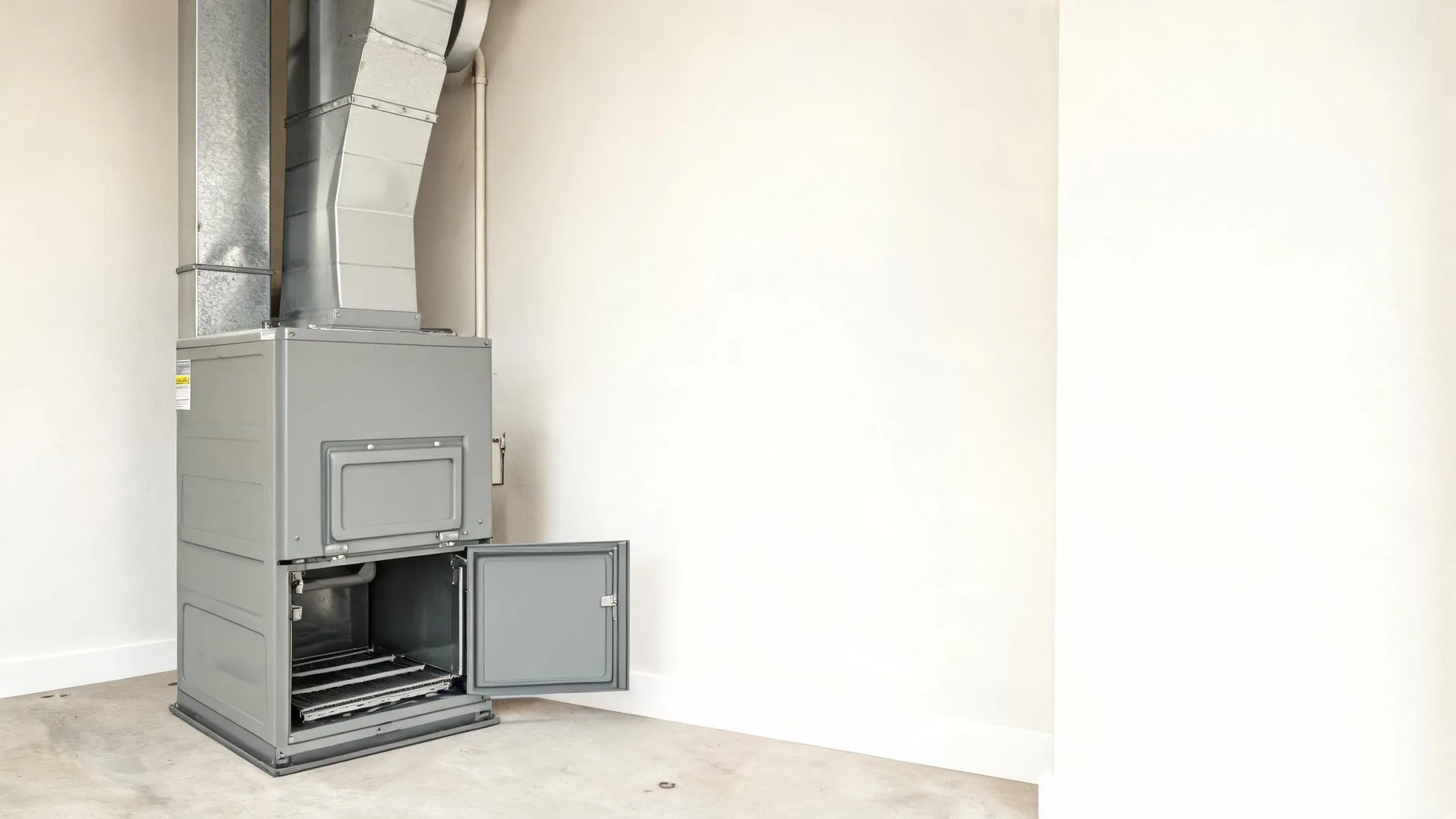
Five months of real work
Furnaces here run from November through March, with overnight lows averaging 36°F in December and January. That's a shorter season than most of the country asks of a furnace, and milder.
Takes about a minute. No obligation.
Furnaces here run from November through March, with overnight lows averaging 36°F in December and January. That's a shorter season than most of the country asks of a furnace, and milder.
A furnace that hasn't been worked hard for years is usually sound underneath a breakdown. When one in Clarksdale acts up, the cause is more often a part that failed or a system that got skipped on maintenance than a machine worn out from the load.
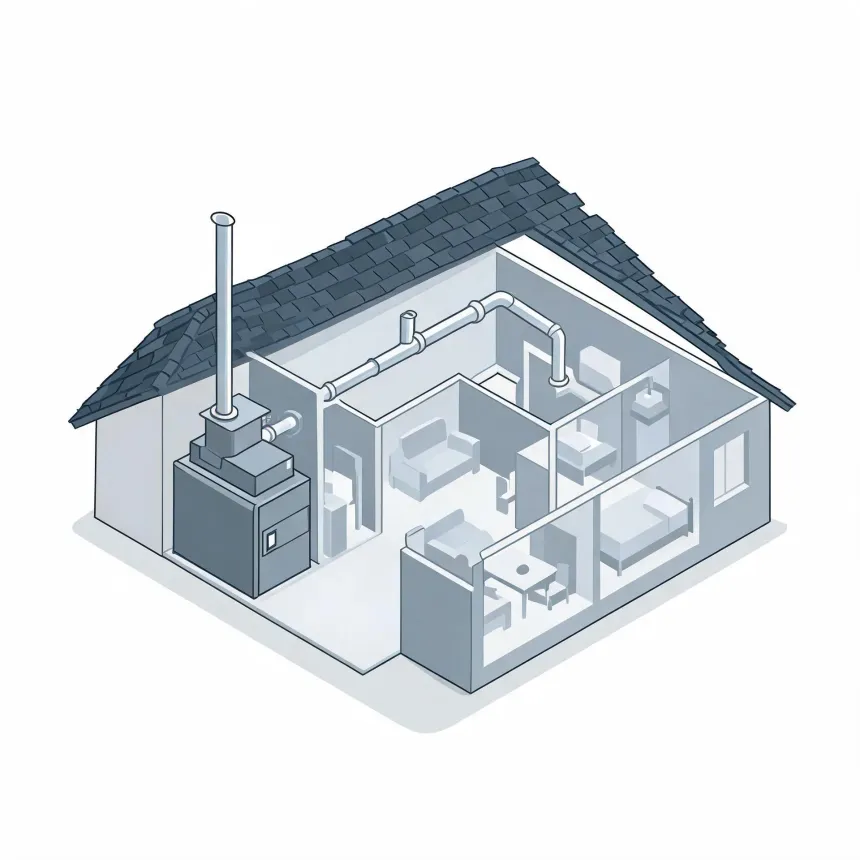
NOAA nClimDiv, 1991–2020 normals
Furnaces in Coahoma County start up again in November.
A part that was already weak often won't make it through that first cold snap.




If your furnace came with a house built that long ago, it's worth finding out how old the furnace itself is before paying for a big repair. Plenty of furnaces have been swapped out since 1970, so the house's age doesn't tell you the machine's age. But if yours has never been replaced, a technician can look at the heat exchanger and tell you how much life is left in it. That changes the math on a repair. A part worth fixing on a newer furnace might not be worth fixing on one as old as the house.
It has an easier job here than in most places, so your furnace is often in decent shape. Repair is usually worth it.
Find a contractor
Start with the thermostat. Make sure it's set to heat, not cool, and set above room temperature. A dead battery in the thermostat will leave you with no furnace at all, and it's an easy fix. Next, pull the air filter and look at it. A filter clogged with dust chokes airflow across the heat exchanger, and some furnaces will shut themselves off rather than overheat. If it's gray and matted, replace it. Walk the house and check that no vents or registers are closed off or blocked by furniture. Find the furnace switch, it looks like a regular light switch, usually mounted on or near the unit, and make sure it wasn't bumped off. Check the breaker panel for anything tripped. If the furnace has a standing pilot, see whether it's lit. If it uses an igniter instead, listen for the unit trying to start and failing. That points to an ignition problem a technician needs to look at. None of this is dangerous to check yourself. If you smell gas, leave that alone. Get everyone out and call the gas company, not a repairman.
Short cycling is one of the clearest signs, the furnace kicks on, runs a few minutes, shuts off, then starts again before the house warms up. Cold air coming out of the vents when the furnace is running points to a different problem, often ignition failing partway through the cycle. A burning smell on first startup each season is normal for a moment, but if it lingers or comes back every cycle, that's not dust burning off anymore. Listen for a boom at ignition, that's gas building up before it catches, and it's worth getting looked at soon rather than waiting.
A furnace makes the same handful of sounds when it's healthy, and a new one is usually the first thing you hear before you see a problem. A screech points to the blower motor or a bearing going dry. A rhythmic banging when the burners light is often a delayed ignition, the gas isn't catching right away. Clicking that doesn't lead to the burners firing usually means the igniter is trying and failing. None of these fix themselves, and most get worse the longer the furnace keeps running that way.
Estimates for a typical Coahoma County home, compared with an older unit built to the previous federal minimum, from EIA household energy data, Mississippi fuel prices and NOAA climate normals. Your home will differ.
Repair makes sense when one part has failed and the heat exchanger is sound.
Replacement makes sense when the heat exchanger is cracked or the furnace keeps needing parts.
A diagnostic visit starts with questions, not tools. A technician wants to know what you've noticed, when it happens, and whether it's gotten worse. Then the cover comes off and the burners get watched through a full cycle, from ignition to shutdown. That's where ignition delay, a weak flame, or a burner not lighting evenly shows up. Flame sensor gets checked, since a dirty or failing one will shut the furnace down partway through a cycle even when everything else is fine. The blower gets tested for the amount of air it's actually moving, because a motor can run and still not push enough air across the heat exchanger. If the furnace is old enough, the heat exchanger itself gets inspected for cracks, since a cracked one is a safety issue, not a repair you patch. By the end, you should know what failed and why, not just what part is getting replaced.