Low-angle view across a lawn and pine-needle mulch toward a single-story brick house with a dark hipped roof and covered porch, framed by pines and a moss-draped oak branch.

Furnace Repair in Bay St. Louis, MS

Tell us about the job

Takes about a minute. No obligation.

RepairFurnace or heatingHancock County, MS
Step 1 of 2

What ZIP code is the job in?

Five months of work a year

Furnaces in Bay St. Louis run from November through March and sit idle the rest of the year. Overnight lows average 43°F through December, January and February, which is cold enough to need heat but not the kind of deep freeze that pushes a furnace hard. A furnace here just doesn't rack up the hours or the strain that one does further north.

What that means for a repair call

A furnace that isn't worked hard tends to still have good years left in it when something goes wrong. If yours is acting up, the cause is more likely a part that failed or was never maintained than a machine worn out from the job it's been doing. That makes fixing it the right call more often than not.

5 months
November through March, your furnace is on duty
43°F
the average winter night it heats against
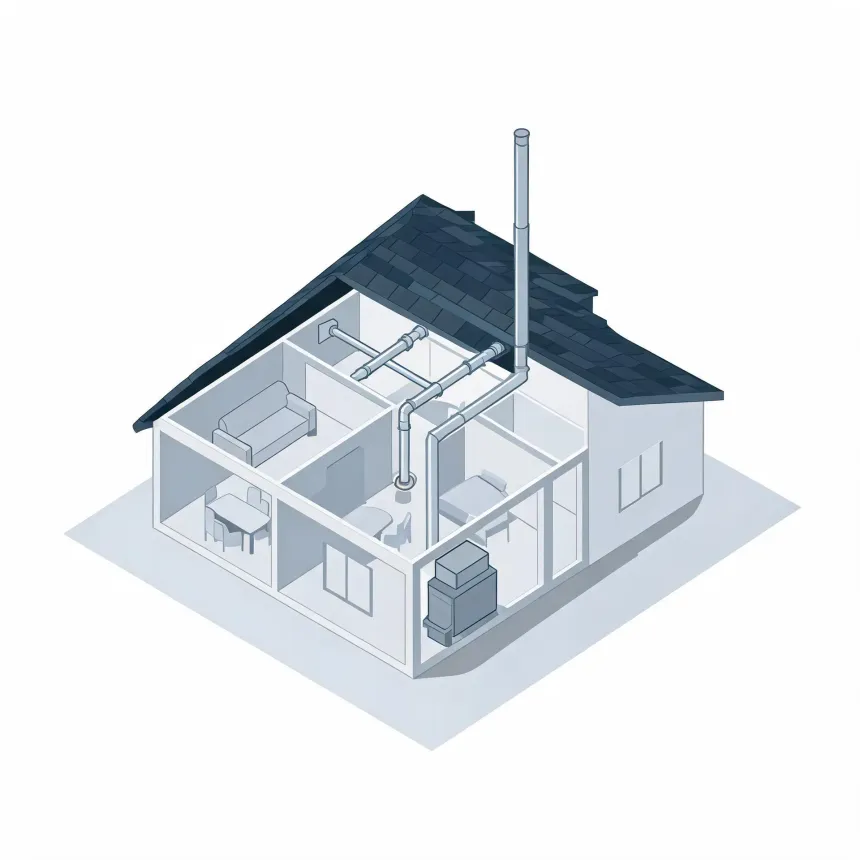
Isometric cutaway illustration of a single-story house showing interior rooms with furniture, ductwork and piping running to a tall vertical flue through the dark shingled roof, and a furnace-like appliance unit on the floor.
Your furnace works hardest from December through February.

NOAA nClimDiv, 1991–2020 normals

Half the houses in Hancock County were built in 1999 or later.

A furnace that came with a newer house hasn't been sitting around long enough to wear out on its own.

November is when a weak furnace gets found out

Heat runs November through March
Winter nights average 43°F
Climate zone 2A

A newer furnace is worth fixing first

If your furnace came with the house, there's a good chance it's not old enough to be the problem on its own. Worth getting the actual cause checked before anyone talks about replacing it.

Find a contractor
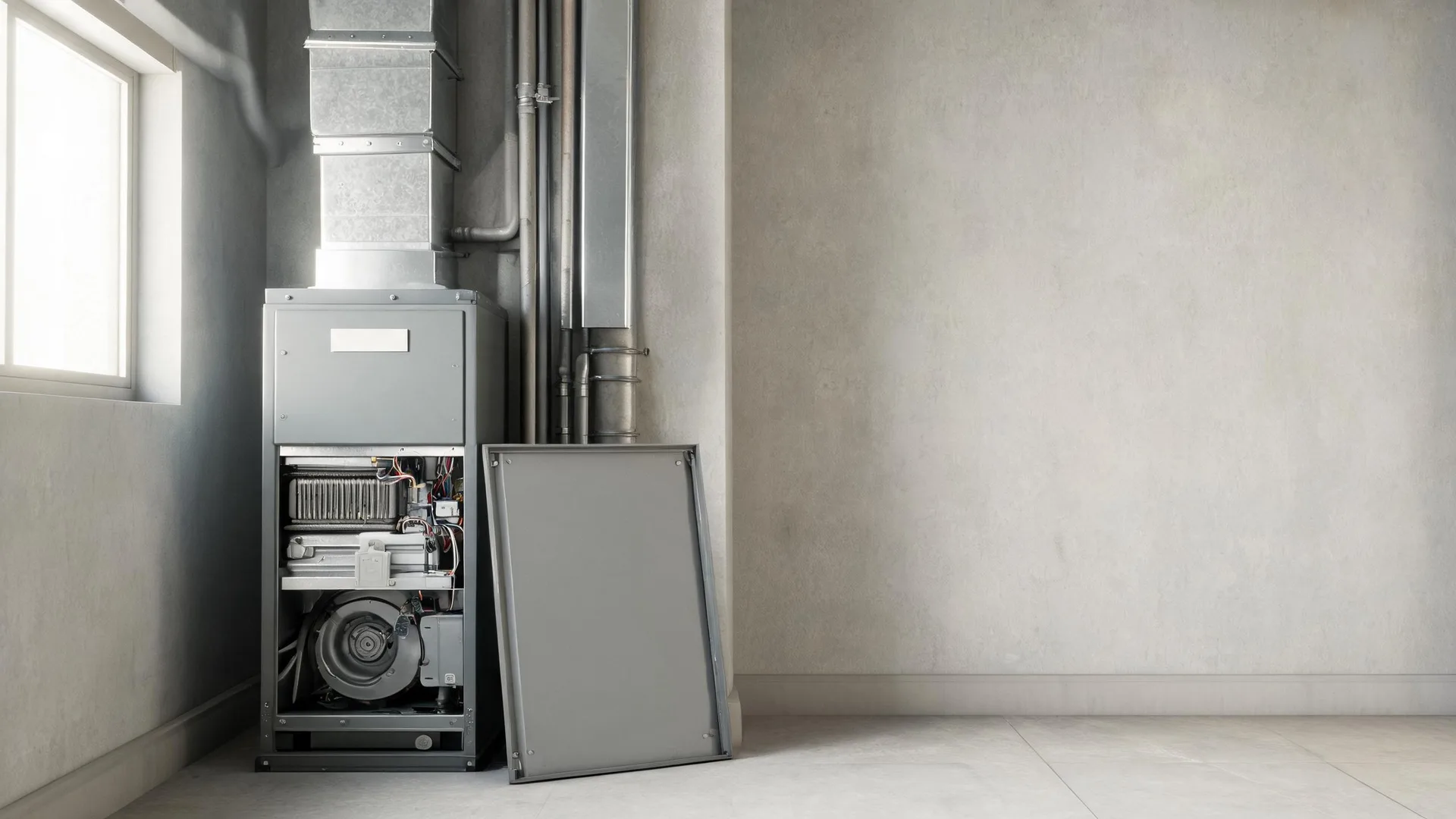
A gray high-efficiency gas furnace installed in an unfinished basement, surrounded by gas lines, a condensate drain, and sheet-metal ductwork.

Furnaces rarely fail all at once

Most furnace failures start with one part, not the whole machine giving out. The igniter cracks or weakens with age and stops lighting the burners. The flame sensor collects a film of residue until it can't tell the burner is lit, so the system shuts itself down as a safety step. A limit switch trips because airflow is restricted somewhere, often by a dirty filter, and the furnace won't run until that's cleared. Blower motors wear out after years of cycling on and off. None of these mean the furnace itself is bad. They mean one component reached the end of its life while the rest of the unit is fine.

What you'll notice first

A furnace that's starting to fail rarely stays quiet about it. It might take a few tries to light, or light and then shut off a minute later. The blower might run but push out air that's barely warm. You might hear a clicking that repeats over and over instead of ending in a flame. Short cycling and cold air from the vents are the furnace telling you which part is struggling before it quits for good.

Why it's worth a call now

A furnace that's limping along doesn't fix itself. Running it in that state wears on the parts around whatever failed first. A cracked igniter left alone means more failed startups and more strain on the circuit board. A dirty flame sensor only gets dirtier with time. Waiting usually turns a one-part fix into a bigger repair.

A dirty flame sensor is a good example of how this goes. The furnace tries to light, the sensor fails to pick up the flame, and the system shuts off as a safety step. If that happens once and gets looked at, it's a simple cleaning. Left alone, the furnace keeps attempting the same failed startup, and that repeated cycling puts extra load on the ignition control board. A limit switch trip works the same way. Ignore what's tripping it and the furnace keeps shutting down mid-cycle, which stresses the blower motor and the heat exchanger along with whatever caused the airflow problem in the first place. The part that failed first is rarely the only part you end up paying to fix.

A diagnostic visit starts with the symptom, not a guess. A tech will ask when the trouble shows up. Right at startup, a few minutes in, or only after the furnace has been running a while, each points somewhere different. Then it's a sequence of checks in order, ruling things out as they go. Power and the thermostat signal come first. A furnace that won't start at all often isn't a furnace problem yet. After that comes the ignition system. Does it spark or glow, does it sense the flame once lit, does it hold. Airflow gets checked too. A restricted filter or blocked vent can trip a safety switch that has nothing wrong with it otherwise. Often the furnace gets run through a full cycle while someone watches it, because some failures only show up once the system has had a few minutes to heat up.