





An unfinished basement featuring a forced-air furnace, exposed wooden ceiling joists, bare concrete walls, and miscellaneous items including cardboard boxes and coiled cables on the floor.

Furnace Repair in Amory, MS

Tell us about the job

Takes about a minute. No obligation.

RepairFurnace or heatingMonroe County, MS
Step 1 of 2

What ZIP code is the job in?

A furnace that's struggling doesn't fix itself by staying on. Take a cracked heat exchanger. Run it long enough and what started as a small problem becomes a safety issue, because that crack lets combustion gas mix with the air moving through your ducts. A clogged burner or dirty flame sensor can cause the furnace to short cycle, turning on and off over and over, and every one of those cycles puts more strain on the igniter and the blower motor until one of them fails outright. Even a dirty filter forces the blower to work harder to push air through, and that extra heat can crack a heat exchanger that would have otherwise held up fine. The furnace usually gives some warning first. A burning smell, a strange sound, heat that comes and goes. Those signs are worth paying attention to before the furnace makes the decision for you.

5 months
November through March, your furnace is on duty
35°F
the average winter night it heats against
4 winter storms
in ten years, the nights a failure hurts most
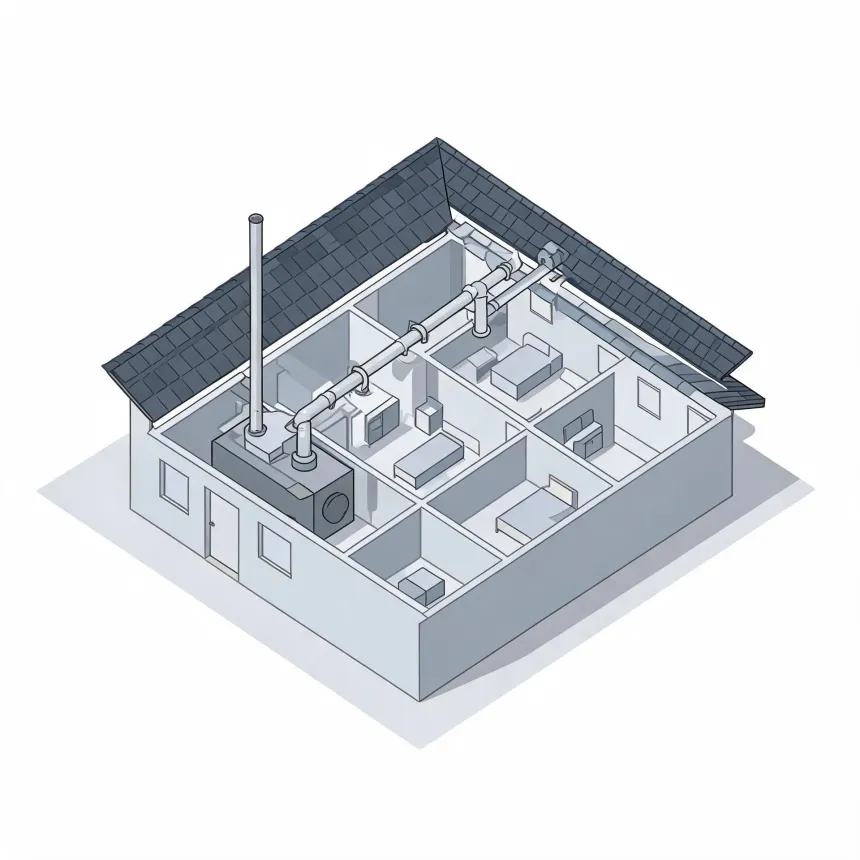
Isometric cutaway illustration of a single-story house showing interior rooms, furniture, a dark furnace unit with a tall vertical flue pipe, and ductwork running under the pitched shingle roof.
Your furnace works hardest from November through March.

NOAA nClimDiv, 1991–2020 normals

Furnaces in Amory only run about five months a year, November through March.

A furnace with a shorter season behind it usually has less wear on it, so a repair is often worth doing.

Half the homes here were built by 1982, but age isn't why your furnace is acting up

Half the homes here were built by 1982
Heat runs November through March
Winter nights average 35°F
Amory furnaces start up in NovemberHeat here runs November through March, five months a year.

Most furnace problems here come down to a part wearing out, not the house itself. If a repair tech traces your issue back to the electrical side, electricity in Mississippi ran $39.26 per million Btu in 2024, so an igniter or blower motor pulling more current than it should will show up on your bill before you notice anything else is wrong. That's a reason to get a repair done rather than let a furnace limp along underperforming. Nothing about Amory makes a furnace break down more than it would anywhere else. It's usually a worn part doing what worn parts do, and the fix is the same one a tech would make anywhere.

It's usually worth repairing

It has an easier job here than in most places, so your furnace is often in decent shape. Repair is usually worth it.

Find a contractor
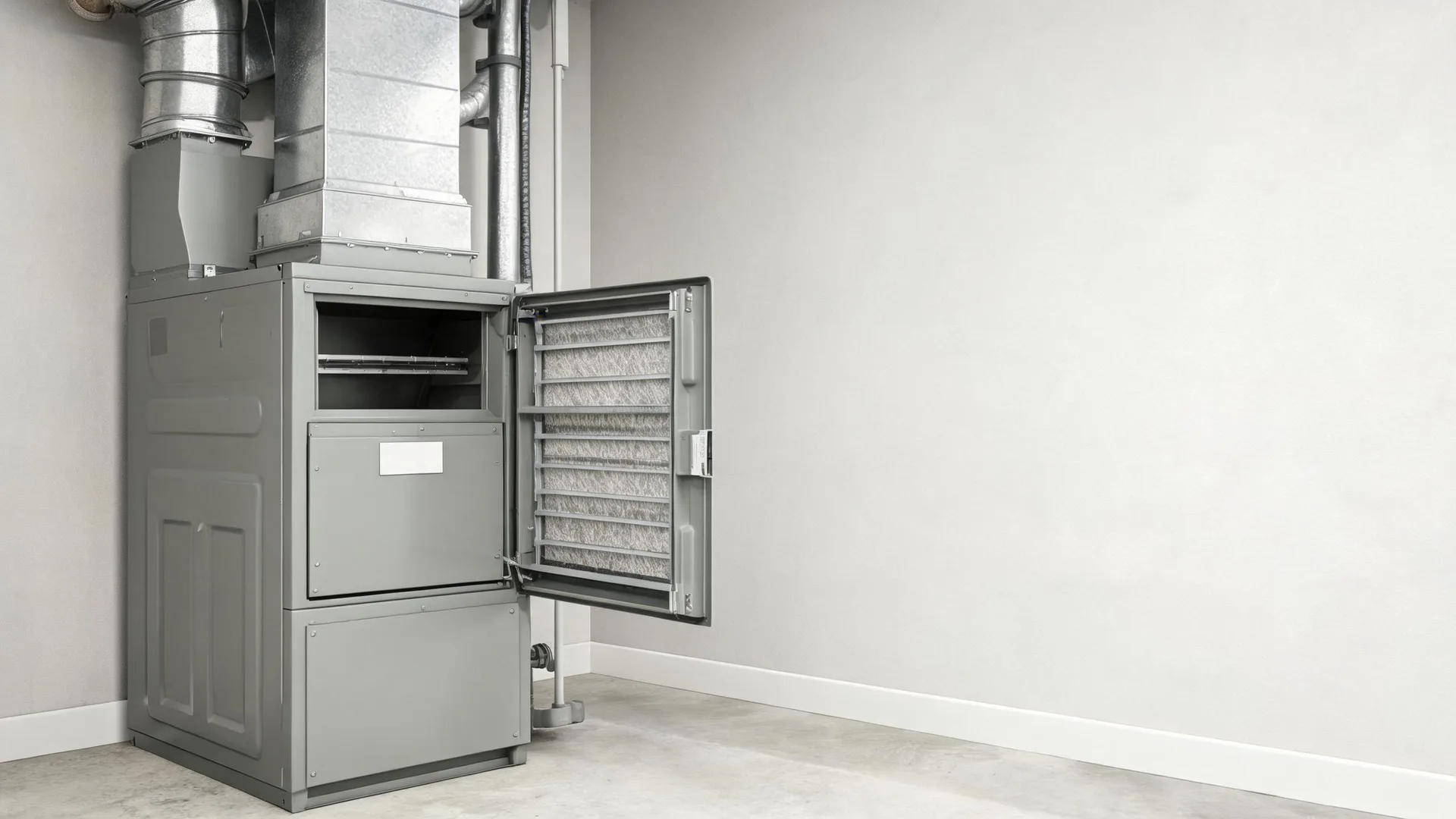
A gray high-efficiency gas furnace installed in an unfinished basement, surrounded by gas lines, a condensate drain, and sheet-metal ductwork.

A mild five months, not a hard winter

Those overnight lows average 35°F across December, January and February, nothing like the deep cold that shortens a furnace's life further north. Five months of moderate duty is a reasonable season to ask a repair to hold up through. If your furnace is giving you trouble now, getting it fixed is the better bet over replacing it.

Check the thermostat and the filter first

Make sure the thermostat is set to heat and set above room temperature, and check the batteries if it uses them. Then look at the filter. If you can't see light through it, it's choking off airflow, and swapping it for a clean one sometimes fixes the problem outright.
Check the breaker and the switch near the unit

A furnace that won't start at all may have tripped a breaker rather than failed internally. There's also a power switch on or near the furnace itself, usually one that looks like a light switch, and it can get bumped off by accident. Check both before assuming the worst.

A few parts fail more than the rest. The igniter is one. It heats up every cycle to light the gas, and that constant heating and cooling wears it down until it cracks or stops glowing hot enough. The flame sensor is another, not because it breaks often but because it coats over with residue and starts telling the furnace no flame is there when one is, so the furnace shuts itself down as a safety measure. Blower motors wear out from sheer runtime, bearings going bad after years of spinning. And draft inducer motors fail quietly, so the furnace won't even attempt to start because it can't confirm the exhaust path is clear. Most of this is wear, not damage from any one bad day.

A repair holds up when the rest of the furnace has nothing else wrong with it. If the igniter or flame sensor failed on its own, replacing that one part gets you a furnace that runs like it did before, because nothing else was asking for attention. Replacement starts to make sense when the heat exchanger is the problem, since that's not a part a tech swaps out on its own, or when the furnace has already had a few different repairs in a short stretch, each one a different part giving out. A furnace with one failed part and an otherwise clean bill of health is a repair. A furnace where everything seems to be wearing out at once is telling you it's done, not that it needs one more fix.