






A bare concrete basement containing a gray gas furnace with metal ductwork and a vertical flue pipe, lit by a single hanging bulb.

Furnace Installation in Starkville, MS

Tell us about the job

Takes about a minute. No obligation.

New system or replacementFurnace or heatingOktibbeha County, MS
Step 1 of 2

What ZIP code is the job in?

Oktibbeha County has seen 91 damaging wind events and 10 tornadoes over the past decade. A furnace itself sits inside, but the install involves venting and ductwork, and some of that can run near an exterior wall. Worth asking your contractor how it's placed. Power is the bigger issue for a furnace. Nearly a third of Mississippi households lost power for a day or more in 2024, and a standard furnace needs electricity to run even with gas supplying the heat. If a winter storm knocks the power out, ask what it would take to keep the furnace running on backup.

5 months
November through March, your furnace is on duty
35°F
the average winter night it heats against
80% AFUE
the federal minimum any new unit must meet
Isometric cutaway illustration of a single-story house showing interior rooms, furniture, a dark furnace unit with a tall vertical flue pipe, and ductwork running under the pitched shingle roof.
Your furnace works hardest from November through March.

NOAA nClimDiv, 1991–2020 normals

Furnaces here only run about five months a year, November through March.

A furnace that short a season doesn't need top-tier efficiency to be worth installing.

October is the month to put in a furnace, before November asks it to work

Heat runs November through March
Winter nights average 35°F
Climate zone 3A

Electricity heats 65.7% of homes in Oktibbeha County, gas furnaces account for 20.8%, and propane covers most of what's left. If your current furnace runs on gas, putting in another gas furnace means the gas line and venting are already there, which keeps the install simpler. The same goes for electric furnaces where that's what the house already has. Switching fuels is possible, but it means new gas line work or new electrical capacity, and that's a bigger job than most replacements. Worth asking your contractor what your house is set up for before you decide.

The furnace you need only has to meet one number

Furnaces sold here have to hit at least 80 percent AFUE, and that minimum holds until the end of 2028, when it jumps to 95 percent for new units. A furnace bought now only needs to clear the lower bar. Zone 3A doesn't ask for much given how short the season runs here, so there's no efficiency reason to hold off. A federal tax credit is available on qualifying high-efficiency units if you want to go above the minimum anyway.

Find a contractor
A man in a navy T-shirt, tan work pants, boots and a green cap climbs porch steps toward a blue front door, carrying a canvas tool bag beside a blue planter with a small shrub.
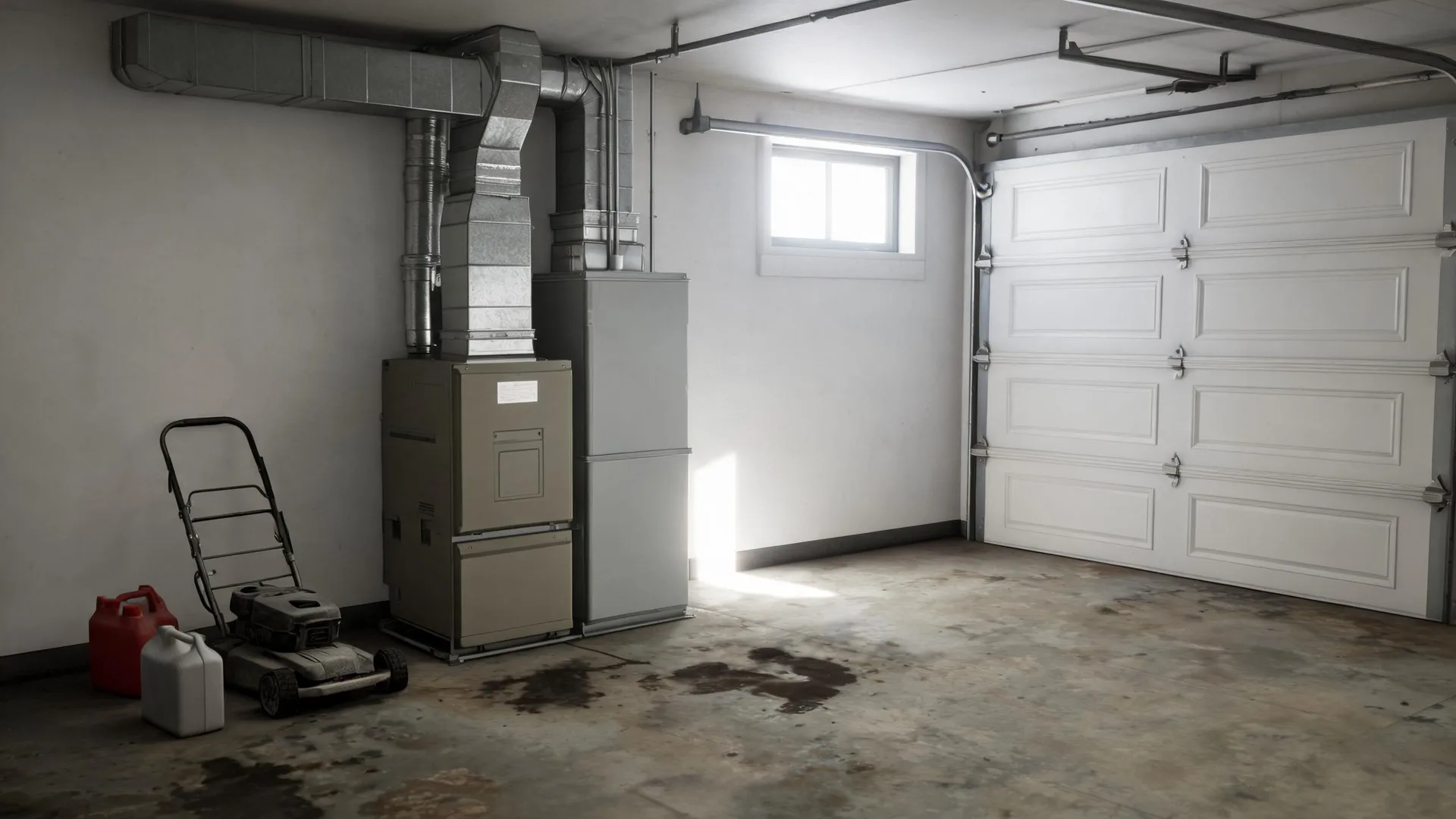
A gray residential gas furnace installed in an unfinished basement, connected to sheet-metal ductwork and PVC pipes.

Five months a year, mild nights

Five months of heat, and a lot of those nights only need to fight off 35 degrees, not single digits. That's not a hard job for a furnace to do. Pick one that's reliable and sized right for your house, and leave the top-efficiency models to places where the furnace runs harder and longer.

Ask for a load calculation, not a guess off square footage

The size of the furnace should come from a room by room heat loss calculation, not a quick estimate based on the old unit or the size of the house. A furnace that's too big cycles on and off fast, which wears out parts sooner and leaves rooms uneven. One that's too small runs constantly and never quite catches up on the coldest nights.
Ask what happens to the ductwork, not just the furnace

A new furnace moves a different amount of air than the one it replaces, and the existing ducts have to be able to handle it. Undersized or leaky ductwork chokes airflow no matter how good the furnace is. Have the contractor check the duct sizing and the condition of the seams before the install, not after the first cold snap shows the problem.

The old furnace doesn't get reused or moved to another house. Once the new one is in, the installer disconnects the gas line or electrical circuit, pulls the unit out, and it goes with them for scrap. Furnaces have a heat exchanger that's run through years of combustion, and that's not something anyone reinstalls elsewhere, so it isn't kept as a spare or a backup. If the old system had a separate humidifier or a thermostat wired specifically to it, ask whether those get swapped too or left in place. Venting is the other piece worth checking. A new high-efficiency furnace can vent differently than the old one did, so the old vent pipe might get capped or removed rather than reused.

Sizing a furnace comes down to how fast the house loses heat, not how big the house is. A home with a lot of window area or little insulation loses heat faster than one without, even at the same square footage, so a contractor works it out room by room rather than reading it off a chart. Oversize it and the furnace short cycles, kicking on, satisfying the thermostat fast, then shutting off again before it's run long enough to heat evenly or wear in properly. That stop start pattern is harder on the igniter and the blower motor than a normal run cycle. Undersize it and the furnace runs long and still can't keep up on the coldest night, because it was never built to cover that much heat loss. The right size runs steady, holds the temperature, and shuts off when the job's done.