




An unfinished basement featuring concrete block walls, exposed floor joists, a bare concrete floor, and a forced-air furnace with a large metal exhaust duct in the corner.

Furnace Installation in Madison, MS

Tell us about the job

Takes about a minute. No obligation.

New system or replacementFurnace or heatingMadison County, MS
Step 1 of 2

What ZIP code is the job in?

Ask what size furnace they're proposing and how they got that number. It should come from a load calculation on the house, not a match to the unit being replaced. A furnace that's too big cycles on and off instead of running steady, and that wears out the heat exchanger faster. Ask about the venting too, since a new furnace may need different venting than the old one, and that changes the job. Get the efficiency rating in writing and ask what warranty covers the heat exchanger versus everything else, because those terms are often different lengths. Last, ask who pulls the permit and does the inspection. A straight answer on all of this tells you more than any brochure will.

5 months
November through March, your furnace is on duty
37°F
the average winter night it heats against
80% AFUE
the federal minimum any new unit must meet
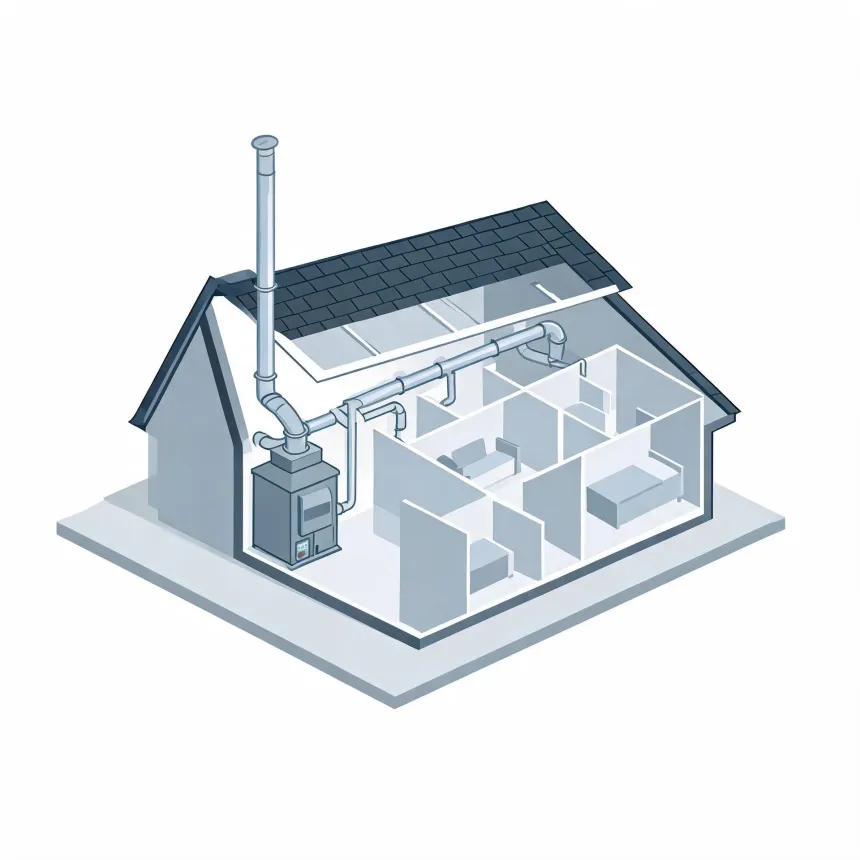
Isometric cutaway illustration of a house showing interior rooms with furniture, a furnace unit with a tall flue pipe outside, and ductwork running through the attic.
Your furnace works hardest from November through February.

NOAA nClimDiv, 1991–2020 normals

Gas heats about half the homes in Madison County.

If your house already has a gas line, a gas furnace is the straightforward replacement.

Five months of mild winters means a furnace here doesn't have to work hard to keep up

Heat runs November through March
Winter nights average 37°F
Climate zone 3A

What a new furnace here has to meet

Any furnace installed here now has to hit at least 80 percent AFUE, the federal minimum. In 2028 that minimum jumps to 95 percent, so a furnace going in today under the current rule won't meet the standard a newer unit would have to. A federal tax credit is available on qualifying high-efficiency furnaces, worth asking about before you settle on a model.

Find a contractor
A gray gas furnace with attached ductwork and piping installed in an unfinished concrete basement.

A furnace that gets most of the year off

Five months of work a year, and the coldest nights only average 37°F. That's not a system fighting to keep up, it's one cycling on for a few hours at a stretch on a cold morning and sitting idle the rest of the year. Put the money into getting the size and venting right rather than chasing a higher efficiency tier the load here doesn't call for.

What the load calculation actually measures

A contractor doing this right measures the floor area, the ceiling height, the window glass, and how much insulation sits between inside and outside. Every one of those feeds into how fast the house loses heat on a cold morning, and that loss is what the furnace has to replace. Skip this and you're just guessing from the size of the old unit, which may have been wrong from the day it went in.

Why the wrong size wears a furnace out

A furnace sized too big heats the house fast, shuts off, then fires again a few minutes later. That short cycling stresses the heat exchanger and the blower motor more than a long, steady run does. A furnace sized too small just runs longer trying to catch up, and on the coldest mornings it may not get there at all. Either way the damage shows up down the road, not on day one.

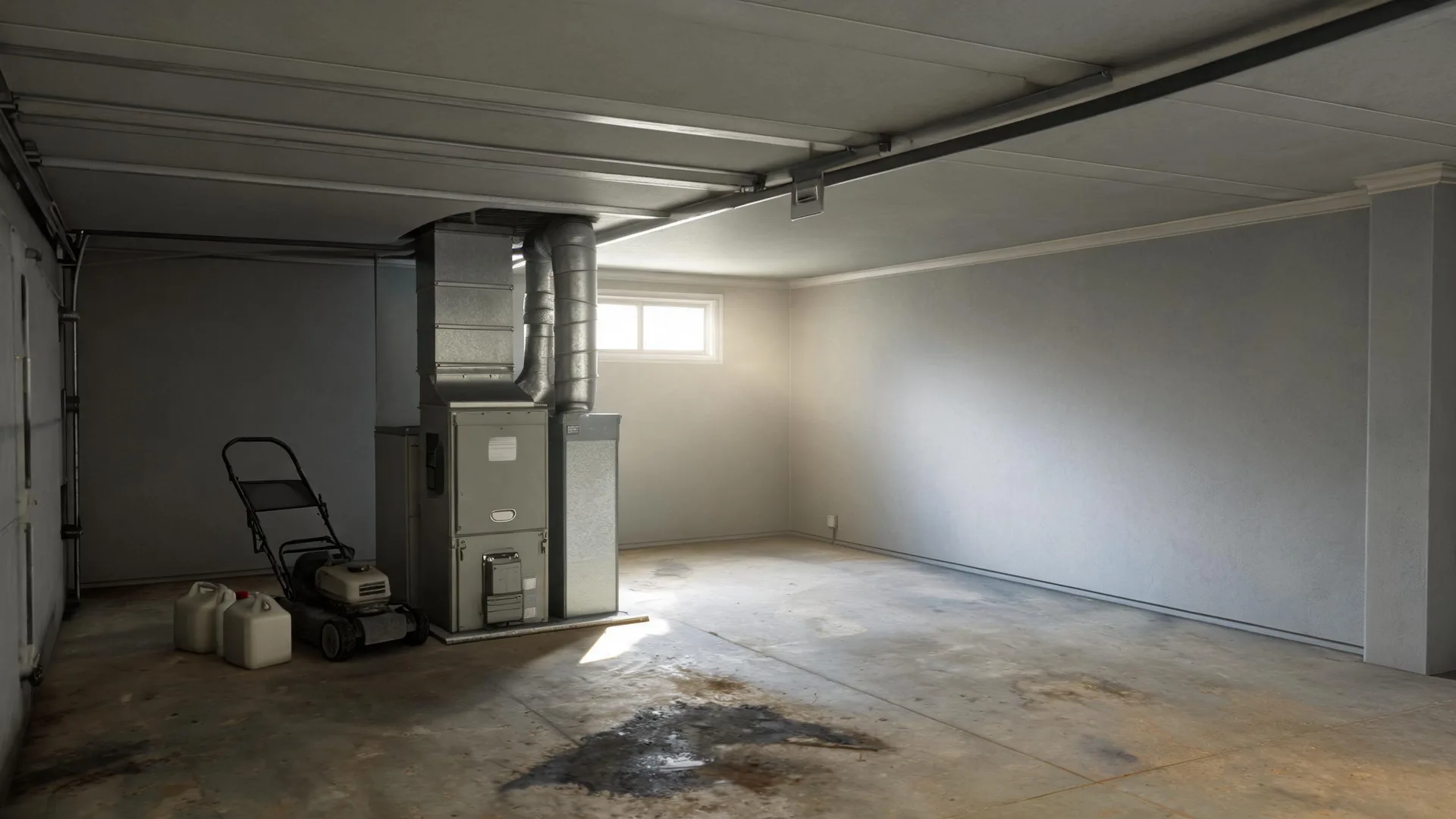
An unfinished concrete basement containing a gas furnace with sheet-metal ductwork, utility shelving, and exposed overhead joists.

A high-efficiency gas furnace would save about $80 a year to run in Madison County compared with a gas furnace.

  • A high-efficiency gas furnace$420 a year
  • A gas furnace$500 a year

Estimates for a typical Madison County home, from EIA household energy data, Mississippi fuel prices and NOAA climate normals. Your home will differ.

The old furnace comes out first, and that's when a contractor finds out what the last install actually looked like. New furnace goes on a stand or hangs from the same spot, lined up with the vent and the gas line. The gas line gets connected and pressure tested before anything runs. The vent pipe gets checked or replaced, since a new furnace may draft differently than the one it's replacing and the old pipe isn't always a match. Once it's hooked up, the contractor fires it, checks the flame, checks the temperature rise through the plenum, and makes sure the blower is moving the air it's supposed to. Then comes the carbon monoxide check, on the furnace itself and anywhere else gas burns in the house. Last thing is the inspection, which confirms the venting and the gas connection were done to code before anyone calls the job finished.