






A row of single-story houses with porches, one brick and others with pale siding, behind a trimmed hedge and lawn, under oak branches draped with Spanish moss.

Furnace Installation in Hattiesburg, MS

Tell us about the job

Takes about a minute. No obligation.

New system or replacementFurnace or heatingForrest County, MS
Step 1 of 2

What ZIP code is the job in?

The furnace itself is only part of what you're paying for. Size matters more than most people expect. A furnace that's too big for the house cycles on and off too fast, wearing out parts early and leaving rooms uneven. One that's too small runs constantly and still can't keep up on the coldest days. Getting that right takes a load calculation, not a guess based on the old unit. The ductwork matters too. If the existing ducts are undersized, leaky, or routed poorly, a new furnace has to fight them, and sometimes that duct work costs more than the furnace. Venting is another piece. Higher efficiency furnaces need different venting than older ones, and if the home's setup doesn't match, that has to be addressed before the furnace goes in. None of this shows up on a sticker price. It shows up in the walkthrough, when someone actually looks at what's there.

5 months
November through March, your furnace is on duty
40°F
the average winter night it heats against
80% AFUE
the federal minimum any new unit must meet
Isometric cutaway illustration of a single-story house in gray tones, showing interior rooms with furniture, ceiling ductwork, and an exterior furnace unit with a tall flue pipe.
Your furnace works hardest from November through February.

NOAA nClimDiv, 1991–2020 normals

Electricity runs $39.26 per million Btu in Mississippi, cheaper than most of the country.

A high-efficiency furnace costs more up front and takes longer to earn that back here, so pick one for how it holds up, not just the fuel bill.

Five months of heat, and nights that only drop to 40, is not a hard winter for a furnace

Heat runs November through March
Winter nights average 40°F
Climate zone 3A
Most homes here heat with electricity68.1% of occupied homes in Forrest County run on electric heat, against 25.9% on utility gas

Forrest County gets more severe weather than most places, 164 events over the last ten years between wind, hail, tornadoes and tropical storms. That's worth thinking about when you're putting in a new furnace, especially if the install includes outdoor equipment like a heat pump. Where it sits and what protects it from wind and debris is worth asking the installer about. Power cuts are the other side of this. A furnace with electronic ignition won't run without power, so if a generator hookup or battery backup matters to you, bring it up before the job gets written up, not after.

Have it in before November

Heat starts here in November. Putting in a furnace during October means it's running on the first cold night, not getting picked out after one.

Find a contractor
A man in a cap, dark jacket and tan work pants climbs porch steps toward a blue front door, carrying a canvas tool bag in his right hand, with a potted shrub beside the entry.
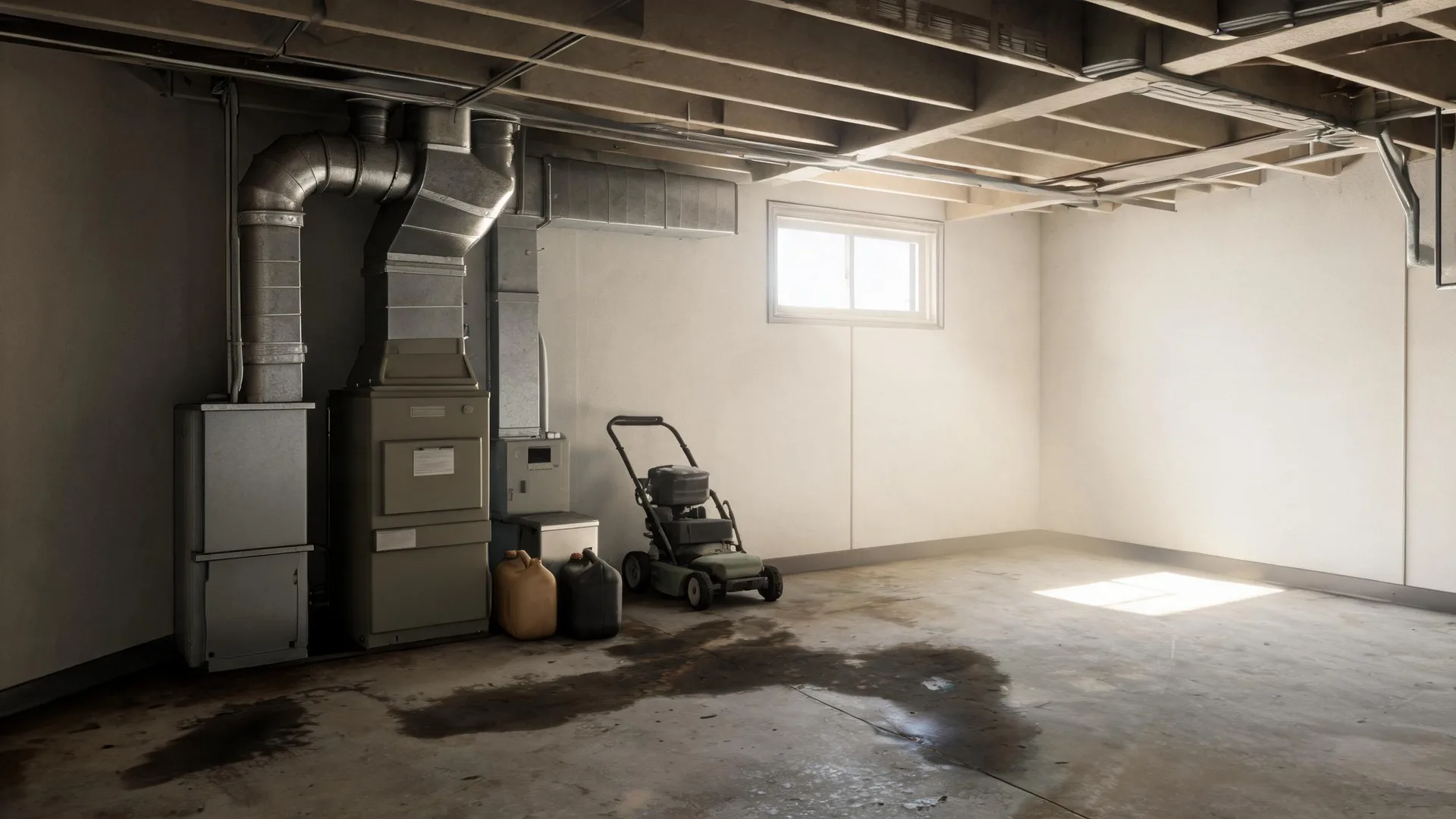
A gray high-efficiency gas furnace installed in an unfinished basement, surrounded by gas lines, a condensate drain, and sheet-metal ductwork.

Every cycle wears something, the question is what and how fast

A furnace cycles on and off thousands of times a season. Every cycle puts the same stress on the same parts. The igniter heats from cold each time it fires, so it's usually the first part to wear out. The blower motor wears from spinning, not from sitting idle, so the hours it runs matter more than the years on the calendar. A heat exchanger cracks from expanding and contracting over and over, not from one hard freeze. None of this makes a furnace fragile. It just means the parts that cycle the most are worth asking about when you're comparing systems. Ask what the igniter is made of. Ask whether the blower motor can be serviced or has to be replaced whole if it fails. A furnace sized right for the house runs longer, steadier cycles at lower output, and that alone puts less wear on every part than a furnace that's undersized and straining to catch up.

The load calculation looks at the whole house

A load calculation adds up the windows, the insulation, the ceiling height, and how the rooms connect, not just the floor space. Houses built differently need different size furnaces even at the same size. Skipping this step and matching the old unit just repeats whatever mistake was made the first time.
A furnace sized right runs longer, not shorter

People expect the furnace to kick on, heat the place fast, and shut off. A properly sized one runs longer stretches at a lower output, which is what keeps rooms even and keeps the blower from short cycling. If a contractor's pitch is about how fast it heats the house, that's worth a second question.

That efficiency rating on the label tells you how much of the fuel burned turns into heat in the house versus what goes out the flue. A furnace rated higher wastes less, plain and simple. But it's not a stand-in for how the furnace will perform in a given house, and it's not something to shop by on its own. A higher rated furnace usually means sealed combustion and different venting, which changes what the install involves, not just what the unit costs. Furnaces with the same rating can still behave differently depending on how they're sized and installed. The rating tells you about the equipment. It doesn't tell you whether it's the right fit for the house it's going into.

Install day starts with the old furnace, not the new one. Gas and power get shut off first. Then the ductwork, the vent, and the wiring get disconnected before anything gets pulled out. Once the old unit is out, the flue and gas line get checked before the new furnace ever goes in place. Setting the furnace and hooking up gas, power, and venting is usually the fastest part of the day. Testing takes longer. Gas pressure gets checked. Temperature rise gets checked. The blower gets checked to make sure it's moving the right amount of air. A furnace that's connected but not tested is just a box sitting where the old one used to be. Before the crew leaves, it should be running on its own, heating and shutting off on its own, with nobody standing there holding it together.