Weather here is rough on equipment
Washington County logged 115 severe weather events between 2015 and 2024, most of it damaging wind and hail. A furnace installation here should account for where the outdoor equipment sits and what can hit it.
Takes about a minute. No obligation.
Washington County logged 115 severe weather events between 2015 and 2024, most of it damaging wind and hail. A furnace installation here should account for where the outdoor equipment sits and what can hit it.
Close to a third of Mississippi households went at least a full day without power in 2024. A furnace that runs on electric ignition or blower controls won't start without it, so it's worth asking your contractor what happens to your heat if the power goes out.
NOAA nClimDiv, 1991–2020 normals
Natural gas ran Mississippi homes $15.03 per million Btu in 2024.
A high-efficiency furnace earns back less here, so pick one for how it holds up, not just what it burns.



Most homes in Washington County heat with gas, 54.4 percent of them. Electricity comes in second at 39.6 percent, and a small share, 4.6 percent, run on bottled or LP gas. If your house already has a gas line run to it, replacing your furnace with another gas furnace is usually the straightforward path. The venting is already there, the gas line is sized for it, and your contractor isn't working around a fuel switch on top of everything else. If you're in the smaller group heating with electricity, that changes what your contractor needs to plan for, including the circuit and the equipment that fits it.
Furnaces sold here have to hit 80 percent AFUE at minimum, and that climbs to 95 percent for units built from December 2028 on. Whatever goes into your house now has to clear that bar first, then fit how your house already heats and what the weather here can do to it.
Find a contractor
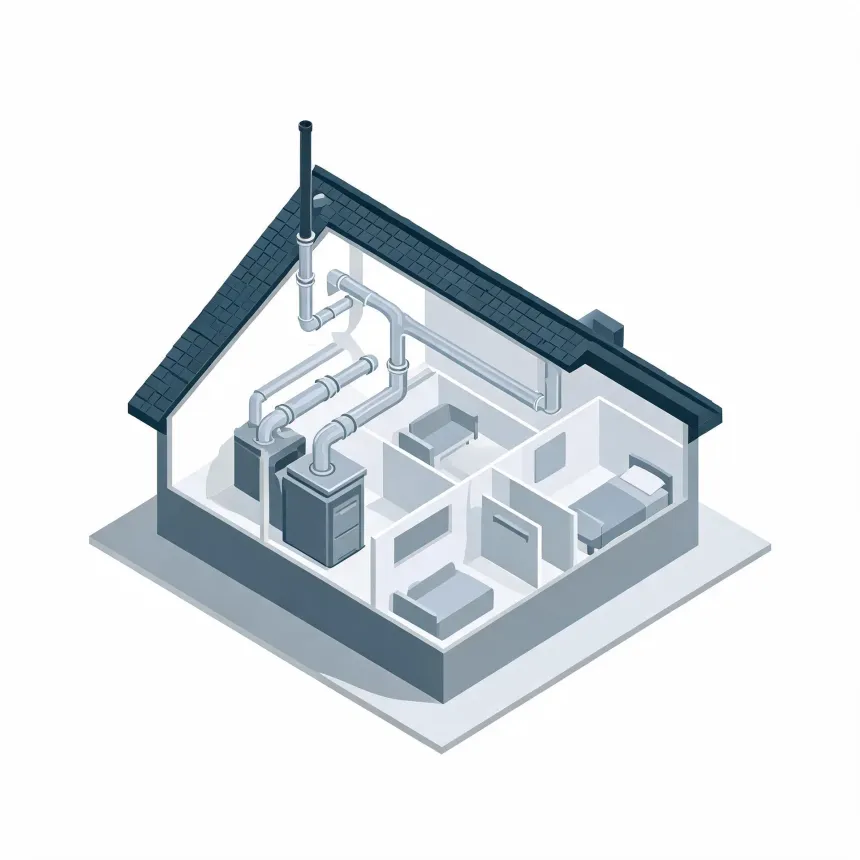
What drives the cost of a furnace installation is rarely the furnace itself. The unit is one line item. The rest is what it takes to put it in right. Sizing matters more than people expect. A contractor has to run a load calculation on the house, not just swap in something the same size as what's coming out, because the old one may have been wrong from the start. Ductwork is often the real cost driver. If the trunk lines and branches can't move the air the new furnace produces, they need modifying, and that's labor, not equipment. Venting changes the math too. A furnace that vents differently than the old one, through a sidewall instead of a chimney, say, means new pipe and new penetrations. Electrical and gas connections sometimes need upgrading to match what the new unit calls for. And where the furnace sits, a closet, an attic, a crawlspace, changes how long the job takes and how many people it takes to do it.
A higher AFUE number costs more up front and makes most sense when a furnace runs long hours through a cold season. If yours only has to carry light duty, a contractor should be able to tell you honestly whether the jump in efficiency is worth the jump in price.
A furnace sized off the old unit instead of the house can short-cycle if it's too big, or run constantly if it's too small. Either way wears it out faster. The contractor should be measuring your house, not matching a number on the furnace you're replacing.
Estimates for a typical Washington County home, from EIA household energy data, Mississippi fuel prices and NOAA climate normals. Your home will differ.
Install day starts with the old furnace coming out. That alone can take a couple hours once the gas is shut off and the ductwork and venting are disconnected. Setting the new unit is the fast part. Most of the day goes to what happens around it, wiring the control board, sealing the duct transitions, running new vent pipe if the setup calls for it, pressure-testing the gas line before it's ever lit. A good contractor fires it up and runs it through a full cycle, checking the temperature rise against what the manufacturer specifies, not just that it blows warm air. The last step is usually the one homeowners don't think to watch for. The contractor checks the flue draft and tests for carbon monoxide at the furnace and anywhere air could leak back into the house. That part matters as much as anything that happened before it.