A white Southern-style house with a wraparound porch photographed at night, surrounded by Spanish moss-draped oak trees lit by landscape lights.

Furnace Installation in Columbus, MS

Tell us about the job

Takes about a minute. No obligation.

New system or replacementFurnace or heatingLowndes County, MS
Step 1 of 2

What ZIP code is the job in?

Storms are routine here

Lowndes County recorded 161 severe weather events between 2015 and 2024, with damaging wind the most common. Hail and tornadoes hit too. A furnace installed here should account for that, not just the coldest night of the year.

The power can stay off a while

Close to a third of Mississippi households lost power for a day or more in 2024. A furnace needs electricity to run even on gas, so an outage means no heat no matter the fuel. Ask what backup options make sense for your home.

5 months
November through March, your furnace is on duty
35°F
the average winter night it heats against
80% AFUE
the federal minimum any new unit must meet
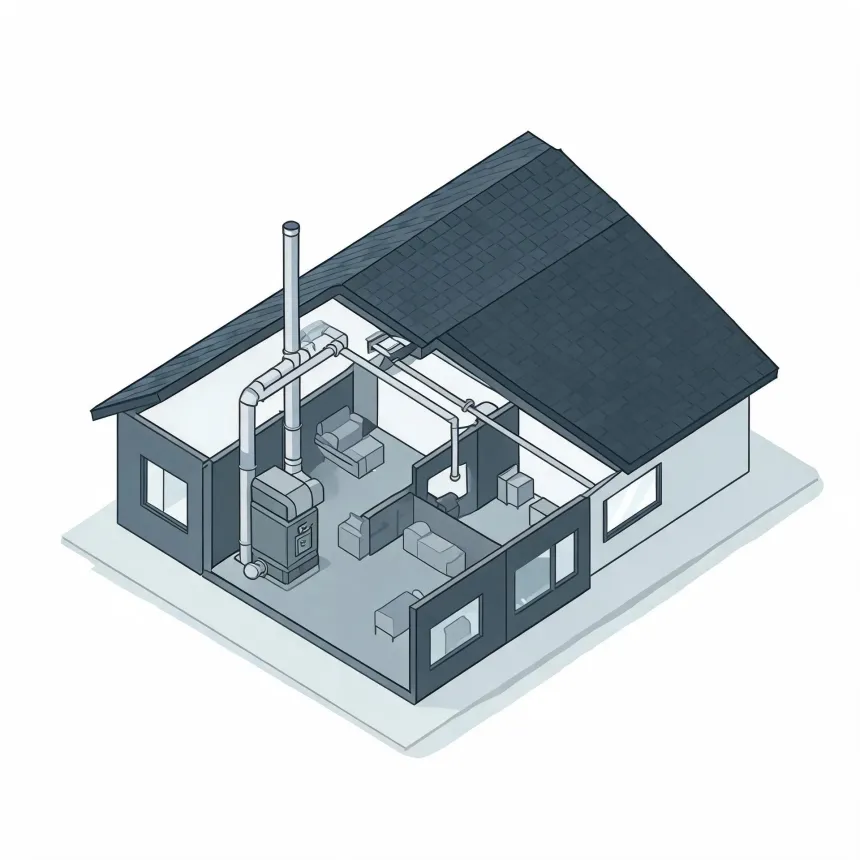
Isometric cutaway illustration of a single-story house showing interior rooms with furniture, a furnace unit connected to ducting and vertical flue pipes running through the roof.
Your furnace works hardest from November through February.

NOAA nClimDiv, 1991–2020 normals

Furnaces here run November through March.

Replace yours in October and it's done before you need it, not during the first cold night.

A normal furnace is sized for Columbus winters

Heat runs November through March
Winter nights average 35°F
6 winter storms from 2015 to 2024

Lowndes County falls under climate zone 3A. Any furnace installed here now has to reach 80 percent AFUE, the federal minimum for non-weatherized gas furnaces. Most units on the market already clear that. That minimum rises to 95 percent AFUE for furnaces built from December 2028 on, so a unit bought before then can still go in at the lower standard. Check the manufacture date against the rule before you settle on a model. A federal tax credit is available for qualifying high-efficiency equipment, worth asking about while you're comparing units.

If your house already runs on gas, a gas furnace is the simple swap

Utility gas heats 31.1% of homes in Lowndes County. If gas already runs to your house, a furnace replacement keeps things simple. Same fuel, same vent, same line. That's one less thing to sort out before the cold sets in.

Find a contractor
A gray residential gas furnace installed in an unfinished basement, connected to sheet-metal ductwork and PVC pipes.

Five months of work, not year-round

Furnaces here run about five months a year, November through March. The rest of the year it sits idle. Overnight lows average 35°F through December, January and February, so most nights the furnace isn't closing a huge gap to keep the house warm. A short season and mild lows add up to less wear on the heat exchanger and blower than a furnace working harder somewhere colder. A system here is more likely to fail from age, a skipped filter change or sitting unused all summer than from being run hard. You don't need the highest-output furnace on the lot. You need one sized right for your house and installed well.

The old furnace gets disconnected and hauled off

The gas line gets capped, the vent or flue gets removed or sealed, and the old unit gets cut loose from the ductwork. A licensed installer handles the gas line work. Hauling the old furnace away is part of a normal installation, so you shouldn't be left to deal with it.

The duct and vent connections carry over, not the furnace itself

A new furnace has to match the existing ductwork, the vent pipe, and the gas line already in place. Old equipment doesn't move to a new house or get resold for home use. Once it's disconnected, its only path is scrap.

A furnace that's too big for the house short cycles. It heats the air fast, hits the thermostat setting, and shuts off before it's pulled moisture out of the air or warmed the walls and furniture. Then the house cools back down fast and the furnace kicks on again. That start-stop pattern wears the heat exchanger and blower harder than a furnace sized right and running longer, steadier stretches. An undersized furnace has the opposite problem. It runs almost constantly and still can't keep up on the coldest nights. Getting the size right starts with a load calculation. That calculation weighs the square footage against the windows, insulation and layout of the house, not just floor area. A good contractor runs that calculation instead of matching whatever size came out of the house before.

Installation day starts with the old furnace coming out and the house getting checked before anything new goes in. An installer tests the gas line pressure, looks at the venting, and confirms the ductwork can handle the new unit, because a furnace bolted onto the wrong duct size never heats evenly no matter how good it is. Setting the new furnace in place, connecting the gas line, and sealing the vent pipe takes a few hours of careful work, not minutes. Once it's hooked up, a tech fires it up and checks the flame, the airflow coming out of the registers, and the exchanger for proper operation before calling it done. Expect some noise and some foot traffic through the house while that's happening. A good installer walks you through the thermostat and the filter location before they leave, so you're not guessing later.