









Why your furnace makes a banging noise in Mississippi

RepairFurnace or heatingMississippi
Step 1 of 2

What ZIP code is the job in?

Why is my furnace making a banging noise?

A bang when your furnace kicks on isn't something to ignore, especially when you're running electric heat through a Mississippi winter and counting on it to keep the house warm for whoever's home. The noise usually means something specific is happening inside the unit, not just normal settling.

It's likely built-up gas igniting all at once, or ductwork expanding as it heats

A loud bang when the furnace starts usually means gas collected in the burner chamber before it lit, then caught all at once instead of lighting smoothly. A dirty burner or a weak igniter can cause this. A softer thump or popping sound as the system runs is often the ductwork itself, metal expanding as warm air moves through it and contracting again when the cycle ends. The first kind points to a problem with the burner assembly and is worth having checked, since it can get worse or affect how evenly the furnace heats. The second is usually just the metal adjusting to temperature change and is less urgent, though a tech can confirm which one you're hearing.

A gas furnace with two gray access panels stands against a plain wall in a basement, connected to sheet-metal ductwork, white PVC vent pipes, and a yellow gas line.

Why the bang happens at startup

Most electric furnaces heat with metal strip heaters or a heat exchanger that expands as it warms. If a panel or duct connector has worked loose, that metal shifts and pops against the frame the moment the system kicks on. It's the same reason a tin roof cracks in the sun. The noise shows up at the start of the cycle because that's when the temperature change is fastest, not because the furnace is working harder than it should.

A gray high-efficiency furnace in a basement corner with white PVC vent pipes, copper and black gas piping, and sheet-metal ductwork beside a plain white wall and wooden stair framing.

What the sound tells a tech

A single bang at startup points somewhere different than a bang that repeats through the cycle or shows up when the blower shuts off. The timing, the loudness, and whether it comes from the cabinet or the ductwork all narrow down what's loose, cracked, or rubbing. That's part of why describing it over the phone to one contractor after another wastes time. A tech who hears it in person, once, can usually tell you what's wrong without opening the whole furnace.

Is the Bang Something to Worry About

Safe to wait on

  • A single soft pop when the furnace first kicks on, then quiet for the rest of the cycle, is usually just metal expanding as it warms.
  • The sound shows up only on the coldest mornings when the furnace runs its longest cycles of the day.
  • It happens at the same point in the cycle every time, and the house is heating evenly with no cold rooms.
  • A duct connector ticking as it cools back down after the furnace shuts off, rather than during startup.
  • Nobody in the house smells anything unusual, and the furnace is holding the temperature you set it to.

Worth a look soon

  • The bang is loud enough to hear from another room or to make someone ask what that was.
  • The noise has gotten louder or more frequent over the past few weeks instead of staying the same.
  • A rattle or scrape follows the bang, which points to something loose beyond a panel or connector.
  • Rooms that used to heat fine are now running cold while the noise has started up.
  • The bang comes with a burning smell or the furnace cycling off on its own before the room reaches temperature.
  • Anyone in the house is especially sensitive to cold, and a furnace that quits mid-winter isn't something to risk finding out about.
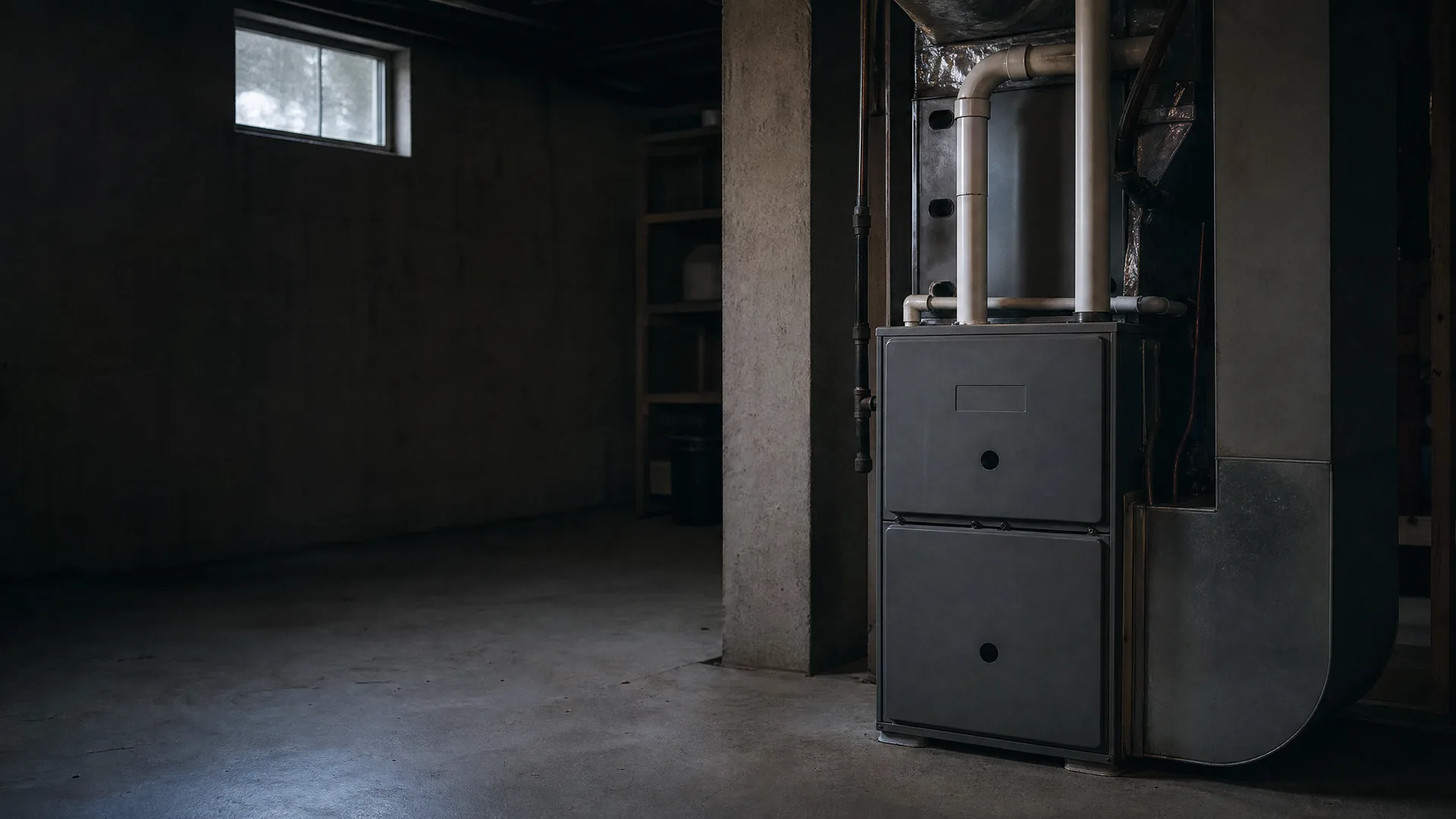
A gray high-efficiency furnace with white PVC vent pipes and attached ductwork stands beside a concrete support column in a dim, empty basement with bare concrete walls and floor and a small window.

The thermostat clicks over just after six, and the furnace fires up somewhere behind the water heater. Nobody's down here to hear it, but the bang carries up through the floor vents into the kitchen. It's November, dark early the way it gets, and the air near the unit holds a thin layer of dust that never quite settles. The duct connector rattles once, hard, then the blower evens out and runs on like nothing happened. Upstairs someone pulls a sweater on and doesn't think about it again until tomorrow, when the same bang comes right at six, right when the heat kicks on, same as it did tonight.

A gray high-efficiency furnace with white PVC vent pipes stands on a concrete pad in a basement, beside sheet-metal ductwork, copper piping and a poured concrete wall with wood framing at left.
A furnace running the way it should, ductwork solid and connections tight, sending heat up quiet except for the normal click of startup.
A beige gas furnace in a basement with a metal flue pipe, galvanized sheet-metal ductwork to its left, and gas and water pipes along the concrete wall to its right.
An older furnace with a bang on every cycle usually has a cracked part moving against metal, and that needs a look before it gets worse.
An older woman with gray hair in a bun and glasses, wearing a beige knit sweater, smiles while looking to the side in a warmly lit kitchen, with a loaf of bread on the counter in the foreground and a snowy scene outside the window.
A woman and a child wrapped together in a knitted gray blanket on a couch, with the child's head resting on her shoulder and a lit table lamp and houseplant in the background.

A local pro for your furnace repair

One form replaces the calls you'd make to find a furnace pro.

It costs nothing to send, and you don't have to hire anyone.

What a quick check tells you

Shut the furnace off and pull the filter. If it's packed with dust and hasn't been changed in a while, that's worth fixing on its own, but it also tells you the blower's been working harder than it should, and a strained blower can rattle a loose panel more than a clean system would. Look at the return air grille too. If something's blocking it, a bag, a piece of furniture, the furnace is pulling air through a tighter gap than it was built for. None of this guarantees the bang is harmless, but a dirty filter or blocked return turning a quiet furnace noisy is common enough that it's worth ruling out before you assume the worst.

When it's worth getting looked at

A furnace that's banged on every startup for years without getting worse is a different situation than one that just started. If yours was quiet last winter and isn't now, something changed, a part shifted, a connector loosened, a component started to wear, and that's not something a filter change fixes. A contractor who works on furnaces in Mississippi homes can get underneath the panels and see what's actually moving, rather than guessing from the sound alone. Instead of calling around to find someone, explaining the noise over and over, and comparing quotes on your own, you can get matched with a contractor who handles this kind of repair and have them reach out to you directly.

A beige metal furnace with a louvered front panel stands on a concrete floor against a concrete wall, connected to galvanized sheet-metal ductwork and a metal pipe.
Before you get your furnace repair
A gray high-efficiency furnace stands on a concrete basement floor beside sheet-metal ductwork, with white PVC vent pipes and a black flexible line running up to exposed wood floor joists, next to a wood-framed post against a concrete wall.
After you get your furnace repair

Sorting it out on your own

You can shut the furnace off, pull the filter, check the vents in each room, maybe get up in the attic if the unit's up there. That tells you something, but it doesn't tell you whether the bang is a loose panel you can leave alone or a cracked heat exchanger that needs a part replaced. Most people don't have a way to know which one they're looking at, and guessing wrong means either an unnecessary repair bill or ignoring something that gets worse through the winter while you're trying to keep the house warm for whoever's home.
Getting someone out to look

A licensed contractor who works on furnaces in your area knows what that bang usually means once they hear it and see the unit. You skip the part where you search around, call a few places, explain the noise over and over, and sort through quotes that don't tell you much without someone looking at the actual furnace. Once you're matched, the contractor reaches out to you directly, and you find out what's actually going on instead of listening for the bang again every morning and wondering if tonight's the night it gets worse.

Winter nights average 38°F statewide

Overnight lows in Mississippi average 38°F across December, January and February, so your furnace isn't just running on the coldest snap, it's cycling on most nights all winter. That's a lot of startups for a loose panel or a cracked part to keep banging against.

NOAA nClimDiv 1991-2020 county normals weighted by homes

A bang on startup is worth checking, not worth losing sleep over, and now you know what separates the two. A soft pop that fades once the furnace gets going is metal settling into its warmth. A bang that repeats all cycle, or comes with a burning smell or a furnace that won't stay lit, is a part that needs a hand before it fails on the coldest night of the year. You could spend an evening searching listings, calling a few numbers, explaining the same noise three different times, and still not know who to trust with a furnace that's run your winters this long. Or you could answer a few questions once and let a contractor who knows electric furnaces in Mississippi homes reach out to you. Either way, the furnace is still banging tonight. One path gets you an answer faster than the other.

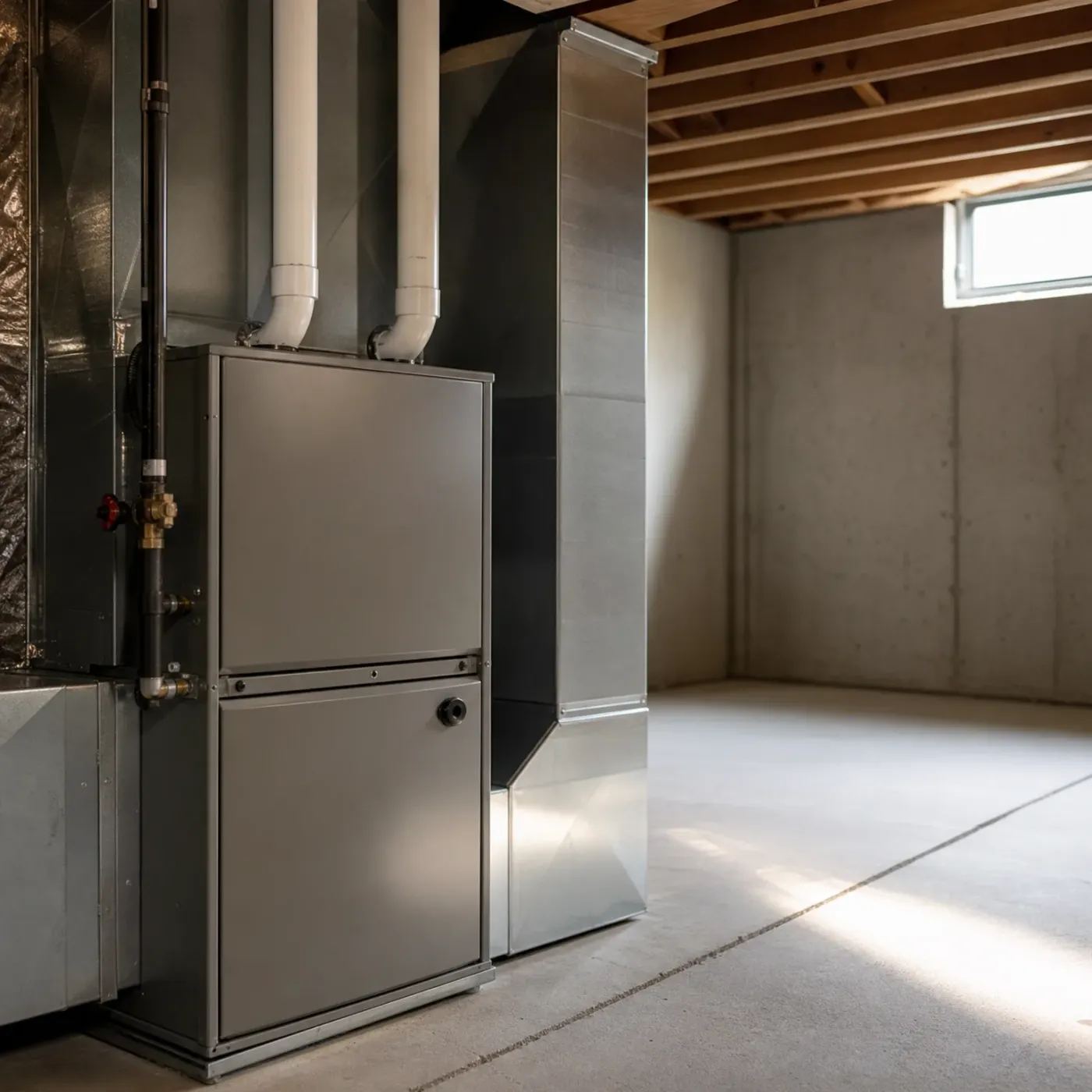
A gray furnace with PVC vent pipes and sheet-metal ductwork stands against a wall in an unfinished basement with concrete floor and walls, exposed wood joists, and a small window.

Get the right pro for your furnace

Get matched

Describe what your furnace is doing once, in one form.

No charge to send it. You decide if you hire them.