




Three white clapboard houses with wraparound porches glow with warm interior and landscape lighting beneath Spanish moss-draped oak trees at dusk.

Heat Pump Repair in Fulton, MS

Tell us about the job

Takes about a minute. No obligation.

RepairHeat PumpItawamba County, MS
Step 1 of 2

What ZIP code is the job in?

A heat pump in Fulton switches modes with the season instead of shutting off, so it gets worked through all five months of cooling and then straight into five months of heat. The first cold snap in November is when a weak part usually gives out. That is the moment the system has to reverse itself and push warm air for the first time in months, and whatever was already struggling, a failing capacitor, a low charge, a stuck reversing valve, shows itself under that load. Same with the switch into cooling come May. If your heat pump is acting up right as the season turns, that timing is the clue, not the coincidence.

5 months
November through March, your system heats
5 months
May through September, it cools
34°F
the average winter night it heats against
90°F
the average summer afternoon it cools against
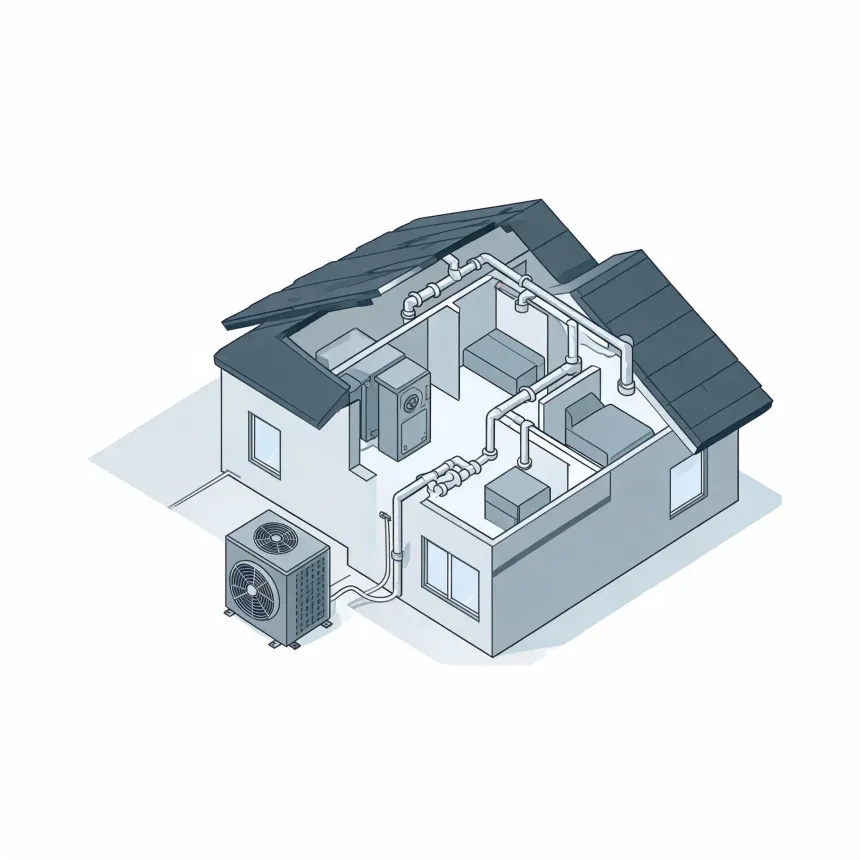
Isometric grayscale illustration of a cutaway two-story house showing interior ductwork, an indoor air handler unit, and an outdoor condenser unit on a pad beside the building.
Your system heats November through March and cools May through September.

NOAA nClimDiv, 1991–2020 normals

A heat pump blowing cool air in heating mode hasn't failed, it's stuck between cycles.

A reversing valve that won't fully shift is usually the cause, and it only gets worse left alone.

Half these homes were built by 1984, but age isn't what's breaking your heat pump

Half the homes here were built by 1984
Power costs 13.39 cents a kWh statewide
Climate zone 3A

A tech starts outside, checking what the outdoor unit is actually doing. Is the fan turning, is the compressor running, is it short cycling or just sitting dead. Gauges go on next to check the refrigerant charge, since too little or too much both throw off how the system heats and cools. Inside, they'll check the air handler and the thermostat call, making sure the signal to reverse is actually reaching the valve and the valve is answering it. If the system runs but won't switch between heating and cooling, the reversing valve and its solenoid get tested directly. Electrical readings on the capacitor and contactor come next, since a weak capacitor often shows a reading that's close but not quite right rather than a clean failure. The visit ends with the tech explaining what they found in plain terms, what it takes to fix it, and whether it's a failing part or something that can be adjusted back into spec.

Get it looked at early

Problems tend to show up in the first weeks of the season, when the load hits a part that was already weak.

Find a contractor
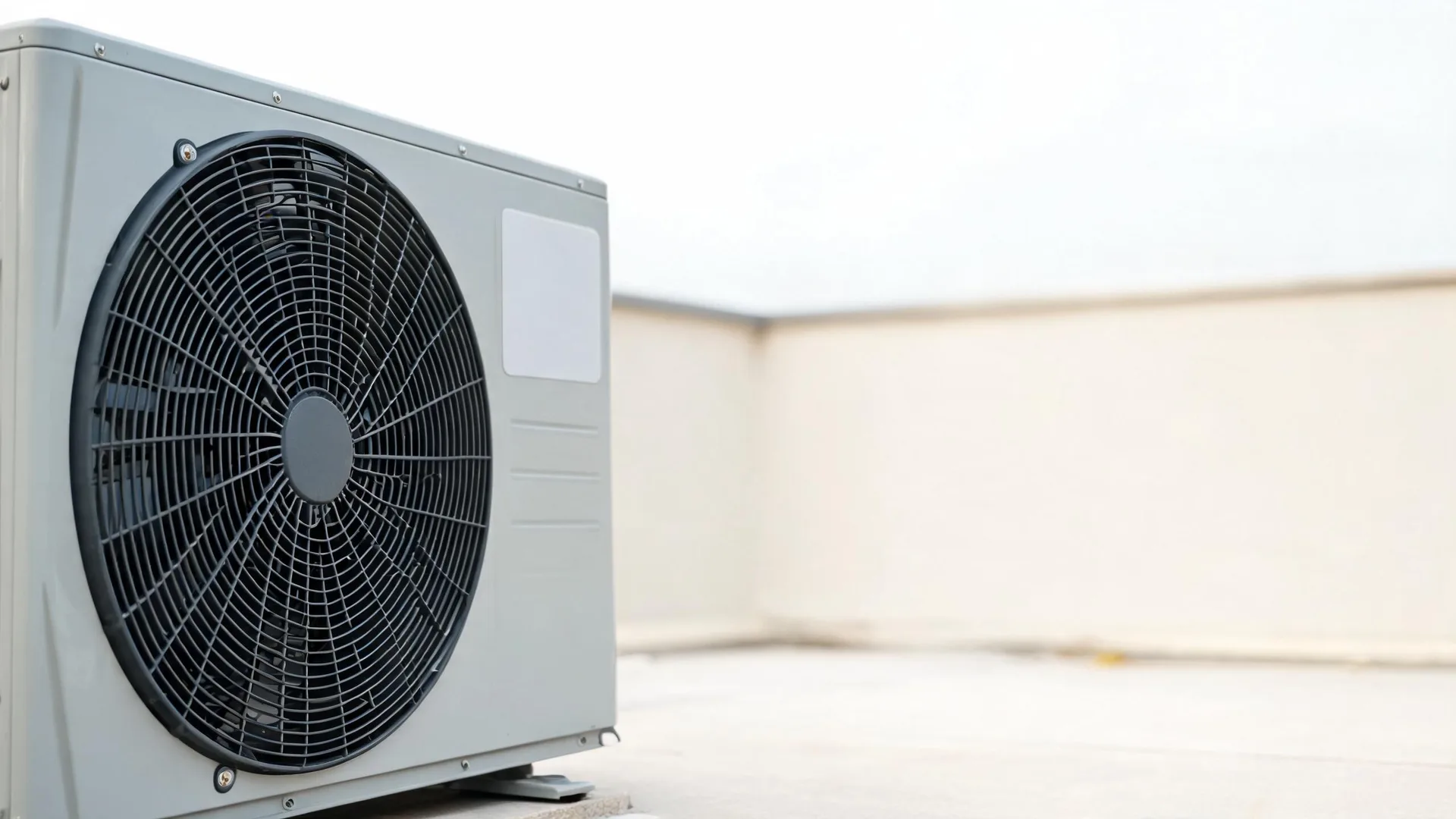
A gray heat pump condenser unit mounted on a concrete pad against the gray lap-siding exterior wall of a house.

It runs year round, so something always wears first

A heat pump never gets a season off. Switch it to cooling and the compressor and outdoor fan run. Switch it to heat and that same compressor reverses and keeps running, so the parts that would wear out in a furnace instead wear out here, year round. The reversing valve takes the worst of it, since it has to physically shift with the seasons and then sits unused in between, which is exactly when a solenoid can stick or corrode. Run capacitors fail from this kind of steady work too, losing their charge slowly until the compressor starts drawing hard or not at all. Bearings in the outdoor fan motor wear the same way, from hours logged rather than any one hard freeze or hot stretch. None of this is about one bad day. It is about a system that never really stops, so whatever part was weakest wears down first.

A struggling compressor draws harder the longer it runs

A compressor low on charge or working through a weak capacitor doesn't just run poorly, it pulls more current trying to make up for it. Keep calling for heat or cool and that strain keeps building on the same windings. A problem caught early is a part swap. Left running, it can take the compressor down with it.
A frozen coil feeds on itself if the system keeps going

Low refrigerant or blocked airflow lets frost creep over the outdoor coil. A heat pump left running tries to push through it, but ice blocks the coil from doing its job, so more frost builds and less heat gets moved. Shutting it down stops it there. Running it through a weekend can turn a coil problem into a compressor problem.

Before calling anyone, look at the thermostat first. Make sure it's set to heat, not auto, and the set point is actually above room temperature, since a setting bumped by accident looks exactly like a broken system. Check the outdoor unit next. Clear away leaves, mulch or anything stacked against it, since a blocked unit can't move air no matter what's wrong inside it. Look at the filter. A filter clogged with dust chokes airflow and can make a perfectly good system struggle to heat or cool. Check the breaker panel for a tripped breaker, especially after a storm, since a heat pump that won't start at all is sometimes just a power problem. If the outdoor unit is coated in ice beyond the thin frost that's normal in defrost cycles, that's worth noting but not worth touching. None of this is a repair. It just rules out the simple causes before you pay someone to rule them out for you.

Not every heat pump problem is worth replacing a unit over, and not every noisy repair call means the system is done. A weak capacitor or a stuck reversing valve is a part failure, not a sign the whole system is failing. Swap the part and a heat pump that is otherwise sound will run fine for years. What changes the math is the compressor. That is the one part that is expensive to replace on its own, and when it fails, a tech has to weigh that cost against a whole new system rather than just fixing what broke. Age matters less than people think. A heat pump that has been maintained and is only now seeing its first real part failure is a different case than one where parts keep failing one after another. That pattern, not a birth year, is usually what a tech is actually reading when they tell you it is time to stop repairing.