A illuminated white antebellum-style house with a wraparound porch, white columns, and Spanish-moss-draped oak trees, photographed at dusk.

Heat Pump Repair in Forest, MS

Tell us about the job

Takes about a minute. No obligation.

RepairHeat PumpScott County, MS
Step 1 of 2

What ZIP code is the job in?

The tech checks the system before touching it

A heat pump diagnostic starts with the thermostat, the outdoor unit, and the air coming out of the vents. The tech checks refrigerant pressures, looks at the reversing valve, and tests the capacitor and contactor. Electrical readings show whether the compressor is drawing power the way it should. None of this is guesswork. The readings either match what a healthy system looks like or they don't.


What he finds decides what happens next

A weak capacitor or a stuck reversing valve is a straightforward repair, often done the same visit. A refrigerant leak means finding where it's coming from before adding anything back in. A compressor that's failing is a different situation, since it's the part that keeps the whole system running. The diagnosis tells you which one you're actually dealing with.

5 months
November through March, your system heats
5 months
May through September, it cools
36°F
the average winter night it heats against
90°F
the average summer afternoon it cools against
Isometric line illustration of a cutaway single-story house showing interior rooms with furniture and attic ductwork connected to an outdoor condenser unit beside the building.
Your system heats November through March and cools May through September.

NOAA nClimDiv, 1991–2020 normals

Check the thermostat batteries and the breaker before anything else.

A heat pump that won't start at all is sometimes just a tripped breaker or a dead thermostat display.

November is when a weak heat pump quits here

Cooling runs May through September
Heat runs November through March
Power costs 13.39 cents a kWh statewide
A heat pump that struggles here usually just needs a repairHalf of Scott County's homes were built in 1989 or earlier, and 35.8% are mobile homes.

Scott County has logged 144 severe weather events between 2015 and 2024, including dozens of hail events and damaging wind. An outdoor heat pump unit sits outside through all of it. Hail dents the fins on the outdoor coil, and wind-blown debris can bend them or crack the fan blade, sometimes without stopping the unit from running. Across Mississippi, close to a third of households lost power for a day or more last year, and a heat pump does nothing for heat or cooling until that power is back. If the outdoor unit took a hit during a storm, have it looked at even if it still seems to be working.

Get it looked at early

Problems tend to show up in the first weeks of the season, when the load hits a part that was already weak.

Find a contractor
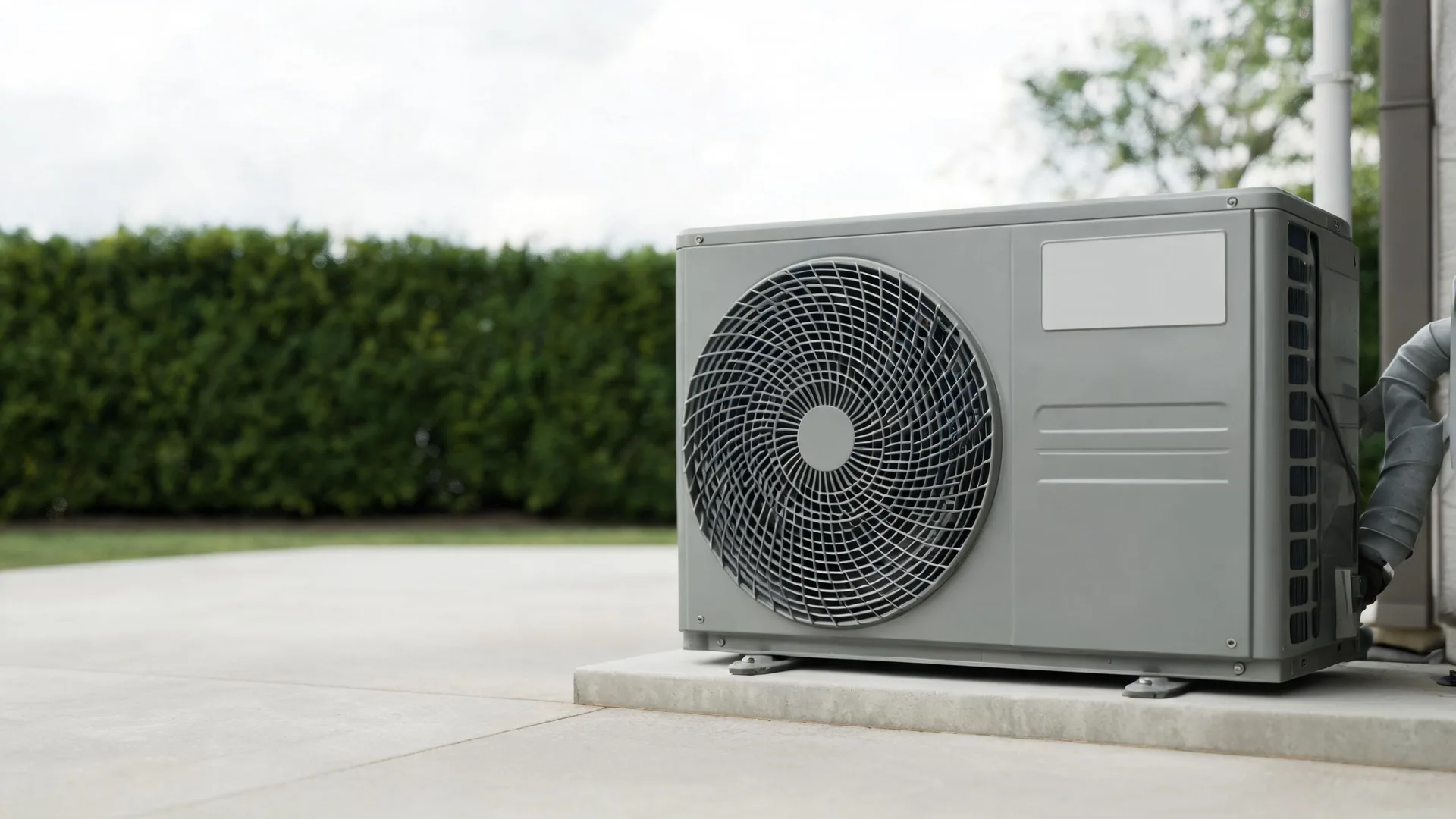
A residential heat pump outdoor unit mounted on a concrete pad next to a house with gray vinyl siding.

What a heat pump tells you before it fails

A heat pump runs in both directions, all year, which means it never really gets a season off the way a furnace does. That wear shows up as noise before it shows up as a breakdown. A clicking at the start of a cycle is usually the reversing valve switching over. A rattle from the outdoor unit can be a fan blade hitting something bent, or a motor mount that's loosened up. Grinding or squealing from the compressor is not something to wait on. Short cycling, where the system kicks on and off every few minutes instead of running a full cycle, points to a thermostat problem, a refrigerant issue, or a compressor that's struggling to start. Ice on the outdoor coil in defrost mode is normal for a few minutes at a time. Ice that stays, or builds up thick, means the defrost cycle isn't working or airflow across the coil is blocked. Warm air out of the vents when the system is set to heat, or weak airflow generally, often traces back to the air filter or to something lower on the refrigerant side. None of these mean the whole unit is done. Most of them are a single part acting up inside a system that otherwise still has life in it.

A struggling compressor only gets worse under load

If the compressor is straining to start, every cycle it completes anyway adds more wear to the motor windings. It draws more current than it should, runs hotter than it should, and the oil inside it doesn't circulate the way it's meant to. A compressor that's limping along can keep limping for a while, or it can seize. Running it in that state doesn't buy time, it spends it.

A refrigerant leak gets harder to find the longer it runs

Low refrigerant makes a heat pump pull harder to do the same job, and that extra strain lands on the compressor. It also means the system is running with less oil return than it needs, since the oil travels with the refrigerant. A small leak left alone doesn't stay small. It shows up later as a bigger repair, often on a part that didn't start the problem.

Most heat pump failures trace back to a handful of parts that do the hardest work. The capacitor gives the compressor and fan motors the jolt they need to start, and it weakens with every cycle until it can't do that anymore. The contactor, which switches power to the outdoor unit, pits and burns over time from making and breaking that connection thousands of times. The reversing valve, the part that lets a heat pump switch between heating and cooling, can stick in one position, especially if it doesn't get exercised in both directions regularly. Refrigerant leaks usually start small, often at a fitting or joint, and get worse as vibration works them loose further. The compressor itself rarely fails on its own. Most of the time it's the last part to go, worn down by something else that was already wrong, like low refrigerant or a bad start capacitor, for longer than it should have.

Age by itself doesn't decide this. A heat pump that's been in service a long time with a bad capacitor is still a capacitor repair, not a replacement. What matters more is the compressor, since that's the part that can't be swapped out on its own at any reasonable cost. If the compressor is still good, fixing whatever's around it usually makes sense. If the compressor has failed, or if the system needs a refrigerant that isn't made anymore, the math changes fast, since you'd be putting money into a system that has one bad part now and may not be far behind on the rest. A tech who's upfront with you will tell you which situation you're in and why, instead of just quoting a price.