





An outdoor HVAC condensing unit on a concrete pad next to a beige single-story house with a dark shingle roof.

Heat Pump Maintenance in Sumrall, MS

Tell us about the job

Takes about a minute. No obligation.

Tune-up, service, or cleaningHeat PumpLamar County, MS
Step 1 of 2

What ZIP code is the job in?

Lamar County logged 148 severe weather events between 2015 and 2024, counting wind, hail and tornadoes. A heat pump keeps its outdoor unit sitting outside year round, right where wind-blown branches and hail can get at the coil and the fan. Storms here also mean power cuts. A heat pump that loses power loses heating and cooling both, since it's the only system running either one.

Half the homes in Lamar County were built in 1999 or later.

A heat pump that age still has years ahead of it, and a yearly check is what keeps it getting there.

A heat pump works year round here, so October and April both matter

Cooling runs May through October
Heat runs November through March
Power costs 13.39 cents a kWh statewide

Check it before storm season

Storm season beats up outdoor units here. Have it checked for damage and debris before you need it.

Find a contractor
A man in a navy long-sleeve shirt and tan work pants, seen from behind, carries a canvas tool bag up light-colored porch steps toward a blue front door.
A residential heat pump outdoor unit mounted on a concrete pad next to a house with gray vinyl siding.

Running both jobs wears the same parts down

A heat pump does not get a season off. Switch it into cooling and the outdoor fan and compressor carry the load. Switch it into heating and the same parts reverse and carry it again. That is what makes a yearly check worth doing before trouble shows. Watch for ice building up on the outdoor coil when it should be defrosting itself. Listen for the compressor struggling to start, or a fan that rattles instead of spinning clean. Feel for weak airflow at the vents, or air that never quite reaches the temperature you set. Any of those is the system telling you a coil is dirty, a refrigerant charge is low, or a part is wearing out before it fails outright.

Keep the outdoor unit clear

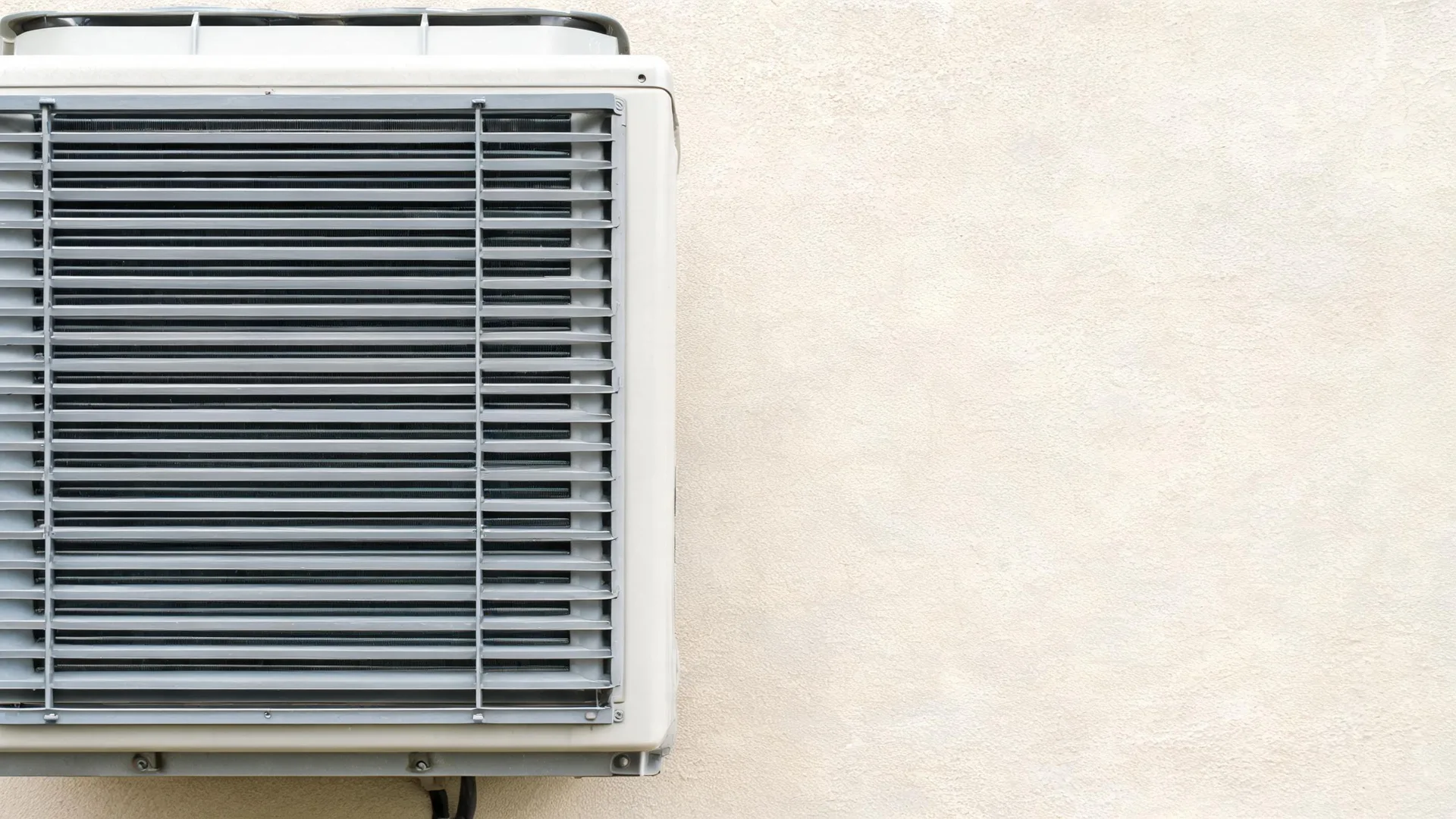
Walk past the outdoor unit now and then and look at what's piled against it. Leaves, pine straw and grass clippings block the coil and make the fan work harder to pull air through. Keep at least a couple feet clear on all sides, and after a storm check for branches or debris caught in the fan housing before the unit even gets a chance to run.
Change the filter yourself

The filter is the one part of this system meant for you to handle, not a contractor. A clogged filter starves the indoor coil of airflow, and in a heat pump that same coil is doing the work in both heating and cooling. Check it monthly and swap it when it looks gray or packed with dust rather than waiting for a set schedule.

Skip the yearly check and the first thing to go quiet is the defrost cycle. A heat pump reverses itself to melt frost off the outdoor coil, and that switch depends on a sensor and a control board that need testing, not just a glance. When that fails, ice builds up on the coil and stays there, blocking airflow until the unit is heating the air a little less every day without ever shutting off or throwing an obvious fault. The refrigerant charge drifts low the same quiet way. Nothing leaks out fast enough to notice, but the compressor runs longer and hotter to make up for it, and that is what shortens its life. None of this looks like a breakdown while it is happening. The house just stops feeling quite right, right up until the compressor finally quits.

A tune-up on a heat pump means someone actually opens the cabinet and tests things, not just looks at the thermostat. The refrigerant charge gets checked against what the manufacturer specifies, since a charge even a little off makes the compressor work harder for less heat or cooling. The electrical connections get tightened, because a loose connection heats up over time and that is how components fail. The outdoor coil gets cleaned, not just glanced at, since dirt and grime hold heat against the coil the same way debris does. The defrost control gets tested on purpose, forcing the cycle to run rather than waiting to see if it kicks in on its own. The contactor and capacitor get checked too, since those are the parts that wear from the compressor starting and stopping every time the system switches modes. None of this takes long, but skipping it means the first sign of trouble is the house not feeling right, which is a lot harder to catch early.