Single-story brick and siding houses with covered porches behind a trimmed hedge and lawn, framed by large oak branches draped with hanging moss under an overcast sky.

Heat Pump Maintenance in Starkville, MS

Tell us about the job

Takes about a minute. No obligation.

Tune-up, service, or cleaningHeat PumpOktibbeha County, MS
Step 1 of 2

What ZIP code is the job in?

Keep the filter clean

A dirty filter chokes the airflow a heat pump needs to move heat in either direction. Check it on a regular basis and replace or wash it when it looks gray or clogged. This is the one job that actually belongs to the homeowner between visits.


Clear the outdoor unit

The outdoor unit needs open space around it to pull air through the coil. Keep leaves, grass clippings, pine straw and anything else from piling against the sides. Leave a clear gap all around it and nothing stacked on top.

Half the homes around Starkville were built in 1993 or later.

A heat pump that age still has a lot of working life left, and a yearly check is what gets it there.

A heat pump works year round here, so October and April both matter

Cooling runs May through September
Heat runs November through March
Power costs 13.39 cents a kWh statewide
Storms here don't skip the heat pumpOktibbeha County saw 91 damaging wind events and 10 tornadoes in the last ten years.

A yearly check is what catches a weak part before it fails. A technician can test the refrigerant charge, check the reversing valve, and look at the electrical connections while the system is still running fine. Catching a problem in the fall means it gets fixed on a technician's schedule, not on the coldest night of the year. If your heat pump was built in 1993 or later, that yearly visit is what keeps it running the way it did when it was new.

Keep it in good shape

If your system is fairly new, a yearly check keeps it in good shape for longer.

Find a contractor
A man in a gray shirt and brown pants, seen from behind, carries a canvas tool bag up porch steps toward a blue front door beside a potted shrub.
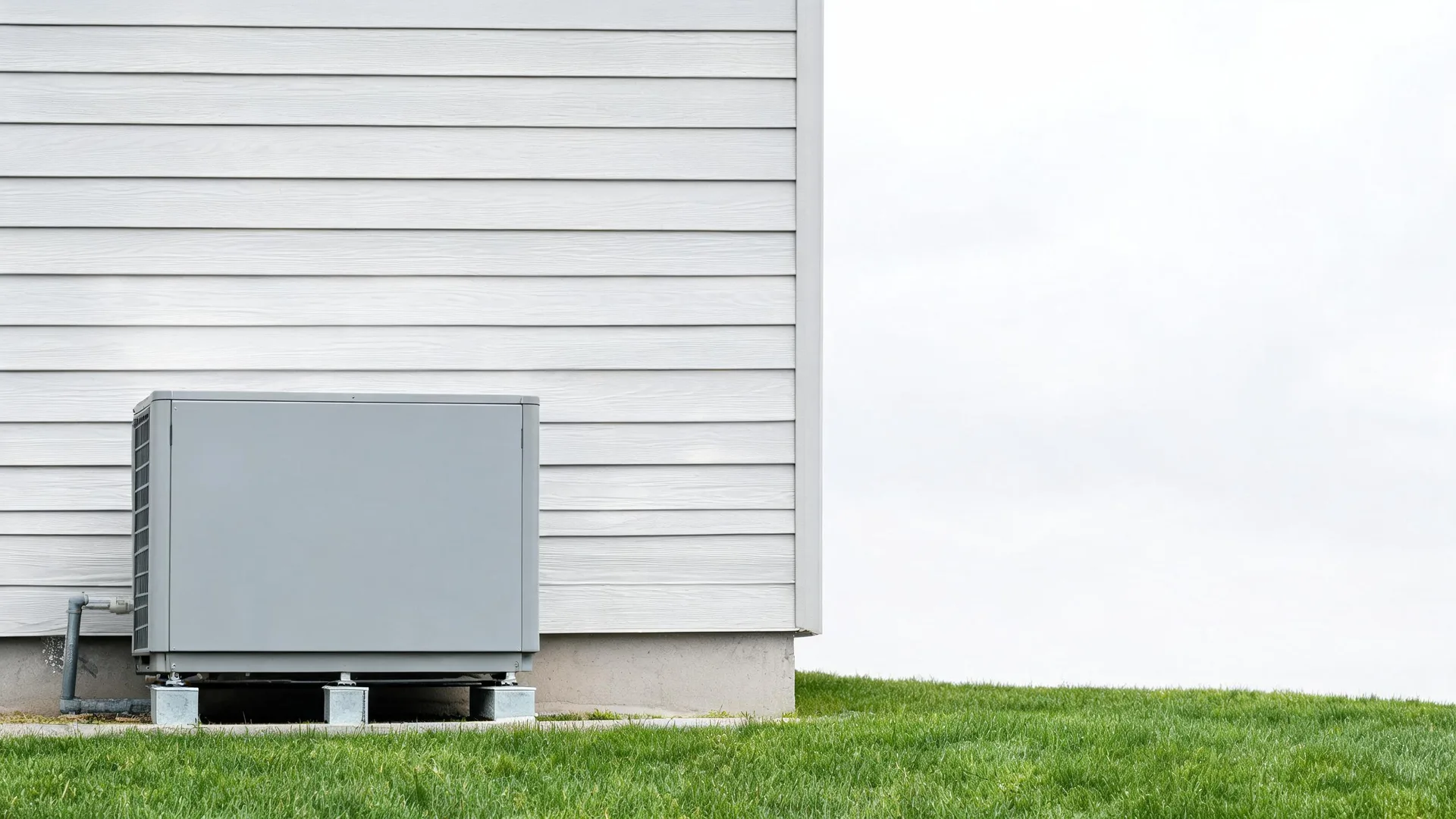
A gray outdoor HVAC unit mounted on a concrete pad beside a house with gray lap siding and a stone foundation.

What it's telling you before it breaks

A heat pump does not get an off season. It switches from pulling heat out of the house to pulling it in, so the reversing valve and both coils see work all year long. A few signs mean it is due for a look before anything quits. Listen for it running longer than it used to, or cycling on and off more than it should. Feel the air coming out of the vents, if it is barely warm or barely cool compared to what you remember, something is losing efficiency. Check for ice on the outdoor coil outside of a normal defrost cycle. Notice if one room stays off temperature no matter what the thermostat says. None of these mean the system is about to fail, but each one is the kind of thing a technician can trace back to a cause, a low charge, a failing capacitor, a stuck reversing valve, while the system is still running.

What gets skipped

A refrigerant charge drifts low and nobody checks it. Electrical connections loosen from the system cycling on and off all year and nobody tightens them. The reversing valve gets sticky and nobody catches it until it sticks open. None of this makes noise. The system keeps running, just worse, until the part that was already weak finally gives out.

What it does to the compressor

A heat pump running on a low charge or a dirty coil has to work harder to move heat in or out of the house. That extra strain falls on the compressor, the one part in the system that is hardest to replace. A yearly check catches the low charge or the dirty coil before the compressor is the thing paying for it.

A quick visit means someone glances at the outdoor unit, checks the thermostat calls for heat or cool, and leaves. A thorough one means the panel comes off. The technician checks refrigerant pressure against what the system is supposed to run, not just whether it cools at all. They test the capacitor under load, since a weak one can still start the system and still fail next week. They check amp draw on the compressor and the fan motor, because a motor pulling too many amps is wearing out even while it runs fine today. They look at the reversing valve both ways, heat and cool, not just whichever mode the thermostat happens to be in that day. They pull the blower wheel and check it for dust buildup that throws off airflow even with a clean filter. If nobody opens the panel, none of this gets checked, and the visit only confirms the system turns on.

There's a difference between checking that a heat pump runs and checking that it runs right, and that difference is most of what a tune-up is for. The outdoor coil gets washed clean of dirt and pollen, because a coil caked with buildup can't give up or absorb heat the way it should, no matter how strong the compressor is. The condensate drain gets checked so it isn't sitting somewhere waiting to clog. The thermostat gets run through both modes, not just whichever one the weather calls for that day, since a heat pump that calls for cool just fine can still have a sticking reversing valve nobody would catch until it needs to call for heat. Refrigerant lines get looked at for oil residue, which is usually the first sign of a slow leak long before the charge drops low enough to notice in how the house feels. Every one of these is small on its own. Skipped together, year after year, they're how a heat pump that should run another decade starts needing a service call every season instead.