





A row of single-story cottages, one brick and the others light gray siding with covered porches, behind a trimmed hedge and lawn, under large oak branches draped with Spanish moss.

Heat Pump Maintenance in Madison, MS

Tell us about the job

Takes about a minute. No obligation.

Tune-up, service, or cleaningHeat PumpMadison County, MS
Step 1 of 2

What ZIP code is the job in?

Madison County saw 226 severe weather events between 2015 and 2024, and most of it was wind and hail. Your heat pump's outdoor unit sits right in the path of both. Wind drives debris into the coil and the fan. Hail dents the cabinet and bends the fins around it. A unit that ran fine last fall can be struggling by spring without anyone noticing, because none of that damage stops it from running, it just makes it work harder to do the same job.

Half the homes in Madison County were built in 1997 or later.

A heat pump that age has a lot of working life left to protect with a yearly check.

October through March, then May through October, your heat pump never really gets a break

Cooling runs May through October
Heat runs November through March
160 damaging wind events from 2015 to 2024
Built for weather, not for this much of itDamaging wind hit Madison County 160 times between 2015 and 2024

A heat pump that never gets checked still runs. That's what makes skipping it easy to justify. The coil slowly loses its grip on heat exchange as dirt builds across the fins, and the system answers by running longer to hit the same temperature. Nobody notices that part, because the thermostat still reads the right number. What they notice later is the compressor working harder than it should for years, or the refrigerant charge drifting low from a slow leak nobody caught early. A yearly check catches the coil before it's coated, the charge before it's low, and the electrical connections before a loose one burns through. None of that announces itself. It just shows up one day as a system that won't start.

Check it before storm season

Storm season beats up outdoor units here. Have it checked for damage and debris before you need it.

Find a contractor
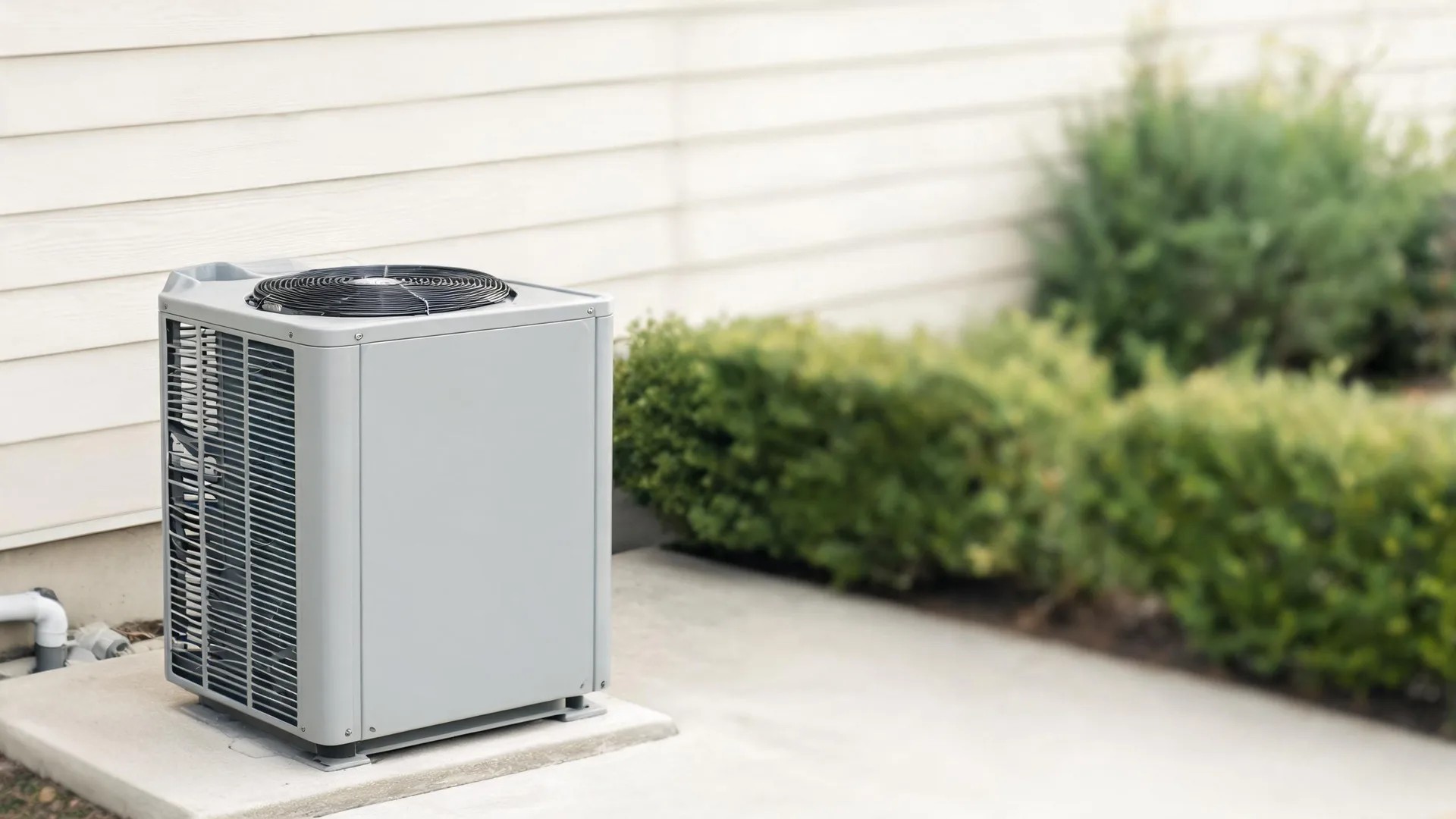
A gray outdoor HVAC unit mounted on a concrete pad beside a house with gray lap siding and a stone foundation.

160 storms in, the coil has taken the hit

That wind count isn't just a reason to check the cabinet for dents. Every storm that passes through pushes grit and leaves into the coil, and the unit keeps running anyway. Nothing about how it sounds or how the thermostat reads will tell you the coil is dirtier than it was last year. A check before the season gets going catches that buildup while it's still easy to clean off, instead of after the compressor has spent months working harder to make up for it.

The reversing valve gets tested, not just looked at

A heat pump switches between heating and cooling with a reversing valve, and a stuck valve can leave the system blowing cold air in heating mode or warm air in cooling mode without failing outright. A visual check won't catch that. It has to be run through both cycles and watched while it switches.
The defrost cycle only shows itself in winter

The outdoor coil frosts over in cold weather, and the system is supposed to sense that and run a defrost cycle to clear it. If the sensor or control board behind that is failing, the coil can stay iced over and lose its ability to pull heat from the air. A tune-up checks that control now, before cold weather is the only time it would show up.

Between visits, the filter is the one thing worth checking yourself. Pull it out, hold it to the light, and if you can't see through it, swap it or rinse it depending on the type you have. A clogged filter starves the system of airflow, and a heat pump starved of airflow runs longer and colder than it should. Keep anything from piling up against the outdoor unit too. Leaves, pine straw, a stack of firewood all choke off the coil the same way. Airflow has to move through that coil on all sides or the system loses its ability to do its job. Past that, leave the cabinet closed. The refrigerant charge, the reversing valve and the electrical connections are not something to check without the right gauges. Opening the cabinet without them risks doing more harm than the dirt would have.

A full tune-up covers more ground than most people expect. The technician checks refrigerant charge against the system's specs, because too little or too much makes the compressor work wrong either way. They test capacitors and contactors in the electrical cabinet, since a weak capacitor is one of the most common reasons an outdoor unit hums but won't start. They clean the outdoor coil properly, not just a glance at it, and check that the indoor coil isn't fouled too. They check the blower motor and wheel for wear and make sure airflow across the whole system matches what the unit was built to move. They look at the ductwork connections near the air handler for leaks, since a loose joint there wastes conditioned air before it ever reaches a room. And they check the thermostat's calibration, because a thermostat reading a few degrees off makes the whole system run longer than it needs to.