





A single-story brick house with a dark hipped roof and covered porch, seen from a low angle across a lawn with blurred grass in the foreground, framed by pine trees and a large spreading oak on the right.

Heat Pump Maintenance in Lucedale, MS

Tell us about the job

Takes about a minute. No obligation.

Tune-up, service, or cleaningHeat PumpGeorge County, MS
Step 1 of 2

What ZIP code is the job in?

Half the homes in George County were built in 1989 or later, which puts a lot of the heat pumps in Lucedale well inside their working life. A system that young has no business failing early. What determines whether it lasts is whether small wear gets caught while it's still small. A yearly check does that while the system has every reason to still be running well.

George County logged 55 severe weather events between 2015 and 2024, most of them damaging wind.

A yearly check catches what that wind and the power swings behind it do to a heat pump before it turns into a failed run.

October is the month to get it checked, not November

Cooling runs May through October
Heat runs November through March
Power costs 13.39 cents a kWh statewide

If your heat pump came with the house, check the paperwork or the sticker on the unit for the install date. That one number tells a technician what to look for. A system a few years old mostly needs the basics confirmed. The refrigerant charge, the airflow across the coil, the electrical connections. Catching a weak connection or a slow refrigerant leak now means neither one gets the chance to force the system to work harder than it should.

Keep it in good shape

If your system is fairly new, a yearly check keeps it in good shape for longer.

Find a contractor
A man seen from behind in a gray shirt and tan work pants climbs porch steps toward a blue front door, carrying a worn leather tool bag in his right hand, with a potted shrub in a blue planter beside the door.
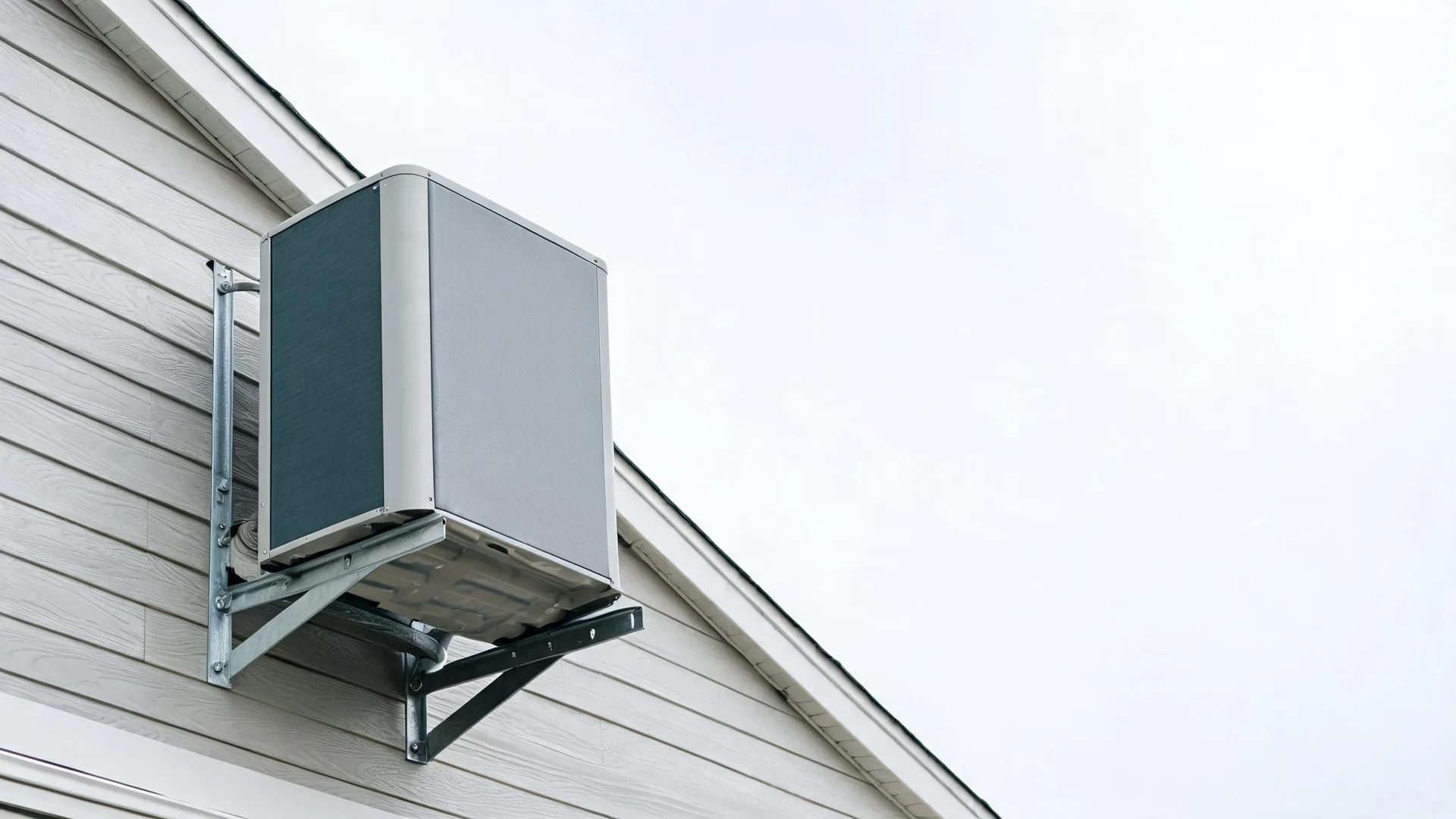
A gray outdoor HVAC unit mounted on a concrete pad beside a house with gray lap siding and a stone foundation.

Between visits, the filter and the airflow around it are on you

The one thing you control year round is the filter. A dirty filter chokes airflow across the indoor coil, and a heat pump starved for airflow has to run longer to move the same heat. Check it monthly and swap it when it's visibly gray. Outside, keep the area around the unit clear. Leaves, grass clippings and anything stacked against the cabinet block the airflow it needs to pull heat from the air, whether it's heating or cooling. In winter, if you see ice building up on the outdoor coil, don't chip at it. Heat pumps run a defrost cycle on their own to clear that. Ice that won't melt off after a defrost cycle is worth a call. Keep the vents and returns inside the house open and unblocked by furniture or rugs too. None of this replaces a yearly check, but it's what keeps the system from working against itself in the months between.

A refrigerant check means gauges, not a glance

A thorough visit has a technician connect gauges to check the refrigerant charge against what the system calls for, and check the temperature split across the indoor coil. A quick visit skips straight to topping off refrigerant without checking if it's even low, or skips it entirely. Charge that's off in either direction makes the compressor work harder than it should, all year.
The reversing valve only gets tested one way

A heat pump depends on the reversing valve to switch between heating and cooling, and the only way to know it's working is to run the system in both modes and check that it actually switches. A fast tune-up checks the system in whichever mode it's already running and calls it done. A stuck reversing valve won't show up until the season it's needed, and by then it's a repair instead of a tune-up item.

A technician opens the cabinet and checks things that don't show up as a symptom until they fail outright. The contactor points get pitted from the arc every time the compressor cycles on, and a pitted contactor can stop making good contact months before it fails completely. The capacitor that kicks the compressor and fan motors over loses its charge slowly, so the motors still start but draw harder to do it. Both of those get tested with a meter, not a look. Inside the air handler, the blower wheel collects a layer of dust and debris that throws it out of balance and cuts the air it can move, even though the motor sounds fine. None of this announces itself. The system keeps running, just worse, until one of these finally lets go.

A full tune-up covers more than refrigerant and electrical. The condensate drain gets flushed, because algae and dust build a clog slowly, and a clogged drain backs water up into the pan and sometimes past it. The outdoor coil gets washed, not just looked at. Dirt packed into the fins cuts how well the coil can pull heat from the air or push it out, and a quick hose rinse from the top does nothing for dirt packed in from the sides. The technician checks the refrigerant line insulation too, since bare spots there make the system work harder the same way a dirty coil does. Thermostat calibration gets checked against a second thermometer, because a thermostat reading a few degrees off will short-cycle the system or run it longer than it needs to, without ever throwing an error. None of these are dramatic fixes. They are the quiet ones that keep the big parts from being asked to do more than they should.