A low-angle view along a red brick wall with shrubs at its base, facing a mown grass lawn with a single-story light-colored house and pine trees under an overcast sky.

Heat Pump Maintenance in Laurel, MS

Tell us about the job

Takes about a minute. No obligation.

Tune-up, service, or cleaningHeat PumpJones County, MS
Step 1 of 2

What ZIP code is the job in?

A dirty coil makes the whole system struggle

The outdoor coil has to give up heat in summer and pull heat from the air in winter. Dirt and pollen on the fins make both jobs harder. A dirty coil is a common reason a heat pump runs long without the house catching up to the thermostat.


The reversing valve has to move cleanly

Switching between heating and cooling depends on the reversing valve sliding into place every time it's asked to. A valve that sits unused or gets sluggish from dust and corrosion can stick partway, and the system ends up blowing air that isn't the temperature you set it for. A maintenance visit is where that gets caught before it turns into a service call.

Half the homes in Jones County were built in 1981 or earlier, half in 1981 or later.

Whatever year a heat pump went in, once a year on the schedule is what it needs.

Heat pump works both ends here, May and November

Cooling runs May through October
Heat runs November through March
160 damaging wind events from 2015 to 2024

A heat pump that needs a look doesn't always make a sound about it. Watch the air coming out of the vents. If it feels cooler than it should on a cold morning, or the system runs long stretches without the house warming up, that's worth checking. Frost on the outdoor unit is normal in small amounts, but a coil caked in ice that doesn't clear on its own points to a defrost cycle that isn't working right. Listen for the outdoor unit too. A clicking or hard clunk when it switches between heating and cooling usually means the reversing valve is having trouble doing its job. And if the system short cycles, turning on and off in quick bursts instead of running a full cycle, that's a sign something inside is struggling to keep up.

Storms come through Jones County often. Make sure your outdoor unit is ready.

Jones County has logged 224 severe weather events between 2015 and 2024, with damaging wind the most common. That outdoor unit sits through all of it, rain, wind and hail alike. A maintenance visit checks the coil and cabinet for damage and clears out whatever debris has collected before the next storm moves through.

Find a contractor
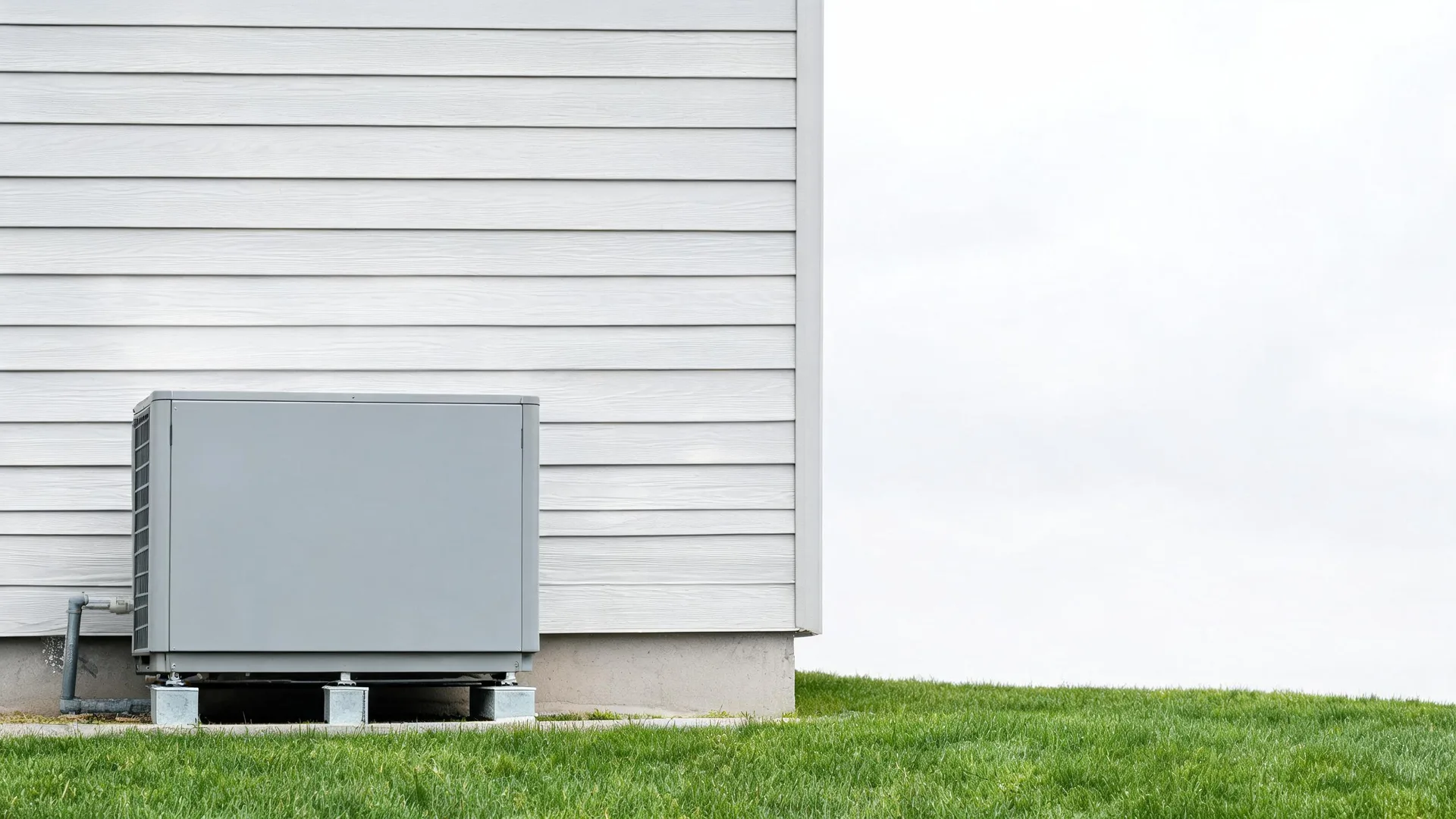
A gray outdoor HVAC unit mounted on a concrete pad beside a house with gray lap siding and a stone foundation.

It runs both directions, and the wind doesn't skip a season

A heat pump in Laurel has no off season. It cools the house for months, then switches over and pulls heat from outside air through the cold stretch. The outdoor unit sits through all of that, and it sits outside while it does. Jones County has logged damaging wind 160 times between 2015 and 2024, and that's wind hitting the same coil and fan that are already running most of the year. A bent fin or a knocked fan blade doesn't always slow the system down right away. It shows up later as the unit working harder than it should. A yearly check catches that kind of wear while it's still small.

Refrigerant charge is checked, not guessed at

A heat pump low on refrigerant will still run and still blow air, so nothing seems wrong at the thermostat. It just takes longer to get the house where you want it, and the compressor works harder the whole time to make up for what's missing. Gauges catch that during a tune-up. Eyes and ears alone won't.

Electrical connections loosen before anything breaks

Every time a heat pump cycles on and off, the wiring and contacts heat up and cool down a little. Over enough cycles, screws back out and connections loosen, usually with no warning before something finally fails. Tightening and testing those connections during a visit is what keeps a loose wire from turning into a no-heat call in the middle of winter.

The filter is the cheapest part in the system and the easiest to forget. Once it loads up with dust, less air moves across the indoor coil, and that coil can frost over even when everything else about it is working fine. Less air moving also means the system has to run longer to shift the same amount of heat, in either direction. The outdoor coil picks up its own buildup over time, pollen and grass clippings and whatever else settles on the fins, and that cuts into how well it can give off heat in summer or pull it from the air in winter. The condensate drain gets ignored until it backs up. Algae and dirt collect in that line slowly, and once it clogs, water backs up into the cabinet instead of draining where it should. A maintenance visit is where the filter gets checked, the coils get rinsed off, and the drain gets cleared before any of that turns into standing water or a system working harder than it needs to.

A tune-up also means someone opens the cabinet and actually tests the system instead of just looking at it. The defrost control gets checked, since that's what tells the unit when to melt off frost and go back to heating. A thermostat that's cycling the system properly still won't help if the auxiliary heat strips kick on more than they should, so that gets checked too. The blower motor and fan get inspected for wear since those parts spin constantly whenever the system runs, in heating or cooling. The refrigerant lines get looked over for rubbing or chafing where they pass through the cabinet or the wall, since a slow leak there can go unnoticed for a long time. None of this takes the place of a repair call when something's already wrong. It's what keeps most of those calls from happening in the first place.