


Two white Southern-style homes with wraparound porches lit by landscape lighting at night, flanked by live oak trees hung with Spanish moss.

Heat Pump Maintenance in Hattiesburg, MS

Tell us about the job

Takes about a minute. No obligation.

Tune-up, service, or cleaningHeat PumpForrest County, MS
Step 1 of 2

What ZIP code is the job in?

Forrest County saw 164 severe weather events between 2015 and 2024, and damaging wind was behind most of them. Your heat pump's outdoor unit sits right in the path of that, exposed to wind-blown debris and hail with nothing around it for cover. Tornadoes have touched down here too, and hail along with them. Almost a third of Mississippi households lost power for a day or more in 2024, and a heat pump does you no good sitting dark during a cold snap. Worth having the outdoor unit checked for bent fins, debris, or loose panels before the next storm rolls through.

May is when cooling starts in Forrest County, and the heat pump has to switch over and run.

Get it looked at in April, before that switch, not after.

Half the homes in Forrest County were built in 1982 or later, so a lot of heat pumps here still have plenty of working life ahead of them. A newer system holds up well against the wind and hail this area sees, but only if it's kept in working order. A yearly check catches the small stuff, a loose panel, a fin bent in the last storm, before it turns into a bigger repair. That matters more here than most places, since the next outage or the next switch to cooling could come at any time.

Get the outdoor unit checked before the next storm hits

Have the outdoor unit checked before storm season builds. A technician can catch bent fins, loose panels, and debris now, while it's a quick fix instead of a breakdown during the next outage.

Find a contractor
A man in a dark T-shirt, backwards cap and brown work pants, seen from behind, climbs porch steps toward a blue paneled front door while carrying a canvas tool bag, with a potted shrub in a blue planter to the right.
A white mini-split heat pump outdoor unit mounted on a concrete pad beside a gray-sided house, surrounded by gravel and green shrubs.

Keep a newer system newer, longer

A heat pump built within the last few years is worth keeping that way. The yearly check is what does it, same time each year, not just after a storm comes through. It's a small thing against a full replacement.

The refrigerant charge drifts off and nobody notices

A heat pump low on refrigerant still blows air, so there's no obvious sign anything is wrong. It just runs longer to do the same job, and the compressor works harder the whole time. By the time it fails outright, that compressor has been straining for a long stretch. A yearly check catches a low charge with a gauge, not a guess.
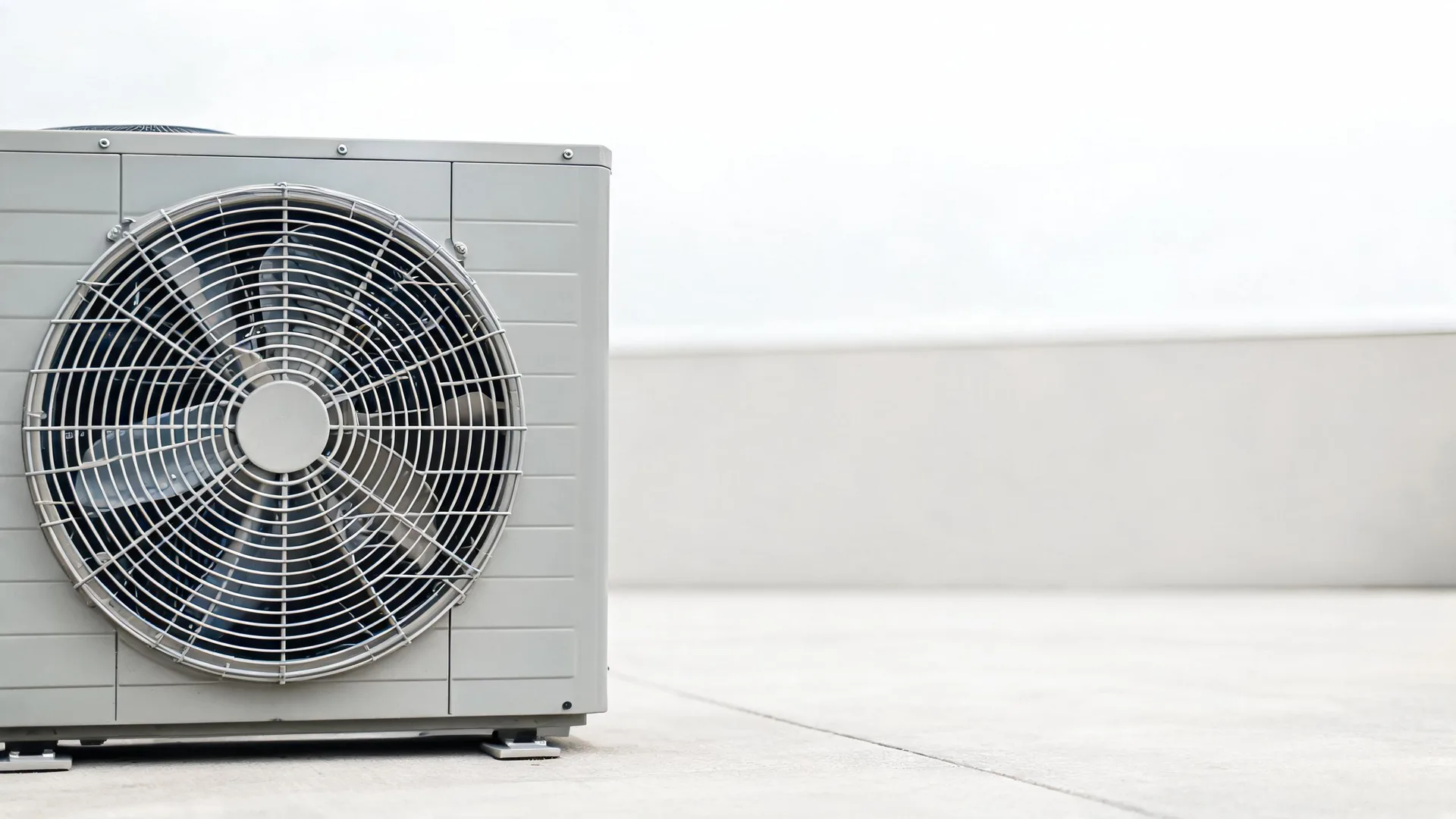
The reversing valve is what makes it a heat pump at all

Skip maintenance long enough and the reversing valve can stick, and when it does, the system quits switching between heating and cooling. Dirty coils and worn contacts are usually behind it. A stuck valve doesn't always announce itself right away either, you might just notice the air isn't the temperature you set it to.

Between visits, the filter is the one thing worth checking yourself. A dirty filter chokes airflow across the indoor coil, and a heat pump with restricted airflow has to run longer to move the same amount of heat. Look at it monthly and swap it when it's visibly gray or clogged. Outside, keep the area around the outdoor unit clear of leaves, grass clippings, and anything stacked against it, since that unit needs open air on all sides to move heat in or out. After a storm, a quick look for bent fins or debris caught in the cabinet is worth doing, but leave the panels closed and the refrigerant lines alone. Anything beyond the filter and a visual check is a job for a gauge and a trained eye, not a guess.

A real tune-up starts outside, with the condenser coil. A technician cleans it, since dirt and grass clippings on those fins cut down how well the unit sheds heat or pulls it in. From there it's electrical work. Capacitor readings get checked, connections get tightened, and the contactor gets a look for anything burnt or corroded. Refrigerant charge gets checked against what the system calls for, not topped off by habit. Inside, the blower wheel gets checked for dust buildup, and the drain line gets cleared so condensation has somewhere to go. A tech also runs the system in both directions, heating and cooling, to make sure the reversing valve actually switches when it's told to. That last part is easy to skip, and it's the one thing that tells you the heat pump still works like one.