





Two illuminated white Southern-style houses with wraparound porches and staircases, framed by a Spanish moss-draped tree on a quiet street at night.

Heat Pump Maintenance in Greenwood, MS

Tell us about the job

Takes about a minute. No obligation.

Tune-up, service, or cleaningHeat PumpLeflore County, MS
Step 1 of 2

What ZIP code is the job in?

A heat pump that needs a check usually tells you before it quits. Listen for it cycling on and off more than it used to, or running long stretches without ever seeming to catch up. Check the air coming out of the vents. If it feels weaker or less warm than you remember, the coil or the airflow is probably behind on something. Look at the outdoor unit too. Frost that lingers instead of melting off during a normal defrost cycle is a sign the system is struggling, not a sign it's working hard. A burning smell or a new rattle from either unit is worth a call on its own, even if the system is still keeping the house comfortable.

Your heat pump switches from cooling to heat in November here.

October is when a Greenwood contractor can catch what the summer wore down, before the first cold night asks the heat strip to cover for it.

Half the homes in Leflore County were built by 1973, old enough that a heat pump should get checked every year

Half the homes here were built by 1973
Power costs 13.39 cents a kWh statewide
Climate zone 3A

A tune-up starts with the refrigerant charge, and that's the part you can't see or guess at from inside the house. Too little and the system works harder to move the same heat, and a compressor that runs like that for a season tends to wear out early. A gauge set catches it now. The tech also pulls the panel off the outdoor unit and checks the contactor and capacitor, the parts that start the compressor and keep it running. A capacitor that's starting to go usually hasn't failed yet, it's just weaker than it should be, and that's easy to miss until the day it doesn't start at all. Indoors, the coil gets checked for dirt buildup you'd never see without opening the cabinet, and the defrost control gets tested to make sure the system actually ends its defrost cycle when it's supposed to instead of running longer than it needs to.

Book it before the season

It starts running hard in the first month of the season here. Book the check the month before.

Find a contractor
A man in a dark shirt and tan work pants, seen from behind, carries a canvas tool bag up wooden steps toward a blue front door of a gray clapboard house, with a shrub in a blue planter beside the door.
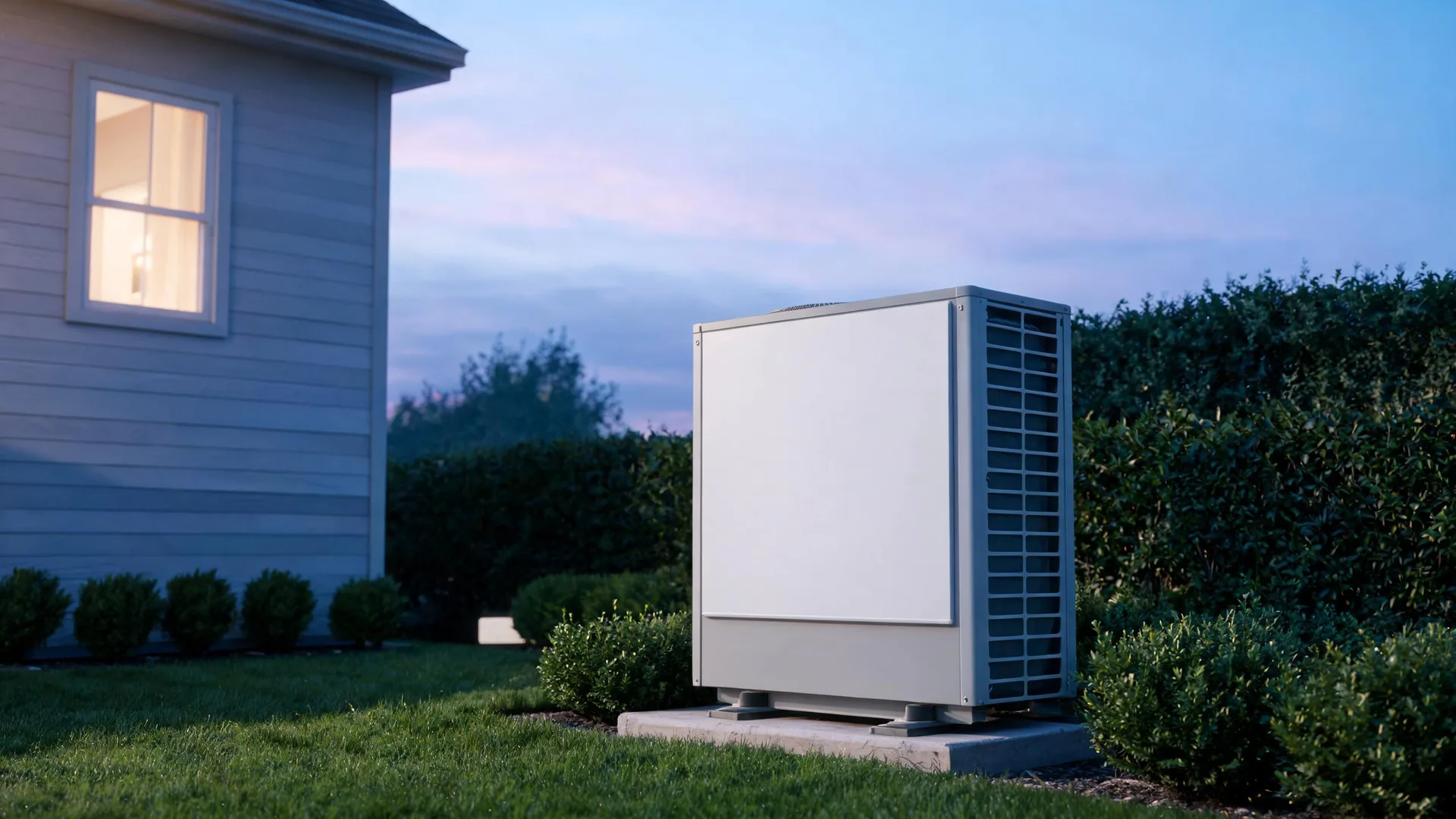
A gray outdoor HVAC unit mounted on a concrete pad beside a house with gray lap siding and a stone foundation.

A real tune-up takes the panels off

A quick visit gets you a filter check and a glance at the readout. A thorough one gets the panels off both units. On the outdoor unit that means pulling the cover to look at the contactor contacts for pitting and testing the capacitor under load, not just eyeballing it. On the indoor side it means checking the coil face for dirt rather than assuming it's clean because the airflow still feels fine. Refrigerant charge gets measured with gauges against the manufacturer's numbers, not guessed at by touching the lines. The defrost board gets tested through an actual cycle to confirm it ends on time. None of that shows up on the invoice as anything more than a line item, so the only way to tell the difference is to ask what was actually checked, or watch how long the tech spends at the outdoor unit before they ever come inside.

The filter decides what the coil has to deal with

A dirty filter doesn't just choke airflow, it lets dust through to the indoor coil instead of stopping it. Once that coil has a film on it, it can't pull heat out of the air as well, and the system runs longer to make up the difference. Changing the filter on a regular schedule is the one thing that protects everything downstream of it.
The drain line is a slow problem until it isn't

The indoor coil sheds condensation constantly when the system runs, and that water needs somewhere to go. Algae and dust build up in the drain line over time and narrow it until it backs up. When that happens the water finds the pan, then the floor or the ceiling below it, often with no warning before it does.

Between visits, the filter is the one thing that's really on you. Check it monthly and swap it when it looks gray or matted, more often if there's a pet shedding in the house. Keep the area around the indoor vents clear so air can actually move through the rooms instead of piling up warm in one and cold in another. Outside, walk past the unit now and then and clear leaves, grass clippings or anything piled against the cabinet. It needs open air on all sides to shed heat properly. After a storm, check that nothing's blown up against the fan or dented the housing. If the outdoor unit ever looks like it's building ice outside of a normal defrost cycle, that's not something to wait out, it's worth a call before it gets worse.

A tune-up also covers things that never show up as a symptom until they do. The tech checks the reversing valve, the part that switches the system between heating and cooling, by running it through both modes and listening for it to shift cleanly. A valve that's starting to stick might still work fine on the day of the visit and fail the first cold morning it's asked to switch over. Electrical connections at the outdoor unit get tightened, since a loose connection builds heat over time and that heat is what eventually burns a wire through. The blower motor gets checked for noise and for how freely it spins, because a motor working against worn bearings pulls more power to move the same air. None of this fixes something that's broken. It's there to catch what's about to be.