April is the month to call
Your heat pump switches over to cooling come May, and that first stretch of hot weather will find any weak part fast. A check in April catches a low charge or a worn contactor before the heat makes it worse.
Takes about a minute. No obligation.
Your heat pump switches over to cooling come May, and that first stretch of hot weather will find any weak part fast. A check in April catches a low charge or a worn contactor before the heat makes it worse.
Heat kicks on in November, right after cooling finally shuts off in September. There's only a month between seasons, and the same unit that cooled your house all summer has to switch gears and heat it all winter. October is the window before that switch.
Half the homes in Washington County were built in 1973 or earlier.
A heat pump in a house that old has had decades of summers and winters to wear a part down, and a yearly check is what catches it first.

If your heat pump came with a house that old, nobody on site today installed it and nobody can tell you offhand what shape it's in. A yearly check is how a contractor finds out. They check the refrigerant charge. They check the electrical connections. They check the parts that wear with age. Skip a few years of checks and a worn part just gets found later, usually when it quits.
It starts running hard in the first month of the season here. Book the check the month before.
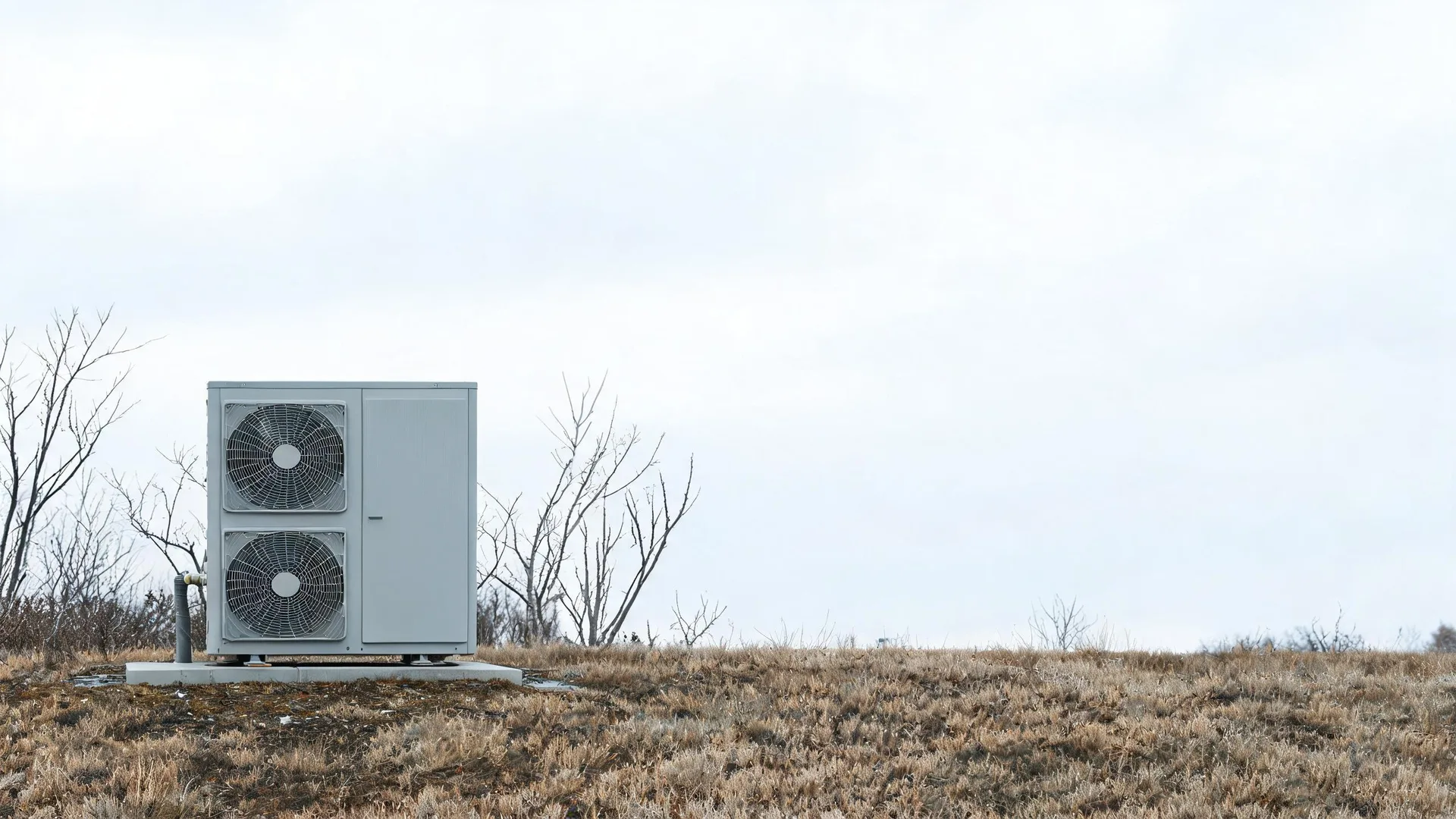
Find a contractorA heat pump that's slipping doesn't always stop working. It just works harder to do the same job. Listen for it running longer than it used to, or kicking on and off more than it should. Feel the air coming out of the vents. If it's not as warm in winter or as cool in summer as you remember, the charge may be low or a coil may be dirty. Look at the outdoor unit too. Ice forming on it in winter, or the fan struggling to spin freely, both mean something inside needs a look before it fails outright.
A dirty outdoor coil can't give up heat or take it in the way it's built to, so the compressor runs longer to make up for it. That extra runtime is what wears a compressor down before its time.
A heat pump low on charge doesn't just run weaker and stay that way. The compressor still tries to do its full job with less refrigerant to work with, and that strain is what burns compressors out early. A yearly check catches a slow leak while it's still just a top-off.
The filter is the cheapest thing to maintain and the most common cause of a service call. A clogged one starves the indoor coil of airflow, and the coil needs that airflow to dump heat in summer or pull it in come winter. Once airflow drops, the coil can ice over even while it's running flat out, and that ice just chokes it further. The outdoor coil has its own job. It has to sit clean and clear of leaves and dirt, or it can't trade heat with the outside air either. The condensate drain matters just as much and gets ignored more. It carries moisture away from the indoor coil, and when it clogs, that water backs up into the system instead of draining outside. A dirty filter, a blocked coil or a clogged drain all do the same thing in the end. They make the system work harder to do less.
Between visits, the filter is the one thing worth checking yourself, and it takes a minute. Pull it, hold it up to a light, and if you can't see through it, swap it. Keep the outdoor unit clear too. Leaves, grass clippings and a stray branch piled against it block the airflow it needs to work. In winter, glance at it after a hard freeze. A thin coat of frost is normal and the unit clears it on its own, but ice that's thick or doesn't go away means something's wrong and it's time to call rather than wait. Past that, leave the refrigerant, the electrical connections and the reversing valve to a tech. Those aren't things to check yourself, and opening up the cabinet to look can do more harm than good.