A red brick single-story house with a covered porch and adjacent cream-sided houses behind a trimmed hedge and lawn, framed by large oak trees draped with Spanish moss under an overcast sky.

Heat Pump Maintenance in Crystal Springs, MS

Tell us about the job

Takes about a minute. No obligation.

Tune-up, service, or cleaningHeat PumpCopiah County, MS
Step 1 of 2

What ZIP code is the job in?

A dirty filter chokes the whole system

A clogged filter cuts off airflow, and the indoor coil needs steady airflow to do its job. Starve it and the coil can ice over even when the air outside is warm. The outdoor coil has its own problem. Dirt and grass clippings cake onto the fins, and the unit can't shed heat properly, in cooling or in heating.


A clogged drain backs up into the house

The indoor coil pulls moisture out of the air, and that water has to go somewhere. The drain line carries it out, but algae and dust build up inside that line over time until it blocks. Once it blocks, water backs up into the drain pan and then into the house, usually onto a ceiling or wall below the unit.

A heat pump that short cycles never settles into a steady run.

Short cycling wears the compressor fast, and a yearly check catches it before the compressor goes.

May is the first full month of cooling here. Have the heat pump looked at in April.

Cooling runs May through October
Heat runs November through March
142 damaging wind events from 2015 to 2024

Once a year is enough for a heat pump, and this is a county where that one visit is worth keeping. Half the homes in Copiah County were built in 1985 or earlier, and a system that's been running that long has more small parts worth checking before they turn into a breakdown. Mobile homes make up 27 percent of the housing stock here, and whatever is heating and cooling them deserves the same yearly look as any other system. A spring visit catches a weak capacitor, a low charge, or a dirty coil while it's still a quick fix.

Book it before the season

It starts running hard in the first month of the season here. Book the check the month before.

Find a contractor
A man in a cap, dark long-sleeve shirt and tan work pants climbs porch steps toward a blue front door, carrying a waxed canvas tool bag with tools visible inside.
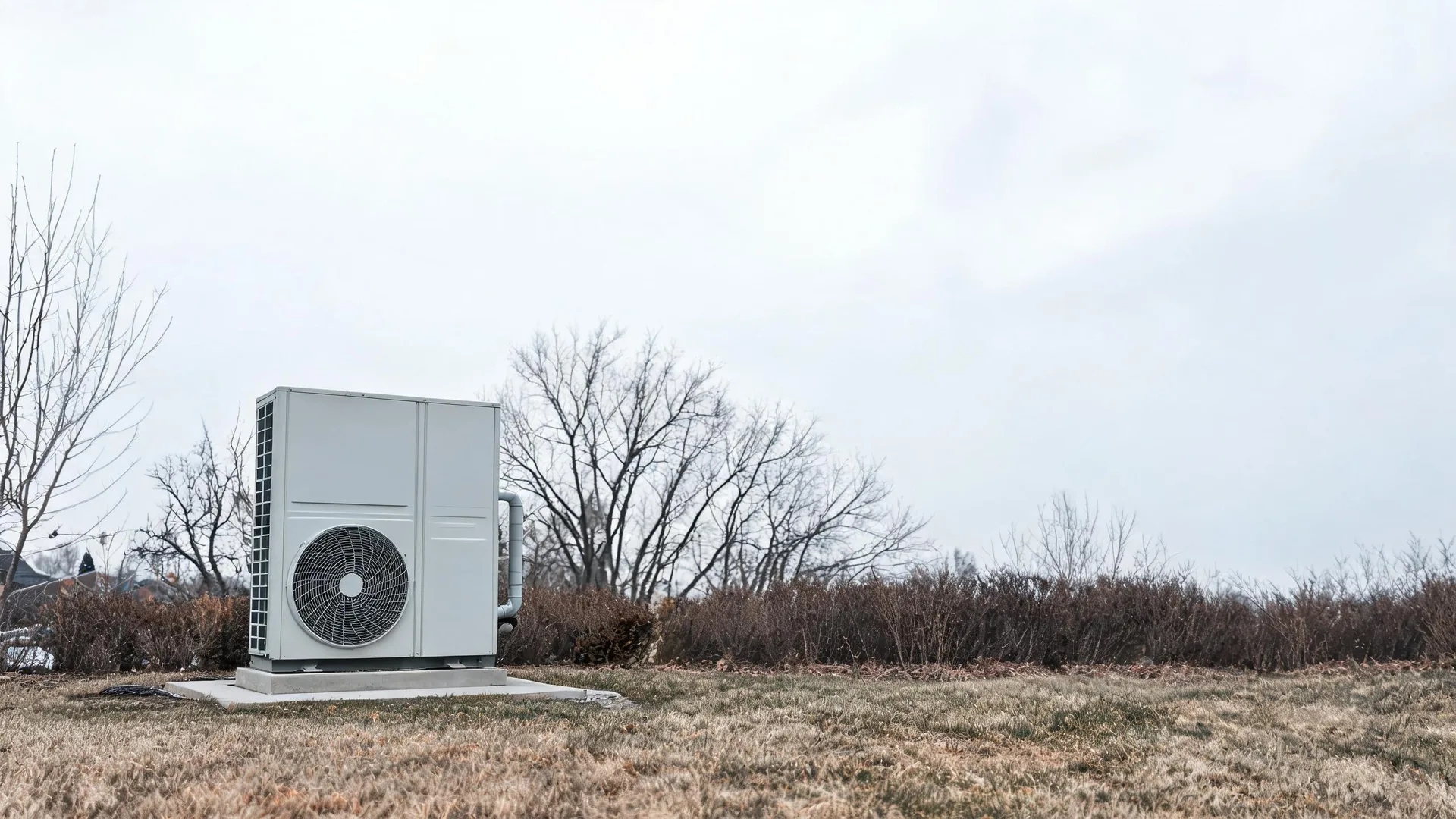
A white mini-split heat pump outdoor unit mounted on a concrete pad beside a gray-sided house, surrounded by gravel and green shrubs.

This unit doesn't get an easy year

Copiah County has seen damaging wind 142 times between 2015 and 2024. Each one can mean a hard stop and restart for a heat pump, or hours on backup power while the grid is down. That kind of jolt is harder on a unit than an ordinary day of running. A part that's already weak, a tired contactor or a capacitor losing its charge, usually doesn't give warning. It just fails on the next hard start. A yearly check finds that part while there's still time to replace it on your schedule, not the storm's.

Change the filter on a schedule

Check the filter every month and change it when it looks gray or thick with dust. A clean filter keeps air moving over the indoor coil, and that matters more on a system that already has a hard year behind it. Airflow is the one piece of this a homeowner controls.

Keep the outdoor unit clear

Pull weeds, cut back grass, and brush off anything stuck to the fins. Leave open space on all sides so air can move through. This doesn't undo wear from a hard stop or a rough restart, but it keeps the unit from fighting its own airflow on top of everything else it's already dealing with.

Skip the yearly visit and nothing fails right away. A heat pump can run for years without a filter change or a coil cleaning, just worse each season than the one before. The refrigerant charge drifts low and nobody notices because the air coming out still feels cool enough. The contactor points wear down a little more with every start. A capacitor loses some of its strength and the compressor begins drawing harder to do the same job it used to do easily. None of that shows up as a breakdown at first. It shows up as a system that runs longer to hit the same temperature, then one that struggles on the coldest or hottest days, then one that finally doesn't start at all. By the time it quits, the part that failed had usually been failing for a long while.

A tune-up starts outside with the coil and the fan. The tech clears debris off the fins, checks that the fan spins freely, and makes sure the unit isn't shedding heat into a space too tight to vent it. Inside, the refrigerant charge gets checked against what the system calls for, since a heat pump running low doesn't trip a warning, it just works harder and wears faster. The reversing valve gets tested too, since that's the part that switches the system between heating and cooling, and a stuck valve can leave you heating when you need cooling or the other way around. Electrical connections get checked for looseness or corrosion, and the contactor and capacitor get tested under load rather than just looked at, because both can look fine sitting still and still be close to failing. The thermostat gets checked last, to make sure it's actually telling the system what the homeowner thinks it's telling it.