A single-story brick house with a covered porch sits on a mown lawn behind a long trimmed hedge, framed by large oak branches draped with hanging moss, with additional light-colored houses in the background under an overcast sky.

Heat Pump Maintenance in Columbus, MS

Tell us about the job

Takes about a minute. No obligation.

Tune-up, service, or cleaningHeat PumpLowndes County, MS
Step 1 of 2

What ZIP code is the job in?

The refrigerant charge gets checked, not just the filter

A quick visit gets you a rinsed filter and a glance at the thermostat. A thorough one checks the refrigerant charge against what the system calls for, because a heat pump running low cools and heats poorly in both directions. The tech should also check the reversing valve actually shifts the system between modes, since that part failing is what leaves a heat pump stuck heating when you need cooling or the other way around.


What happens outside matters as much as what happens inside

The outdoor coil and the fan behind it do the work of pulling heat from the air, even cold air, which is why a heat pump depends on that coil being clean and the fan spinning freely. A real tune-up includes pulling the panel and checking the coil fins and the defrost cycle, not just looking at the unit from a few feet away. Skip that part and you can have a system that starts fine in the shop but struggles the first time it actually needs to defrost itself.

Lowndes County took damaging wind 110 times between 2015 and 2024.

A heat pump that gets ignored after storms like that is the one that struggles on the first cold morning.

Half the homes here were built by 1981, which means half are newer, and a newer heat pump still has a lot of working life ahead, if the storms it lives through don't wear it down first.

Half the homes here were built by 1981
110 damaging wind events from 2015 to 2024
Power costs 13.39 cents a kWh statewide
Book it before NovemberHeat pumps here run heat from November through March, so October is the month to have one checked.

Hail and tornadoes hit this county too, 29 hail events and 15 twisters in the same ten years as those wind counts. An outdoor unit sitting through that takes it directly, dented fins, a bent cabinet, branches and grit pulled into the coil. None of it announces itself right away. The system still runs, just worse, moving less air than it should until the first hard freeze or the first real heat finds the weak spot. Worth having a tech look the unit over before the next round of storms finds that problem for you instead.

Check it before the season

It works hard here, so worn parts show up fast once the season starts. Get it checked before then.

Find a contractor
A man in a brown jacket and cap, seen from behind, carries a canvas tool bag up porch steps toward a blue front door beside a potted broad-leafed plant.
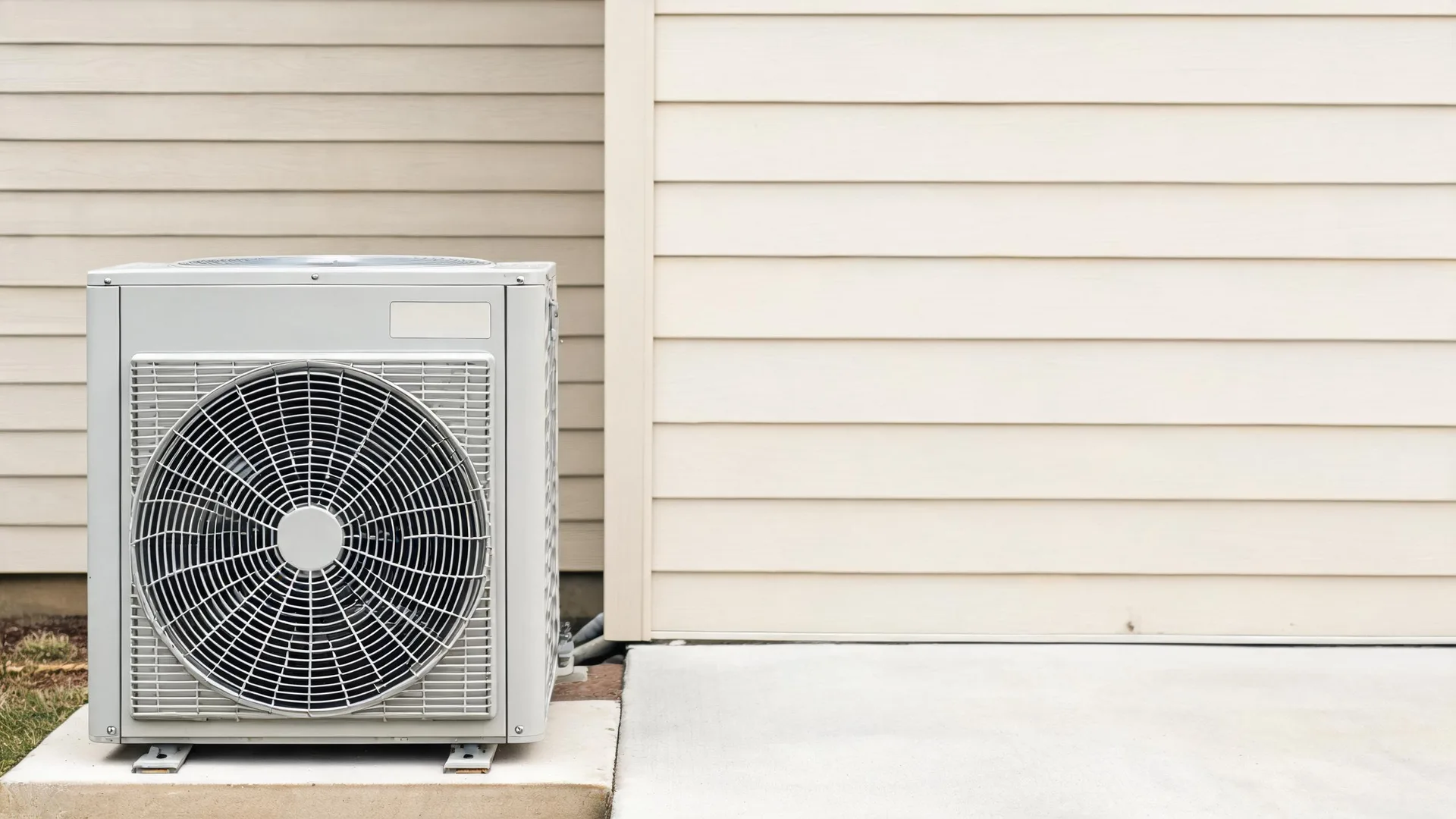
A gray heat pump outdoor unit mounted on a concrete pad next to the stone-accented exterior wall of a house.

What the system tells you before it fails

A heat pump that needs a look doesn't always stop working. It just starts working harder than it should. Listen for the outdoor unit running longer than it used to, or the indoor air feeling cooler than the thermostat setting when it's in heat mode. Frost building up on the outdoor coil and staying there past a normal defrost cycle is another one, same with the unit icing over in mild weather when it shouldn't need to defrost at all. A burning or musty smell when it kicks on, a hissing or gurgling sound from the lines, short cycling where it shuts off and restarts before a room ever gets comfortable. Any of those is the system telling you a part is wearing out before it leaves you with no heat or no cooling at all.

A dirty coil makes the compressor work against itself

A heat pump pulls heat through its coils every time it runs, outdoor and indoor both, in heating mode and in cooling mode. Dust and grime on either coil slow that transfer down. The system has to run longer to move the same amount of heat. The compressor is what absorbs that extra strain, cycle after cycle, and it is not a part that gets a simple repair.

Trouble builds for a while before it ever shuts the system down

A refrigerant charge drifting low or a contactor starting to pit does not stop a heat pump outright. It just makes the system run longer to hold the same temperature. Whatever is wearing out keeps wearing, unnoticed, until the day the system is working its hardest. That is the day a weak part tends to give out.

Between visits, the filter is the one thing worth checking yourself. A heat pump moves air constantly in both modes, and a filter clogged with dust makes it pull harder to move the same amount of air. Look at it monthly and swap it when it's gray instead of white. Outside, keep the area around the unit clear, leaves, grass clippings, anything piled against the cabinet blocks the airflow the coil depends on. Don't stack anything on top of it or let shrubs grow in close. Beyond that, leave the panel closed. The refrigerant charge, the reversing valve, the contactor, those aren't things to check yourself, and opening the cabinet without the right gauges does more harm than good.

A full tune-up also covers the things that don't show up by just running the system. The tech checks amp draw on the compressor and fan motor against what each one is rated for, since a motor pulling more than it should is a motor on its way out. Electrical connections get tightened, because a loose connection at the contactor or the terminals runs hotter than it should and burns itself up over time. The thermostat gets checked against the actual temperature in the room, not just whether it turns the system on and off. Condensate drainage gets looked at too, since a clogged drain line backs up and spills water where it shouldn't. None of this fixes something broken. It finds the part that's drifting out of spec before it takes the rest of the system with it.