White plantation-style houses with wraparound porches lit at night, surrounded by Spanish moss-draped live oak trees.

Heat Pump Maintenance in Columbia, MS

Tell us about the job

Takes about a minute. No obligation.

Tune-up, service, or cleaningHeat PumpMarion County, MS
Step 1 of 2

What ZIP code is the job in?

The refrigerant charge, checked, not guessed

A heat pump low on refrigerant still blows air, so nothing feels wrong at the vent. A gauge set on the lines shows the charge is right or it isn't. That reading is the one thing a homeowner has no way to get on their own, and running low on charge for long enough can wear down the compressor.


What a dirty coil is already doing

The outdoor coil dumps heat in summer and pulls it in during winter. A film of dirt across it makes the whole system work harder to move the same amount of heat, every cycle, long before it trips a breaker or throws a code. Washing it off is routine work during a tune-up, not something that waits for a failure.

A quick visit checks that the system turns on and blows air.

A thorough one pulls the panel, checks the pressures, and tests the contactor and capacitor under load.

Storms here put outdoor units through more than most get

83 severe weather events from 2015 to 2024
30% of homes statewide lost power a day or more in 2024
48 damaging wind events from 2015 to 2024
What is true hereHalf the homes in Marion County were built in 1980 or later, and close to a quarter of all homes here are mobile homes.

Cooling starts in May here, so April is the month to get a heat pump looked at. Heat starts in November, so October is the other window that matters. Both months come right before the system has to switch modes and run hard. A heat pump that's low on charge or running on a weak capacitor can still blow air in April and still limp through October, which is exactly why those problems go unnoticed until the system is already depending on them. Catching it the month before means it's fixed before that happens, not after.

Check it before storm season

Storm season beats up outdoor units here. Have it checked for damage and debris before you need it.

Find a contractor
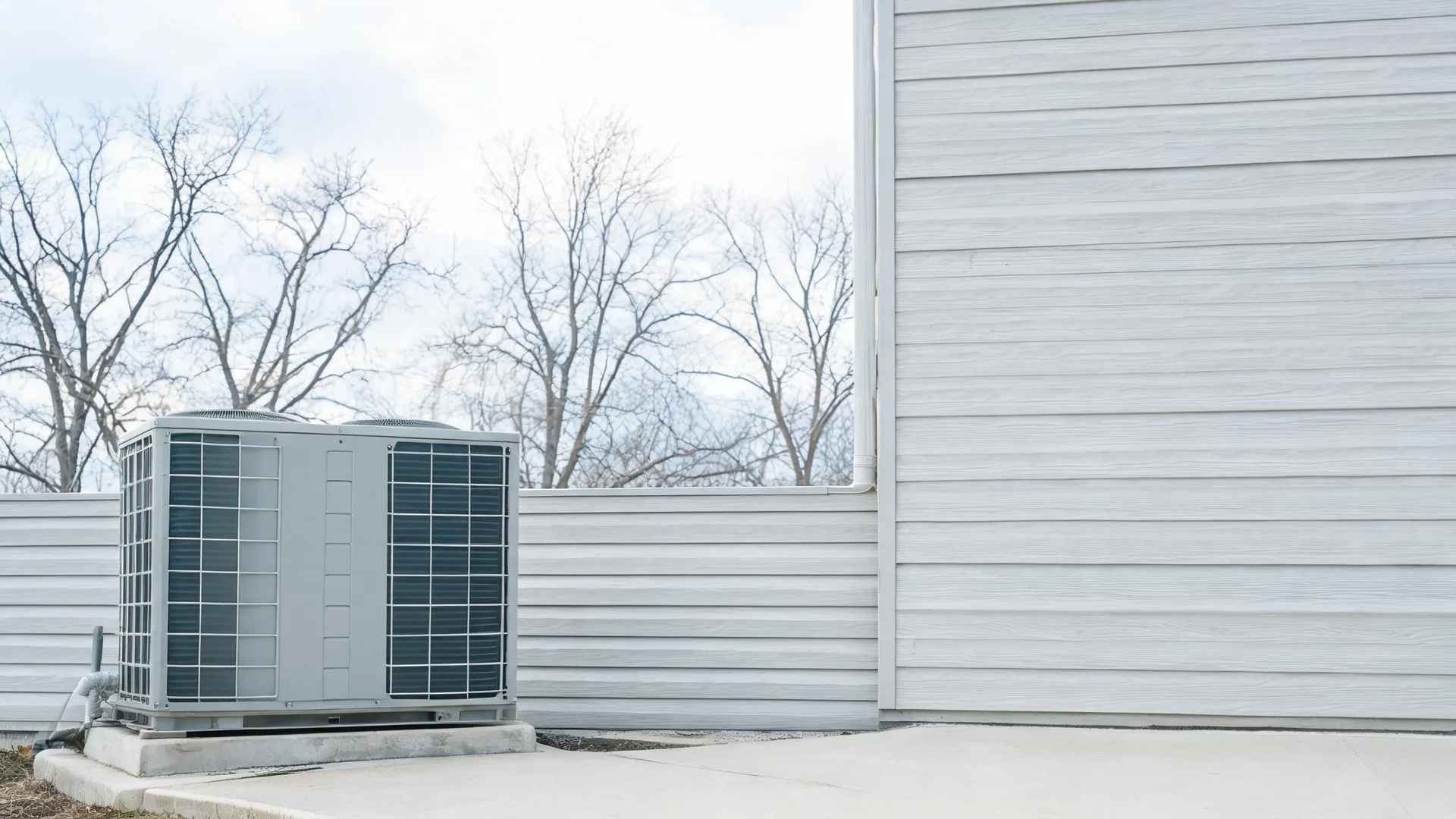
A white mini-split heat pump outdoor unit mounted on a concrete pad beside a gray-sided house, surrounded by gravel and green shrubs.

What you can check, and what has to wait for a gauge

Between visits, the filter is the one thing worth checking yourself. A dirty filter chokes airflow across the indoor coil, and a heat pump moving less air has to run longer to do the same job. Look at it monthly and swap or wash it when it's gray instead of white. Outside, keep the area around the unit clear so air can pull through the coil, nothing stacked against the cabinet, no grass clippings or leaves packed into the fins. After a storm, check for anything leaning on it or caught in the fan guard. In winter, a thin coat of frost on the outdoor coil is normal and the system clears it on its own. A thick layer of solid ice is not, and that's worth a call rather than a wait. None of this replaces a gauge on the lines or a load test on the capacitor, but it keeps the system from working harder than it has to until someone checks the parts you can't.

What the drain line does when it's ignored

The indoor coil pulls moisture out of the air and that water has to go somewhere. It runs down into a drain pan and out through a condensate line. Algae and dust build up inside that line over time, same as any drain does. Once it clogs, the pan fills and either shuts the system down through a safety switch or overflows onto whatever is underneath it. A tune-up includes flushing that line before it gets to either point.

The coil you can't see is still doing the work

The indoor coil sits in the air handler, out of sight, and it gets dusty the same way the outdoor coil gets dirty, just slower because the filter catches most of what would land on it. When the filter's been neglected for a while, enough gets through to coat the coil anyway. A coated coil can't transfer heat the way a clean one does, so the system runs longer to reach the same temperature. Cleaning it is part of what a technician checks during a full visit, not something a filter swap alone takes care of.

A heat pump that needs attention rarely announces it. The signs are smaller than that. It runs longer than it used to before it shuts off, or it cycles on and off more often than it should. The air coming out of the vent feels less hot in winter or less cold in summer, even though the system is still running. Sometimes there's a smell when it kicks on, musty from a damp coil or sharp from something electrical. A hissing or bubbling sound near the lines points to refrigerant, not something to wait on. Ice on the indoor coil, or a buildup of frost outside that doesn't clear on its own, means something isn't cycling the way it should. None of these stop the system from running. That's exactly why they're worth checking before they turn into the reason it stops.

A tune-up starts with the filter and works inward from there. The technician checks the thermostat calls for heat and cooling and watches the system respond to both, not just one. Electrical connections get checked for anything loose or corroded, since a loose connection heats up under load and eventually fails right there. The blower wheel gets inspected, because a wheel caked in dust moves less air even at full speed. Refrigerant lines get checked for insulation that's cracked or missing, not just the pressures inside them. The reversing valve, the part that switches a heat pump between heating and cooling, gets tested in both directions, since a valve that sticks halfway leaves the system blowing the wrong temperature of air. Every one of these can work fine on its own for a while and still add up to a system that's working harder than it should.