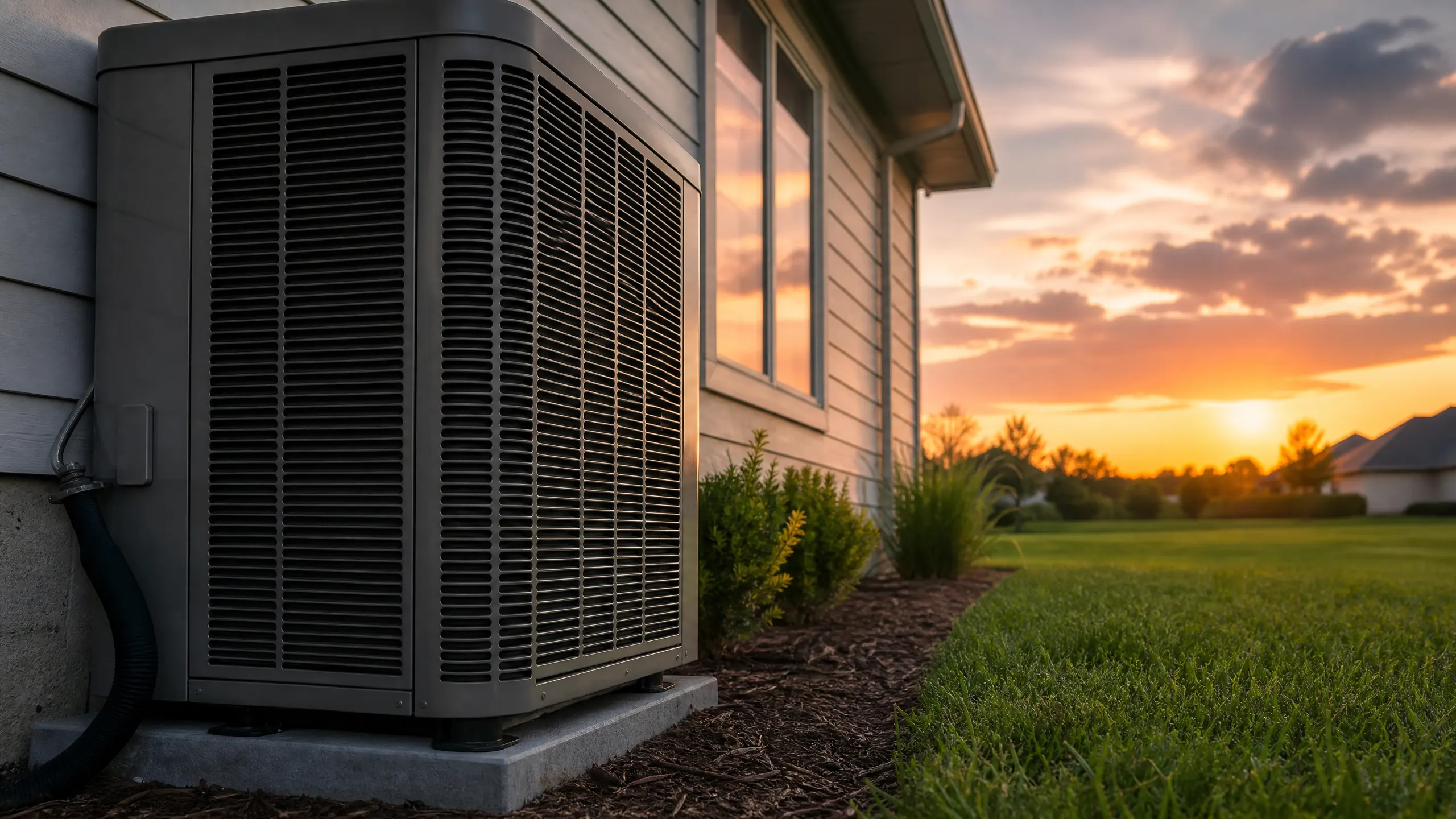






An outdoor air conditioning condenser unit mounted on a concrete pad beside a house at sunset.

Heat Pump Maintenance in Cleveland, MS

Tell us about the job

Takes about a minute. No obligation.

Tune-up, service, or cleaningHeat PumpBolivar County, MS
Step 1 of 2

What ZIP code is the job in?

Bolivar County logged 115 severe weather events between 2015 and 2024, most of it damaging wind. Your heat pump's outdoor unit sits outside year round, and wind like that drives branches and yard debris into the coil and fan. The county has also seen hail and a handful of tornadoes in that stretch, so a cracked fan blade or a dented cabinet is worth ruling out even when the unit still runs fine. Statewide, close to a third of households went at least a day without power last year. A heat pump that comes through storm season with a clean coil and a sound cabinet is one less thing to worry about when the weather turns.

A heat pump that turns on and off every few minutes instead of running a long steady stretch is telling you something.

Short cycling like that wears the compressor faster, so it's worth a look before the system quits on you.

A yearly check is enough for a county this age

Half the homes here were built by 1977
Power costs 13.39 cents a kWh statewide
Climate zone 3A
Cleveland heat pumps work hardest starting in MayCooling runs May through September here, so April is the month to get the heat pump checked.

A technician can check for this before storm season gets going, not after. Pull the cabinet and look at the coil for bent fins from wind that already came through. Check the fan blade for cracks and the cabinet for dents. Clear leaves and yard debris from around the base so air can move through it freely. None of this takes long when the unit is still running fine. A bent coil or a cracked blade left alone only gets worse the next time wind picks up.

Check it before storm season

Storm season beats up outdoor units here. Have it checked for damage and debris before you need it.

Find a contractor
A man in a brown jacket and cap, seen from behind, carries a canvas tool bag up porch steps toward a blue front door beside a potted broad-leafed plant.
A gray heat pump outdoor unit mounted on a concrete pad next to the stone-accented exterior wall of a house.

A heat pump works both directions, and a check should too

A heat pump runs in both directions, so it works parts a straight air conditioner never touches. The reversing valve is the big one. It's what switches the system between heating and cooling, and if it's sticking or the solenoid on it is going bad, you won't hear it fail. You'll just notice the system blowing the wrong temperature air, or taking a strange pause when it switches modes. A tune-up has the tech run the system in both directions on purpose to catch that early. They'll also check refrigerant charge, since a heat pump that's low on charge loses capacity in both heating and cooling, not just one. The outdoor coil gets checked for frost patterns that don't clear during defrost, which points to a failing defrost sensor or board before it leaves you with a block of ice outside in the cold. None of this shows up by looking at the unit from the yard. It only shows up when someone opens it up and runs it through what it's built to do.

The refrigerant charge drifts without any leak

A heat pump loses a little refrigerant through the flare fittings over years just from normal vibration, no leak needed. Nobody notices because the system still blows cold in summer and warm in winter. It just runs longer to get there, and the compressor works harder the whole time to make up for it.
The compressor is the part that pays for it

Dirty coils, low charge, a sticking reversing valve, none of that stops the system from running. It just makes the compressor work against conditions it wasn't built for, season after season. A filter gets changed in a few minutes. A compressor has to be replaced.

Between visits, the filter is the one thing worth your attention. A dirty filter chokes airflow across the indoor coil, and a heat pump moving less air has to run longer to get the same result. Check it monthly and swap it when it's visibly gray or matted down. Outside, keep the area around the unit clear so leaves and grass clippings don't pack into the coil fins. Don't cover the outdoor unit in winter thinking it needs protection from cold. It's built to sit outside and run in freezing weather, and covering it traps moisture and blocks airflow it needs during defrost cycles. If you notice ice building up on the outdoor coil and it isn't clearing on its own within an hour or so, that's worth a call rather than something to wait out.

A tune-up starts with the filter and works inward from there. The tech pulls it, checks the blower wheel behind it for caked-on dust, and looks at the indoor coil for the same. A coil that's coated in dust loses its ability to transfer heat, so the system runs longer in both directions to make up for it. Outside, they check the contactor and capacitor, the parts that get the compressor and fan running, since a weak capacitor shows up as a compressor that hums and struggles to start rather than one that fails outright. They'll check the condensate drain too, because a heat pump cooling the house all summer makes the same condensate an air conditioner does, and a clogged drain backs water up into the cabinet or the house. Electrical connections get checked for anything loose or corroded, since a connection that's barely hanging on now is a no-heat call waiting for the coldest night of the year.