





A nighttime street scene featuring a row of lit white colonial-style houses with wrap-around porches, flanked by oak trees draped in Spanish moss.

Heat Pump Maintenance in Clarksdale, MS

Tell us about the job

Takes about a minute. No obligation.

Tune-up, service, or cleaningHeat PumpCoahoma County, MS
Step 1 of 2

What ZIP code is the job in?

Half the homes in Coahoma County were built in 1970 or earlier. A heat pump that came with a house that old has been in service a long time, maybe longer than the people living there now know. Nobody checking today can tell you what the last few years of upkeep looked like. A yearly check is how a contractor catches a worn contactor or a low charge before it becomes a system that just stops working. Skip enough years and small wear turns into a breakdown with no warning.

A tune-up that only checks the thermostat and calls it done misses what actually fails on a heat pump.

Checking refrigerant charge, the contactor and the condenser coil is what catches trouble before it strands you without heat or air.

October gets your heat pump ready for November, when it starts working for the next five months straight

Cooling runs May through September
Heat runs November through March
Power costs 13.39 cents a kWh statewide

If a heat pump has been there since the house changed hands, or longer, a yearly check is the only way to know where it stands. A contractor can look at the age on the data plate and tell you what that means for parts and refrigerant. If it's old enough, they can also tell you what to expect in the next few years, so a breakdown doesn't catch you off guard in the middle of a cold snap. Ask whoever checks it to show you the data plate and walk you through what they found.

Catch it while it's small

If your system has been in the house a long time, a yearly check is how you catch problems while they're small.

Find a contractor
A man in a dark cap, dark shirt and tan pants, seen from behind, carries a canvas tool bag up concrete steps toward a blue front door, with a potted green plant in a blue planter beside the entry.
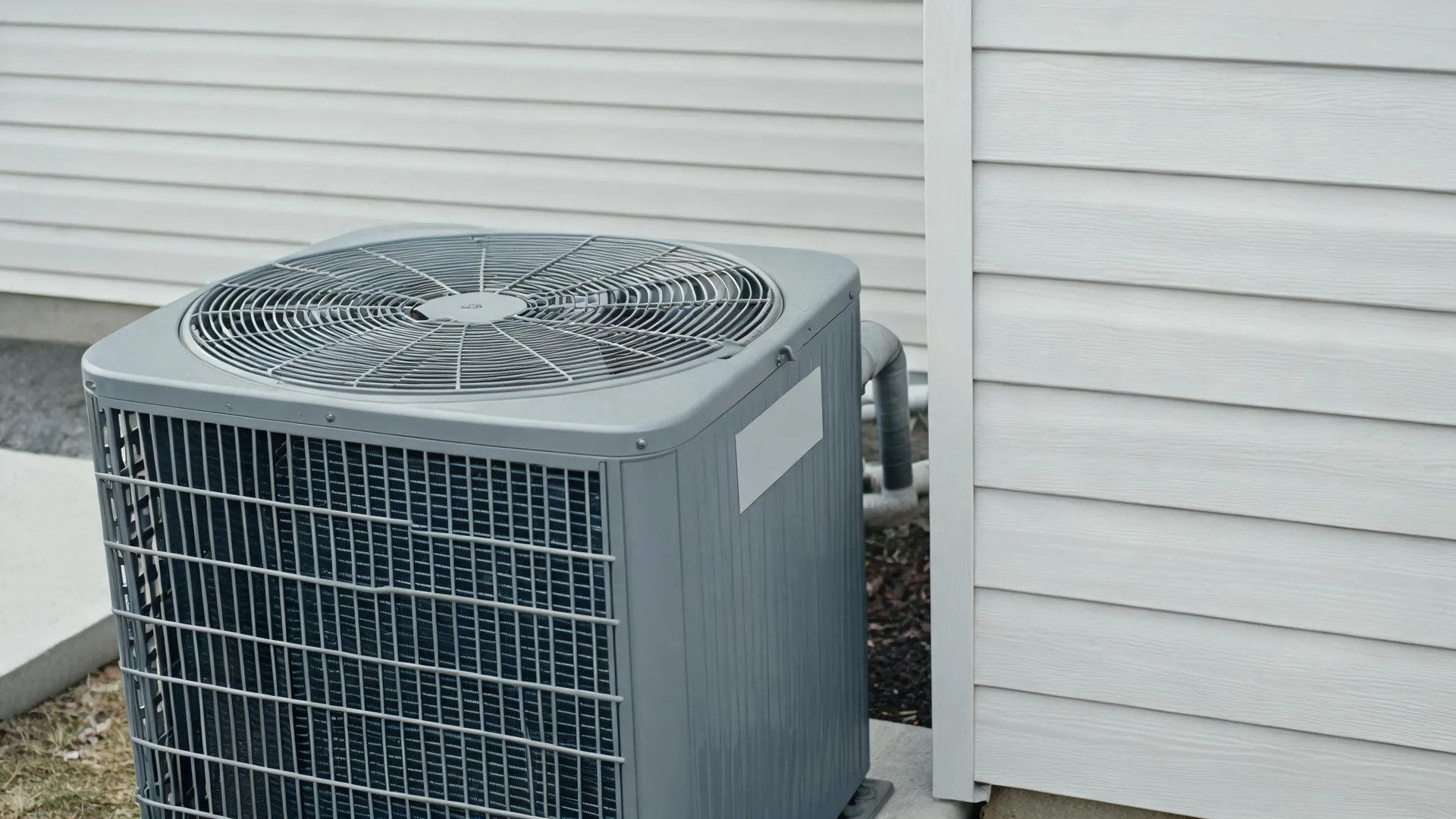
A gray heat pump outdoor unit mounted on a concrete pad next to a residential house with lap siding and stone accents.

What you can check, and what to leave alone

Between visits, the filter is the one thing worth doing yourself. A dirty filter chokes airflow before anything else goes wrong, so check it on a regular basis and swap it when it looks gray and packed with dust. Keep the ground around the outdoor unit clear so air can move through the coil. Pull weeds back from it and point the mower discharge the other way instead of letting clippings blow straight into the fins. After a storm, check for leaves or branches caught in the top of the unit. Inside, keep registers open and clear of furniture or rugs so air can actually reach the room. Watch the outdoor unit after a freeze. A light frost that melts off on its own is normal, but ice that builds up and stays is worth a call, since that usually means the defrost cycle isn't doing its job. Past that, leave the gauges and the refrigerant alone. Opening the cabinet or adding refrigerant without the right tools tends to turn a small problem into a bigger one.

The reversing valve doesn't forgive neglect

A heat pump switches between heating and cooling with a reversing valve, and that valve only moves when it gets the signal and the pressure to move. Low refrigerant or a weak coil already struggling to transfer heat puts extra strain on it every time it switches. A valve that sticks can leave you with a system blowing cold air in the middle of winter, and that's a failure that shows up exactly when you need the system most.
A refrigerant leak gets worse, never better

Refrigerant doesn't get used up. If the charge is low, something is leaking, and a small leak left alone stays a leak that slowly empties the system over months. Running low on charge makes the compressor work harder to move heat, so it runs hotter and wears faster. Caught during a check, a slow leak is a repair. Left to empty out on its own, it's a compressor that may need replacing.

A yearly check catches things you can't see or hear from inside the house. A contractor checks the suction line temperature against the outdoor temperature to confirm the charge is right, something no homeowner can eyeball. They check that the defrost cycle actually kicks in and reverses the valve back when it should, since a defrost board that misfires leaves ice building up on the outdoor coil until it chokes off airflow entirely. They check amp draw on the compressor, because a motor pulling more current than it should is a motor winding down before it quits. A system can sound fine and still be losing capacity for months before anyone notices the house isn't quite keeping up. That's the gap a check is meant to close.

A proper tune-up starts with gauges, not a glance at the thermostat. The contractor checks refrigerant charge against the manufacturer's spec, because too much or too little both make the compressor work harder than it should. They test the contactor and capacitor, the parts that start and hold the compressor and fan motors, since a pitted contactor or a weak capacitor is one of the more common reasons a heat pump fails to start at all. They check electrical connections for looseness and corrosion, clean the condenser coil so it can actually shed and absorb heat, and flush the condensate drain so it doesn't back up later. On a heat pump specifically, they run the defrost cycle and the reversing valve through a full cycle to confirm both work before cold weather asks them to. A system that gets this every year rarely surprises anyone.