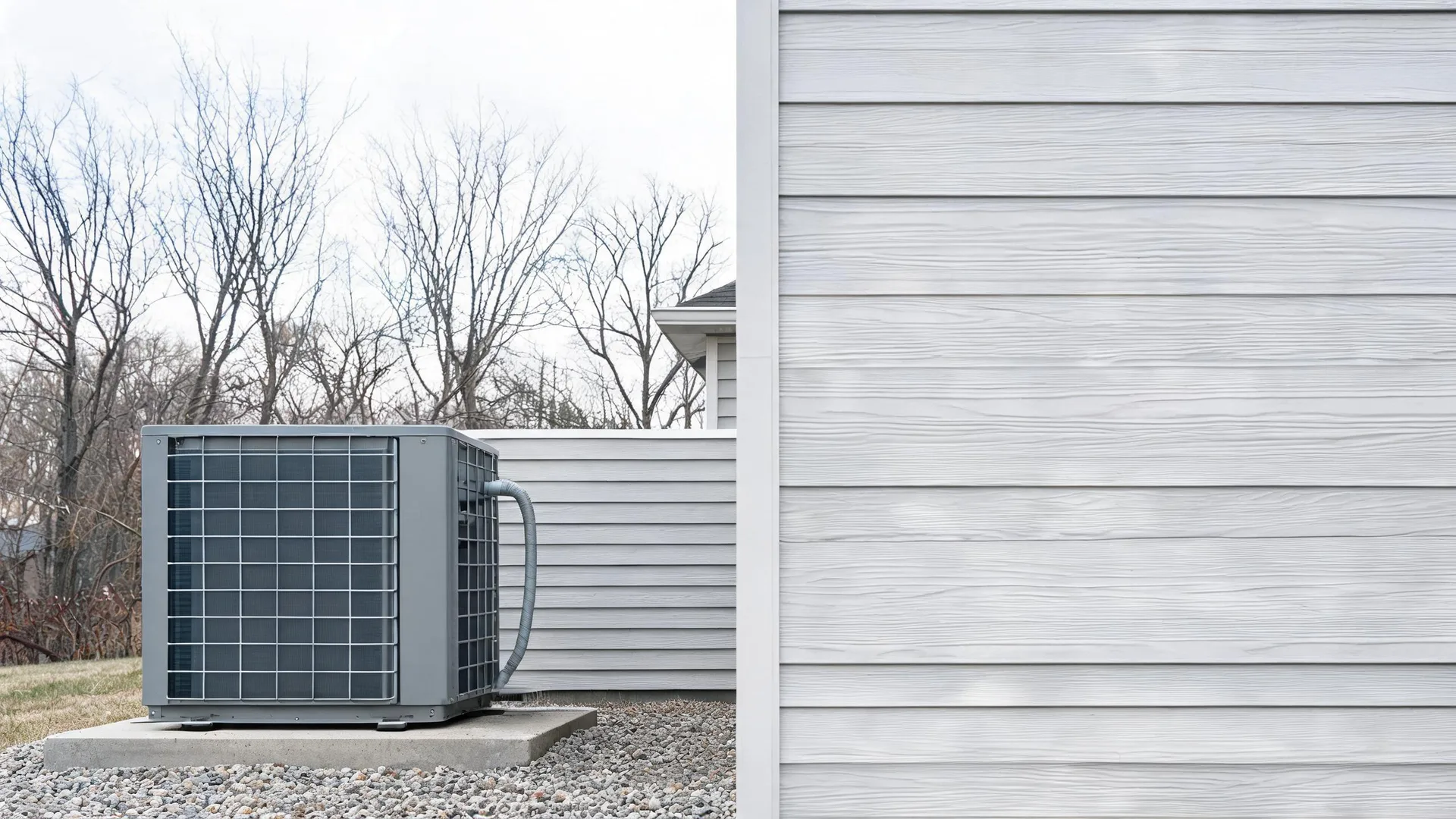
Hancock County recorded 52 severe weather events between 2015 and 2024, including windstorms, hail and tornadoes. A heat pump sits outside through all of it, and wind-blown debris or hail can bend fins and throw the outdoor unit out of balance without ever stopping it from running.
A yearly check is the right amount here
Nothing about this machine calls for more than one maintenance visit a year. The point of that visit is to catch a bent fin, a weak capacitor or a refrigerant level drifting off before it turns into a breakdown, and once a year is enough to stay ahead of that here.
A heat pump that short cycles, turning on and off every few minutes, is straining the compressor every time it does it.
A maintenance visit checks for the dirty coil, low charge or failing capacitor behind that short cycling before the compressor is the part that fails.
Half the homes here were built in 1999 or later, so the heat pump inside is probably still young too
Half the homes here were built by 1999Power costs 13.39 cents a kWh statewideClimate zone 2A
Between visits, keep the outdoor unit clear. Leaves, grass clippings and pine straw pull into the coil and block airflow, and a fence or shrub planted too close does the same thing even though nothing looks wrong day to day. Walk out after a storm and check for bent fins or anything that landed on top of the unit. Inside, check the air filter and swap it when it looks gray or clogged, since a blocked filter makes the whole system work harder to move the same air. Keep vents and returns in the house open and unblocked by furniture or rugs. If you notice the heat pump running constantly, blowing air that isn't warm or cold enough, or making a new noise, that's worth a call before the next scheduled visit rather than waiting it out.
The coil gets dirty either way
Dust and pollen settle on the outdoor coil whether or not the unit ever gets checked. A dirty coil can't shed heat the way it should, so the system runs longer to do the same job and the compressor works harder the whole time it runs.
Small problems don't stay small
A refrigerant leak or a weak capacitor doesn't fix itself. Left alone, a low charge makes the compressor run hot, and a capacitor that's starting to fail will keep failing until the compressor won't start at all. Catching either one early is a different repair than waiting for the breakdown.
A lot of what a tune-up finds doesn't show up as a symptom yet. A technician checks the refrigerant charge against what the system is supposed to hold, not just whether it's cooling or heating right now, because a unit can run low for a while before anyone notices a difference. The reversing valve gets tested too, since that's the part that switches the system between heating and cooling, and a valve that's starting to stick won't always announce itself until the season it's needed most. Electrical connections get checked for corrosion and looseness before they turn into a no-start. None of this is guesswork. It's measuring against known numbers for that system and catching what's drifted before the system itself tells you something's wrong.
A tune-up on a heat pump covers both sides of the system, not just the outdoor unit. The indoor coil gets checked along with the outdoor coil, since a dirty indoor coil restricts airflow the same way a dirty filter does. Static pressure in the ductwork gets measured too, because a system fighting too much resistance wears the blower motor down even when the thermostat says everything is fine. The defrost cycle gets tested going into the cold months, since that's what clears frost off the outdoor coil in the middle of winter, and a defrost control that's failing will let ice build up until the unit can't pull heat from the air at all. The technician also checks that the system is holding the correct temperature split between the air going in and the air coming out, which is a plainer way of confirming the whole system is moving heat the way it's supposed to.