





A single-story brick house with a white-columned wraparound porch and a neighboring light-colored siding house, seen across a lawn behind a trimmed hedge, under oak branches draped with Spanish moss.

Heat Pump Installation in Philadelphia, MS

Tell us about the job

Takes about a minute. No obligation.

New system or replacementHeat PumpNeshoba County, MS
Step 1 of 2

What ZIP code is the job in?

Philadelphia is in climate zone 3A, long summers, a short mild winter, air on the humid side. Any new split-system heat pump has to hit 14.3 SEER2 for cooling and 7.5 HSPF2 for heating. That's not a target to aim for, it's the floor. Nothing weaker can legally go into your home. Contractors here are working above that line already, so the real decision is what the system does on top of it, not whether it clears the minimum.

5 months
November through March, your system heats
5 months
May through September, it cools
36°F
the average winter night it heats against
90°F
the average summer afternoon it cools against
Isometric cutaway illustration of a single-story house with a dark gabled roof, showing interior rooms with ductwork leading to an indoor air handler and an outdoor condenser unit connected by lines on the ground outside.
Your system heats November through March and cools May through September.

NOAA nClimDiv, 1991–2020 normals

Electricity already heats 61.3% of homes in Neshoba County.

A heat pump runs on the fuel most homes here are already wired for.

A standard heat pump sized right is all this county needs

Half the homes here were built by 1985
Climate zone 3A
Power costs 13.39 cents a kWh statewide

A heat pump that's too big cools the room fast, shuts off, and leaves the humidity behind. It never runs long enough to pull the moisture out of the air, so the house feels clammy even at the right temperature. One that's too small runs constantly and never quite catches up on the hottest days. Getting the size right means a contractor works out the heat loss and heat gain of the house itself, the windows, the insulation, how much shade it gets, not just the square footage. That's a load calculation, and it's the only honest way to land on a system that runs in long, steady cycles instead of short bursts or endless ones.

Meet the standard here

A new system here has to meet this region's minimum efficiency, which limits what can go in.

Find a contractor
A gray heat pump outdoor unit mounted on a concrete pad next to the stone-accented exterior wall of a house.

Put it in before the season needs it

Cooling starts in May here, heating in November. That only leaves April and October as the quiet months, the ones where a new heat pump could go in before the next season asks anything of it. Put it in during April and it's already sized and tested before the first hot stretch hits. Put it in during October and it's ready before the first cold night. Wait until the old system fails in the middle of a run, and you're picking a heat pump under pressure, probably without power if the weather that broke it is the kind this county gets.

Ask what happens at the balance point

Every heat pump reaches a temperature where it can't pull enough heat from the outside air to keep up, and backup heat has to take over. That point is different for every system. Ask where it sits and what kicks in below it, strip heat or something else, because that backup is usually the least efficient part of the whole setup.
Ask for the sound rating, not just the number

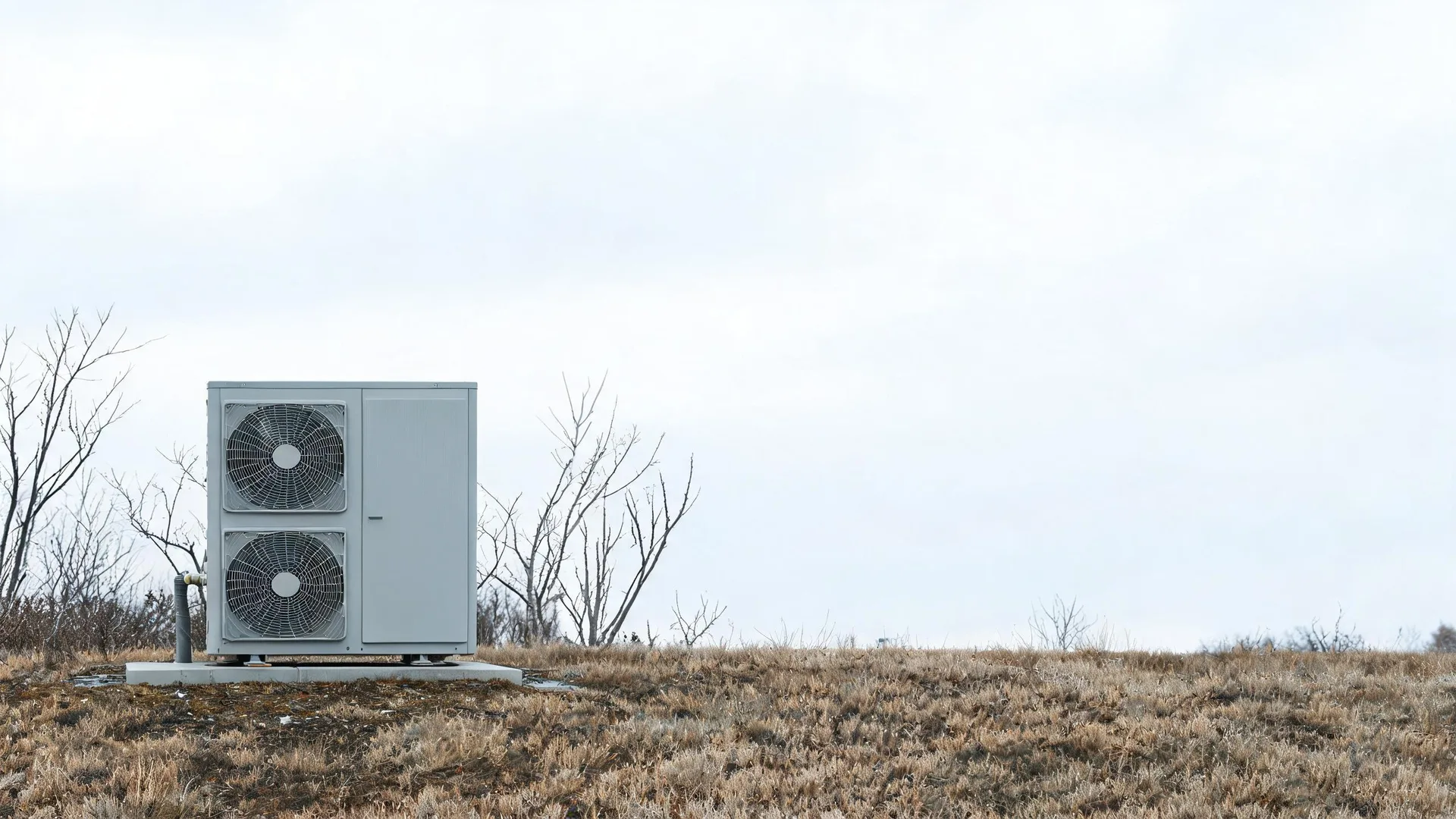
Outdoor units get louder as they age, but the starting point still varies a lot between models. Ask what the unit measures at low speed and high speed, and ask where the installer plans to place it. A unit near a bedroom window matters more than the rating on a spec sheet.

The equipment itself is only part of what you're paying for. Ductwork is the part nobody sees and the part that decides whether the system you bought actually delivers what it promised. If the ducts are undersized, leaky, or running through unconditioned space, a contractor has to account for that, and sealing or modifying them takes time and material. Line set length matters too, the refrigerant lines running between the outdoor unit and the indoor coil, because longer runs need more refrigerant and more careful charging. Electrical work can be its own line item. Heat pumps often draw differently than what was there before, and if the panel or breaker doesn't match the new unit's needs, that has to be upgraded before anything gets turned on. The thermostat, the pad the outdoor unit sits on, the way the old equipment gets removed, none of it is the heat pump itself, but all of it is the installation.

Install day starts with the old equipment coming out, and that alone takes a few hours if the refrigerant has to be recovered from the lines first. The indoor coil and air handler usually go in before the outdoor unit, since the inside work can happen regardless of weather. Setting the outdoor unit means leveling a pad, running the line set, and connecting the electrical whip, then the lines get brazed, pressure tested, and pulled into a vacuum to clear out moisture and air before any refrigerant goes in. Charging it right takes patience, since too much or too little refrigerant cuts into how the system runs for years, not just on day one. Once it's charged, a contractor runs it through both modes, checks static pressure in the ducts, and sets the thermostat before walking the homeowner through it. A straightforward swap can wrap in a day. Anything involving duct repair, electrical upgrades, or a tricky line set run usually pushes into a second.