





A white Southern-style house with a wraparound porch photographed at night, surrounded by Spanish moss-draped oak trees lit by landscape lights.

Heat Pump Installation in Magee, MS

Tell us about the job

Takes about a minute. No obligation.

New system or replacementHeat PumpSimpson County, MS
Step 1 of 2

What ZIP code is the job in?

Simpson County sits in zone 3A, warm and humid, with summer running long and winter barely showing up. Any split-system heat pump installed here now has to meet 14.3 SEER2 for cooling and 7.5 HSPF2 for heating, the federal minimum since the start of 2023. That floor was set for places that run the compressor far more months than the furnace, which is exactly the case here. A federal tax credit is available on qualifying equipment, separate from whatever the efficiency itself saves. Given how often this county loses power, it's worth asking what a given system draws to run, and whether it can pair with backup power.

5 months
November through March, your system heats
6 months
May through October, it cools
38°F
the average winter night it heats against
91°F
the average summer afternoon it cools against
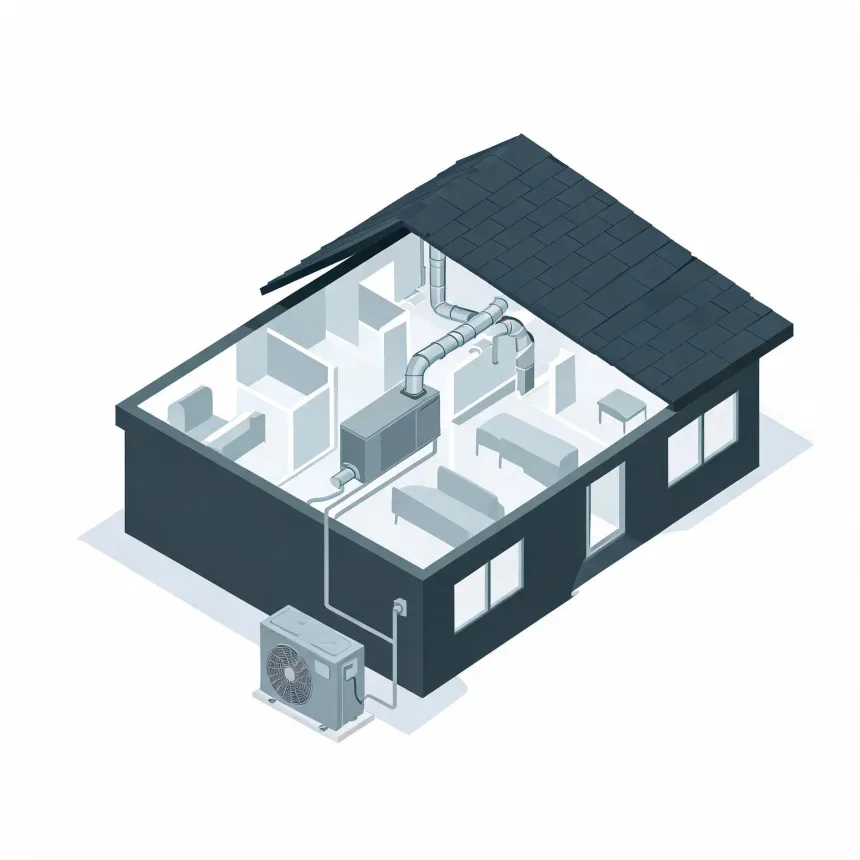
Isometric cutaway illustration of a single-story house showing interior rooms, ceiling ductwork connected to an air handler, and an outdoor condenser unit linked by a line set.
Your system heats November through March and cools May through October.

NOAA nClimDiv, 1991–2020 normals

Electricity already heats 63 percent of homes in Simpson County.

A heat pump replacing that setup fits the wiring and ductwork already in place.

At 13.39 cents a kWh, a heat pump here earns its keep on reliability, not just the power bill

Power costs 13.39 cents a kWh statewide
Climate zone 3A
Cooling runs May through October

Half the homes in Simpson County were built in 1986 or earlier, and half since. About a quarter of the housing stock is mobile homes. Neither points toward special sizing or a higher efficiency tier. A heat pump sized to the home's square footage and insulation covers this climate the same way it would anywhere in this zone. Mobile homes do need equipment rated for that installation type, so if yours is a manufactured home, say so when getting quotes. Beyond that, there's nothing about the age or type of housing stock here that calls for oversizing a system or paying for efficiency past the standard rating.

Get the heat pump in before May or November, not after

Cooling starts in May here and heat in November, so a heat pump put in now gets a full test on mild days instead of the first hot or cold stretch of the season. Installed in October or April, it's running before the county needs it to carry the full load.

Find a contractor
A man in a cap, work jacket and tan trousers carries a canvas tool bag up wooden porch steps toward a blue front door of a house with lap siding.
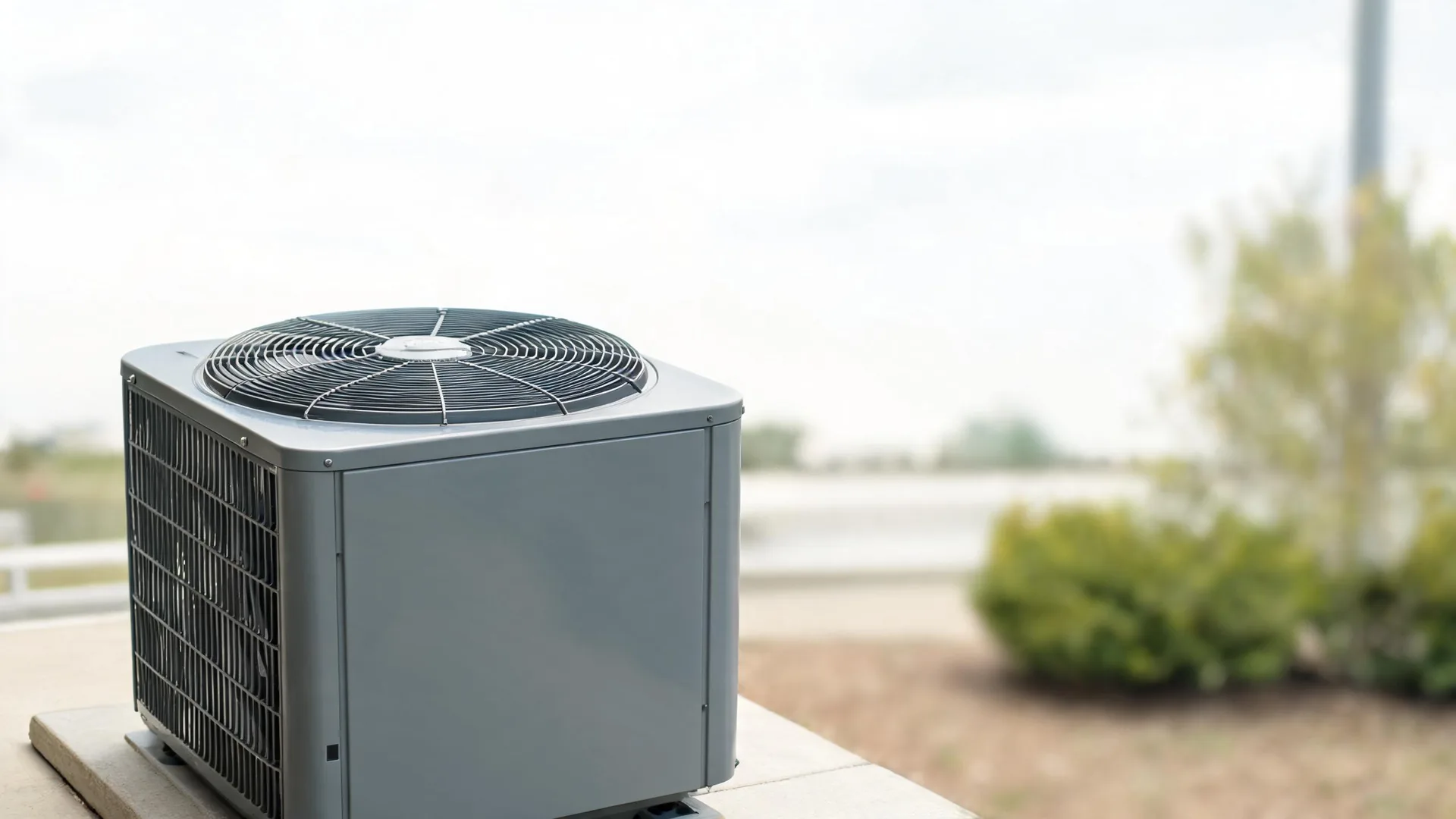
A gray heat pump condenser unit mounted on a concrete pad against the gray lap-siding exterior wall of a house.

What you're paying for is rarely the box outside

The price difference between quotes almost never comes down to the unit sitting outside. It comes down to what has to happen to make that unit work with the house. Ductwork that's too small or leaky for the new system has to be reworked, and that's labor, not equipment. The line set running between the outdoor unit and the indoor coil has to be sized right, and if the old one doesn't match what the new system needs, it gets replaced rather than reused. The electrical circuit feeding the unit has to carry what the new compressor draws, and an older panel sometimes needs work before the heat pump can even be connected. A mobile home adds its own requirements on top of that, since the equipment and the tie-down both have to be rated for that kind of installation. None of this shows up in a number painted on the side of the unit. It shows up when someone gets into the attic or under the house and looks at what's actually there to work with.

The rating is a lab number, not a promise

SEER2 and HSPF2 get measured under set conditions in a lab. The outdoor unit is paired with a specific indoor coil. The refrigerant charge is set exactly to spec. A heat pump only hits that number in the field when it's installed the same way. Right coil, right charge, right airflow across it. Mismatch any of those and the system still runs. It just doesn't run at the number on the sticker.
The rating alone won't tell you how it feels to live with

The number describes efficiency at one set of conditions, not how the system behaves across a mild afternoon versus the coldest night of the year. A heat pump that can run at partial output holds a steadier temperature than one that only switches fully on or fully off, even when both carry the same rating. That difference shows up in the house day to day. It never shows up on the label.

Sizing a heat pump starts with a load calculation, not a tape measure around the house. A contractor works out how much heat the place loses on the coldest expected day and how much it gains on the hottest, factoring in window area, insulation, ceiling height, and how much sun hits which walls. That number, not square footage alone, tells you what size compressor the place actually needs. Oversize it and the system short-cycles, blasting the house to temperature and shutting off before it's pulled any humidity out of the air, so the place feels cold and damp rather than comfortable. Undersize it and it runs flat out on the hardest days and still can't keep up, which wears on the compressor and leaves the house short of the thermostat setting right when it matters most. The right size is the one that runs long, steady cycles on an average day and still has enough capacity in reserve for the extremes.

Installation day starts outside, at the slab or pad where the old outdoor unit sits, if there is one. That gets disconnected, the refrigerant recovered rather than vented, and the line set either reused or replaced depending on what the new system calls for. Indoors, the coil above the furnace or air handler comes out and the new one goes in, matched to the outdoor unit so the whole system was designed to run together. Electrical work usually follows, since the new compressor draws differently than the old one and the circuit has to be rated for it. Once everything's connected, the line set gets pressure tested for leaks before any refrigerant goes in, then the system gets charged to the exact weight the manufacturer specifies. Last comes airflow, checking that each room is getting what the duct design intended, and a run-through of heating and cooling both before anyone leaves. A system that gets fired up and left without that last check is one nobody's actually confirmed is working right.