







Single-story houses with covered porches, one brick and one light-colored siding, behind a trimmed hedge and lawn, beneath large oak trees draped with Spanish moss.

Heat Pump Installation in Indianola, MS

Tell us about the job

Takes about a minute. No obligation.

New system or replacementHeat PumpSunflower County, MS
Step 1 of 2

What ZIP code is the job in?

Most homes in Sunflower County heat with utility gas, 57.2% of them. Electricity is next at 33.6%, with bottled or LP gas making up the rest. A heat pump installed here usually means moving a home off gas heat entirely, or adding electric heat and cooling alongside a gas furnace that stays in place for backup. Either way, the ductwork already in the house matters more than which fuel it used before. If your home was built around gas heat, ask the contractor how the existing ducts and the electrical panel handle the switch.

5 months
November through March, your system heats
5 months
May through September, it cools
37°F
the average winter night it heats against
91°F
the average summer afternoon it cools against
Isometric line illustration of a cutaway house showing interior rooms with furniture, ceiling ductwork under a dark shingled roof, and an outdoor condenser unit connected by lines on the right.
Your system heats November through March and cools May through September.

NOAA nClimDiv, 1991–2020 normals

A heat pump here works hardest from May through September cooling and November through March heating.

October is the month to get a new one in, before the first cold night puts it to the test.

A standard heat pump sized for a typical home here does the job

Half the homes here were built by 1977
Power costs 13.39 cents a kWh statewide
Climate zone 3A
What a heat pump costs to run hereMississippi power ran 13.39 cents per kilowatt-hour in 2024, cheap enough that fit matters more than the efficiency rating.

Indianola is in climate zone 3A, warm most of the year with a humid stretch alongside it. A new split-system heat pump here has to clear 14.3 SEER2 for cooling and 7.5 HSPF2 for heating, the federal minimum since January 2023. That number is about efficiency, not size, so it won't tell you what size unit your home needs, but it does narrow the field, since anything made for sale now already clears that bar. A federal tax credit is available for qualifying installations, worth checking against whatever system a contractor proposes.

Replace it before the season

Replace it before the season starts, so it happens on your schedule, not in a hurry.

Find a contractor
A man in a cap, gray long-sleeve shirt and brown work pants walks up porch steps toward a dark blue front door, carrying a canvas tool bag with tools in its side pockets, beside a potted shrub.
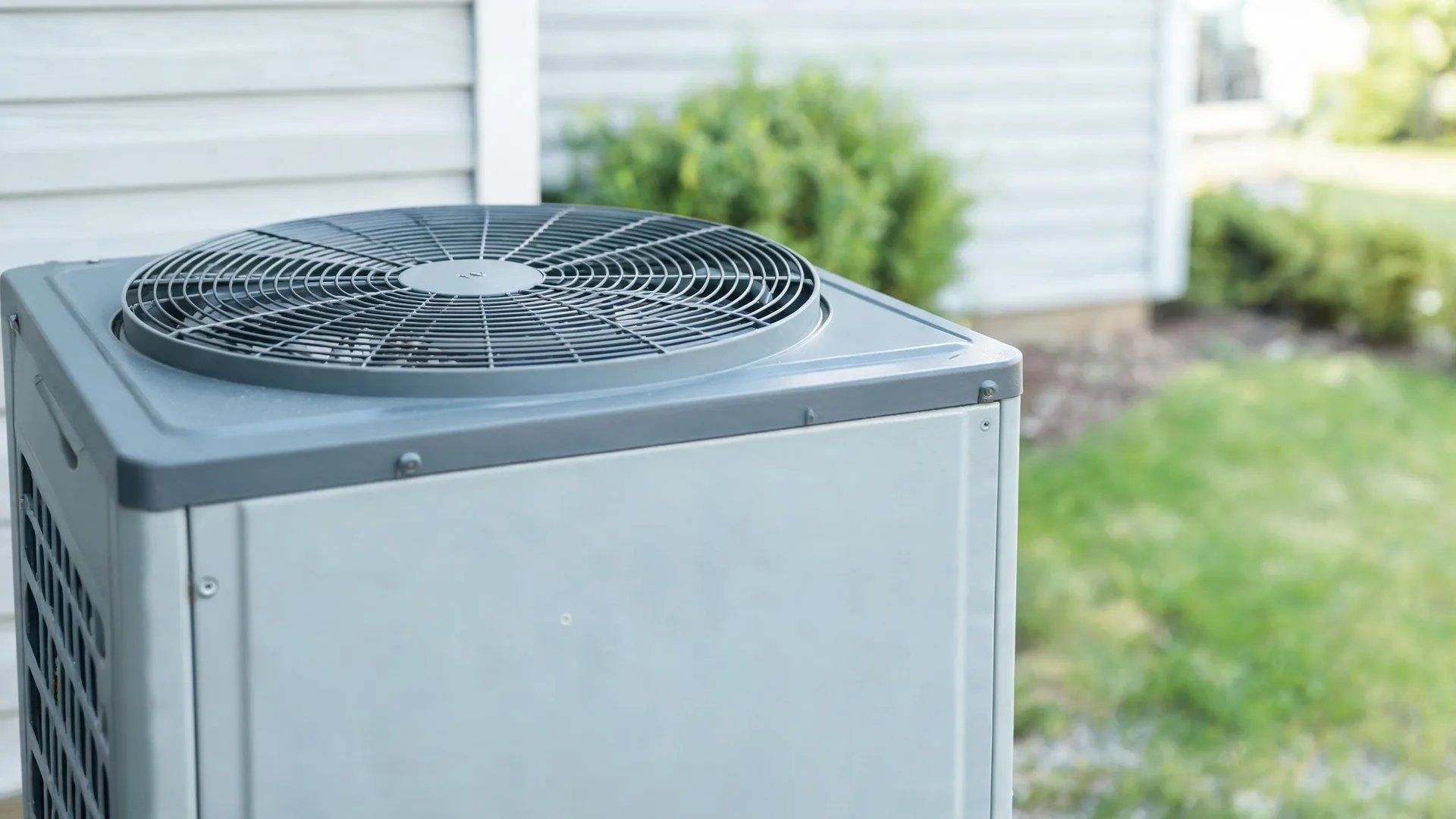
A gray heat pump outdoor unit mounted on a concrete pad next to the stone-accented exterior wall of a house.

The number on the label isn't the whole story

That rating comes from a lab, not your house. The test runs the unit under one set of conditions, with clean coils, sealed ducts, and a filter that isn't loaded with dust. Your house won't match that. A duct run leaking air in the attic or a dirty filter dragging down airflow will pull the real number below what the label promises, no matter how good the equipment is. The rating also comes from a full season of averages, so it doesn't say much about how the unit performs on the hottest afternoon or the coldest night, which is when you actually notice it working. A higher rating usually points to a compressor that can run at more than one speed instead of just switching on and off. That kind of compressor holds a steadier temperature and puts less strain on itself over time. None of that shows up as a number. It shows up in how even the house feels and how long the system holds up.

The old equipment doesn't just sit there

A gas furnace staying on as backup needs its flue and gas line left intact and inspected, even if it runs less than it used to. A unit coming out entirely needs its refrigerant recovered by law before anything gets disconnected, and the line set and pad cleared so the new equipment has a clean spot to land.
The duct and electrical work matters more than the old unit

Whatever is removed, the connections it leaves behind, the duct boot, the electrical whip, the condensate line, have to be checked against what the heat pump needs, not just reused as is. A contractor sizing the new system should be looking at those connections before the old equipment ever comes out.

Sizing a heat pump comes down to a room by room heat loss and heat gain calculation, not the square footage of the house or whatever size the old unit happened to be. A contractor doing this right measures the walls, the windows, the insulation, and the ceiling height, then works out how fast each room loses heat in winter and gains it in summer. Too big and the unit short cycles, running in quick bursts that cool the air but never run long enough to pull the humidity out of it. Too small and it runs flat out on the hardest days and still can't keep up. Either mistake wears the compressor down faster than running at the right size ever would. The old equipment is a clue to what might work, not an answer, since whoever installed it may have guessed too.

Installation day starts with the old equipment coming out, refrigerant recovered, line set disconnected, pad cleared. Then the contractor runs the duct and electrical work, fitting the new connections to what the heat pump actually needs rather than just hooking into whatever was there before. The indoor and outdoor units go in, the line set gets connected and brazed, then pressure tested to make sure there are no leaks before any refrigerant goes in. Once the system is charged, the contractor checks refrigerant levels against the manufacturer's spec, confirms airflow at the vents, and sets the thermostat up to actually talk to the new equipment. The last part is commissioning, running the system in both heating and cooling to make sure it responds, holds temperature, and shuts off the way it should. Most of the day is that testing, not the parts going in.