An outdoor heat pump unit mounted on a concrete pad in front of a two-story suburban house with a landscaped lawn.

Heat Pump Installation in Greenwood, MS

Tell us about the job

Takes about a minute. No obligation.

New system or replacementHeat PumpLeflore County, MS
Step 1 of 2

What ZIP code is the job in?

Half these homes were built in 1973 or earlier

Leflore County's housing is older than most counties. Half the homes here were built in 1973 or earlier, half since. A heat pump picked for a new build is not automatically the right size for one of these.


An older home holds temperature differently

How a house loses heat and cooling depends on the house, not its age alone. Whoever installs your heat pump should size it to how your home actually performs, not to a number pulled off a standard chart.

5 months
November through March, your system heats
5 months
May through September, it cools
37°F
the average winter night it heats against
91°F
the average summer afternoon it cools against
Isometric cutaway illustration of a small house showing interior rooms with furniture, an indoor air handler with flexible ducting, and refrigerant lines running to an outdoor condenser unit beside the building.
Your system heats November through March and cools May through September.

NOAA nClimDiv, 1991–2020 normals

Mississippi electricity ran 13.39 cents a kilowatt-hour in 2024, cheaper than most of the country.

The payback on a high-efficiency heat pump stretches out here, so picking one that fits your house right matters more than chasing the top efficiency number.

Most homes in Leflore County heat with gas, so a heat pump is a change, not a swap

51.7% of homes heat with gas
Power costs 13.39 cents a kWh statewide
Climate zone 3A
A standard heat pump fits fine hereLeflore County saw 44 severe weather events between 2015 and 2024, mostly wind

April is worth marking on the calendar. Cooling starts up in May and runs through September, five months of steady work. A heat pump installed in April goes in with no pressure on anyone, no rush to get the house livable the same day. Wait until the first hot week and you're choosing from whatever a contractor can get to you fast, not necessarily the right size for your home. The same goes in reverse come October, the month before heat season starts in November. Getting ahead of both swings, instead of reacting to one, is what makes this an install on your terms.

Any system you install here has to clear a set efficiency floor

Leflore County falls in zone 3A, and any heat pump going in has to hit 14.3 SEER2 and 7.5 HSPF2 at minimum. That floor is already set. The question left is whether to meet it or go above it, and a federal tax credit is available toward a qualifying high-efficiency system.

Find a contractor
A man in a dark cap, dark shirt and tan pants, seen from behind, carries a canvas tool bag up concrete steps toward a blue front door, with a potted green plant in a blue planter beside the entry.
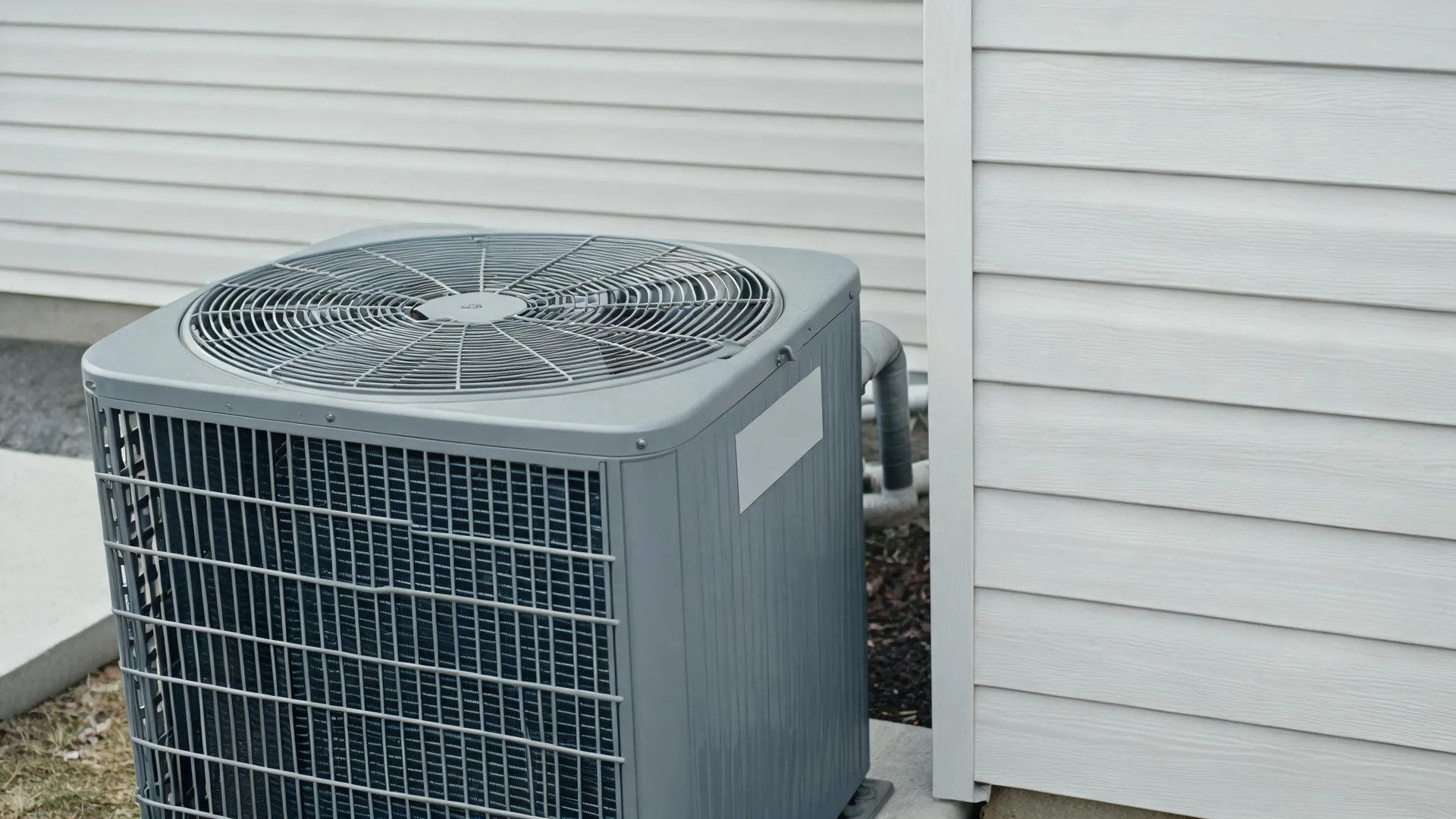
A gray heat pump outdoor unit mounted on a concrete pad next to a residential house with lap siding and stone accents.

Taking out what's there

The old system does not get reused. A heat pump that cools and heats works differently from a gas furnace paired with a separate AC unit, so the furnace, the coil, and often the line set all come out together. Whoever installs the new system should check the ductwork while it's exposed, since that's the easiest point to catch a crushed run or a bad seal that the old furnace never had to fight against. The refrigerant in the old outdoor unit has to be recovered properly, not vented, and that's part of the removal, not an extra step tacked on. If the old furnace shares a flue with a water heater, capping that flue correctly matters once the furnace is gone. None of this is optional groundwork. It's what decides whether the new equipment performs the way it's rated to.

Too big is its own problem

An oversized heat pump cools the house fast, then shuts off before it pulls the moisture out of the air. The house feels clammy even at the temperature you want. It also cycles on and off more, and that stop-start wears on the compressor more than one long steady run would.

The math behind the number

A load calculation works room by room. How much glass faces which direction. How much wall and ceiling area. How air moves through the place. That sets the number, not the square footage alone and not what the last system happened to be. Houses that look alike from outside can need different sizes of equipment.

A heat pump's installed cost comes down mostly to what has to change to make it work, not the unit itself. If the ductwork already in place is sized right and sealed well, a contractor connects to it and moves on. If it's leaky, crushed in spots, or sized for a furnace that pushed air differently, that ductwork gets added to the job. Electrical matters too. A heat pump runs on electricity for both heating and cooling, so the panel and circuit have to support that load, and an older panel sometimes needs upgrading before the unit goes in. Where the outdoor and indoor units sit, and how far apart they are, affects how much line and labor the job takes. None of this shows up until someone looks at the actual house, which is why homes that look alike from the outside can come back with different quotes for what looks like the same system.

Installation day starts before anyone touches the old system, with a walkthrough to confirm where the new lines and wiring will run. The old equipment comes out first, indoor and outdoor units both, and if ductwork is being modified that work happens next while everything is open. The outdoor unit goes on a pad or mounting bracket, the indoor coil ties into the air handler or ductwork, and refrigerant lines run between them. Electrical work follows, since the new circuit has to be sized for the heat pump's draw before anything gets powered on. Once it's connected, the system gets charged with refrigerant, tested in both heating and cooling mode, and checked for airflow at the vents. A contractor should walk you through the thermostat and anything specific to how this system handles defrost cycles in winter before calling the job done.