







A red brick house with a white-columned porch and a row of pale clapboard cottages sit behind a trimmed hedge and lawn, under oak branches draped with Spanish moss.

Heat Pump Installation in Clarksdale, MS

Tell us about the job

Takes about a minute. No obligation.

New system or replacementHeat PumpCoahoma County, MS
Step 1 of 2

What ZIP code is the job in?

Half the homes in Coahoma County were built in 1970 or earlier. A heat pump going into a house that old has to work with what's already there, not what a newer build would have. The ductwork was likely sized for a furnace and an air conditioner running separately, not a heat pump moving both warm and cool air through the same system year round. Insulation and air sealing from that era were done to a different standard too. None of that rules out a heat pump. It just means the equipment and the install need to match the house, not a generic spec sheet.

5 months
November through March, your system heats
5 months
May through September, it cools
36°F
the average winter night it heats against
90°F
the average summer afternoon it cools against
Isometric cutaway illustration of a small house showing interior rooms with furniture, an indoor air handler with ductwork, and lines running to an outdoor condenser unit beside the building.
Your system heats November through March and cools May through September.

NOAA nClimDiv, 1991–2020 normals

Gas heats more than half the homes in Coahoma County.

A heat pump replacing a gas furnace here is going into a house built around gas, not around itself.

Get a heat pump in before November, while you can still pick the day

Cooling runs May through September
Heat runs November through March
Power costs 13.39 cents a kWh statewide
Electricity here costs less than most of the countryMississippi electricity ran 13.39 cents per kilowatthour in 2024.

Coahoma County runs long summers and a short, mild winter, with humidity most of the year, which puts it in climate zone 3A. Any split-system heat pump installed here now has to hit 14.3 SEER2 for cooling and 7.5 HSPF2 for heating, the federal minimum for equipment built since January 2023. A central air conditioner installed here has to clear that same 14.3 SEER2 on the cooling side, so the heat pump going in is already built to the same bar for the cooling this county actually gets. A system rated to a lower number somewhere else would not be legal to install here. There's also a federal tax credit for qualifying heat pump installations, separate from whatever a contractor charges for the job.

Size the new system to the house you have

Get a load calculation done on the house itself, not a copy of what the old system's nameplate says. If the ductwork was sized for a furnace and a separate AC, a contractor needs to check it before the heat pump goes in, not after. That's the step that decides whether the equipment on the spec sheet actually fits this house.

Find a contractor
A man in a dark cap, dark shirt and tan work pants walks up wooden steps toward a blue front door, carrying a worn canvas tool bag in his right hand, with a potted shrub beside the entry.
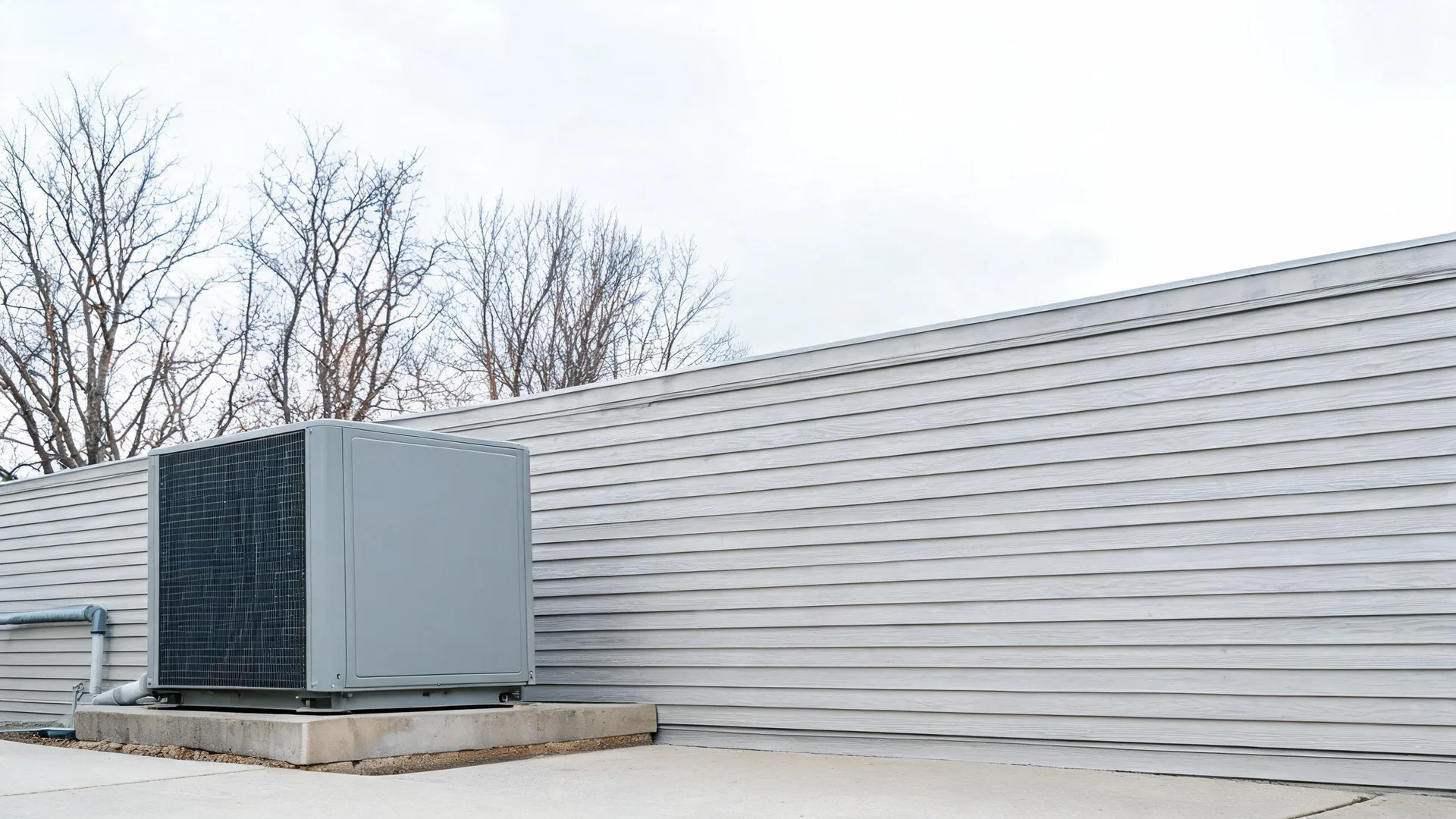
A dark gray heat pump unit mounted on a concrete pad next to a house with gray siding and a stone veneer wall.

The old equipment comes out, it doesn't get left in place

The old furnace and AC don't go anywhere by themselves. A contractor disconnects the furnace, caps or removes the gas line feeding it, and pulls the outdoor condenser along with the indoor coil. If the ductwork stays, it gets tied into the new heat pump's air handler, which is a different job than hooking up a furnace since the same ducts now carry warm air part of the year and cool air the rest. Whoever does the changeover should also check the line set and electrical whip from the old AC. Sometimes they can be reused, sometimes the wire gauge or refrigerant type doesn't match what the new heat pump needs, and that gets decided on site, not off a spec sheet.

The load calculation is the job, not a formality

A contractor works out heat pump size room by room, counting windows, wall area, and ceiling height, then checks that against how much heat the house loses in winter and gains in summer. Skip that and the size comes from a guess instead of the house.
Oversized or undersized both cause real problems

A heat pump too big for the house cycles on and off fast, cooling the air before it pulls the humidity out, which leaves rooms feeling damp. One too small runs constantly and still can't keep up on the coldest or hottest days. The right size runs longer, steadier cycles and holds the temperature without straining.

SEER2 and HSPF2 are both ratios, not a count of anything in the house. SEER2 compares the cooling a heat pump moves over a season to the electricity it uses to do it. HSPF2 does the same for heating. A higher number means the equipment gets more cooling or heating out of the same unit of power, nothing more than that. It doesn't tell you the size of the equipment, and a bigger number doesn't mean a bigger heat pump, units built for very different size houses can carry the same rating. That number also comes from lab testing under set conditions, so it's a way to compare one unit against another, not a promise of what it will do installed in a particular house with particular ductwork. That part still comes down to the install.

Installation day starts with the old system coming apart before the new one goes in, so expect a stretch where the house has no heating or cooling running at all. A crew disconnects the refrigerant lines first, recovering whatever's left in the old system rather than venting it, since that refrigerant has to be handled and logged, not released. Once the old condenser and coil are out and the new ones are set, the line set gets connected, pressure tested, and pulled down to a vacuum before any refrigerant goes in. That vacuum step is what clears out moisture and air left in the lines, and skipping it or rushing it is one of the more common reasons a new system runs poorly from day one. Electrical work happens alongside that, tying the outdoor unit and air handler into their own circuits with the right breaker and disconnect. Only after all of that, the lines charged, the wiring checked, the thermostat set up, does the system get run through its first cycles, with the installer checking airflow at the vents and the temperature split between the air going in and the air coming out.